
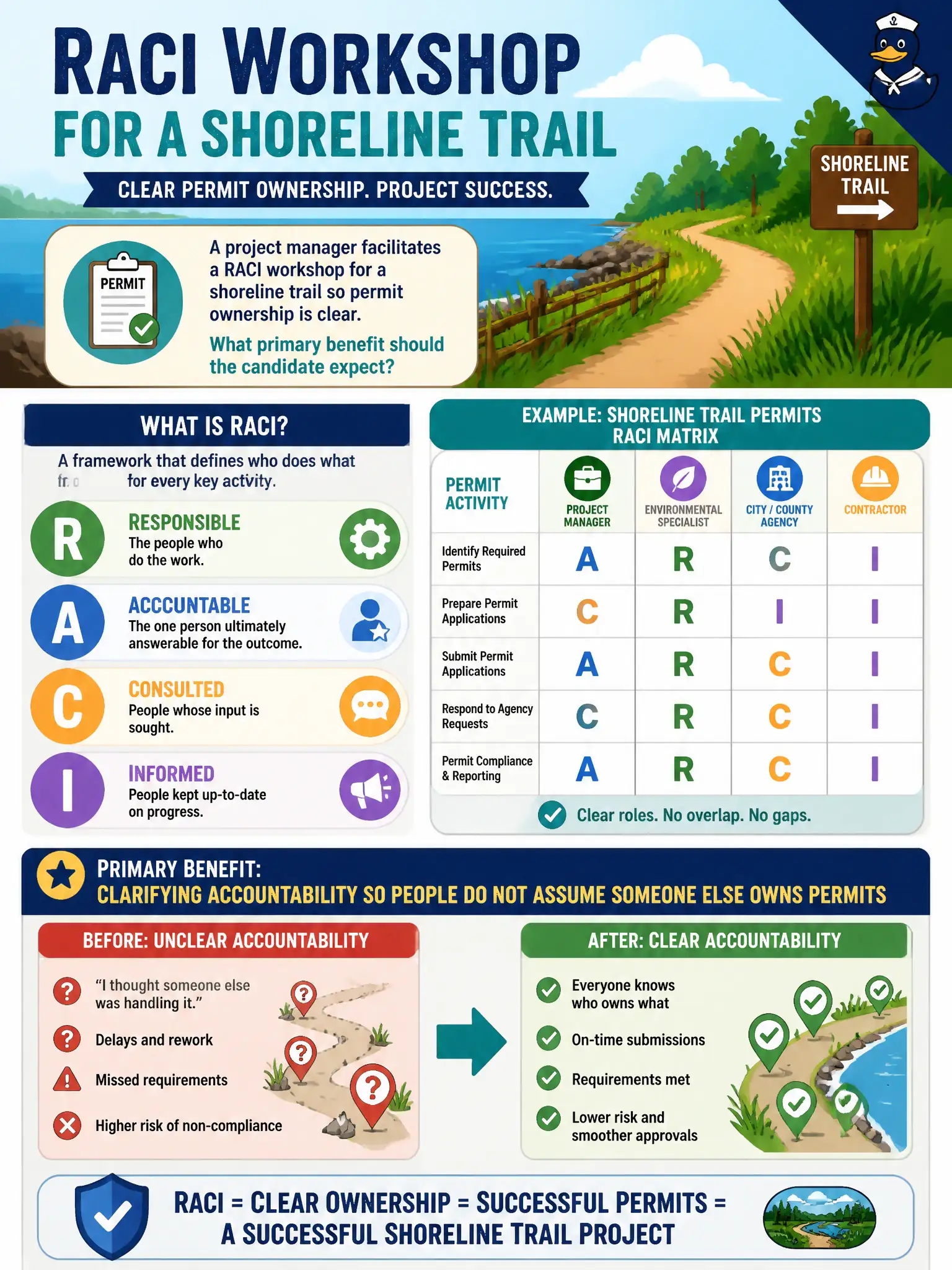
A project manager facilitates a RACI workshop for a shoreline trail so permit ownership is clear. What primary benefit should the candidate expect?
Select an answer to reveal the explanation.
Short Explanation
RACI workshops stop the classic 'I thought you had the permits' shrug. Facilitation gets names next to accountable and responsible. Clear ownership beats finger-pointing when the inspector shows up.
Full Explanation
Facilitating a RACI or similar responsibility workshop clarifies who is responsible, accountable, consulted, and informed so people do not assume someone else owns critical work such as permits. On a shoreline trail, that clarity is the primary expected benefit for regulatory readiness across agencies sharing the corridor. Saying RACI eliminates the need for any permits fails by concept: clarifying ownership does not waive regulatory permit requirements on shoreline work near water. Saying it allows the sponsor to hide from all regulatory discussions fails because accountability mapping should make ownership visible, not provide cover for avoidance. Saying it replaces the project schedule with a RACI chart alone fails because responsibility matrices complement schedules; they do not sequence activity durations or float. Exam caveat: CAPM facilitation and responsibility assignment tools reduce gaps and overlaps—common failure modes on multi-agency civic permitting. Operational check: complete the RACI for permit tasks with named roles, confirm the accountable person accepts ownership, distribute the matrix, and verify permit dates appear on the schedule with that owner. Review the matrix at permit gates so ownership stays accurate as agencies rotate staff.