
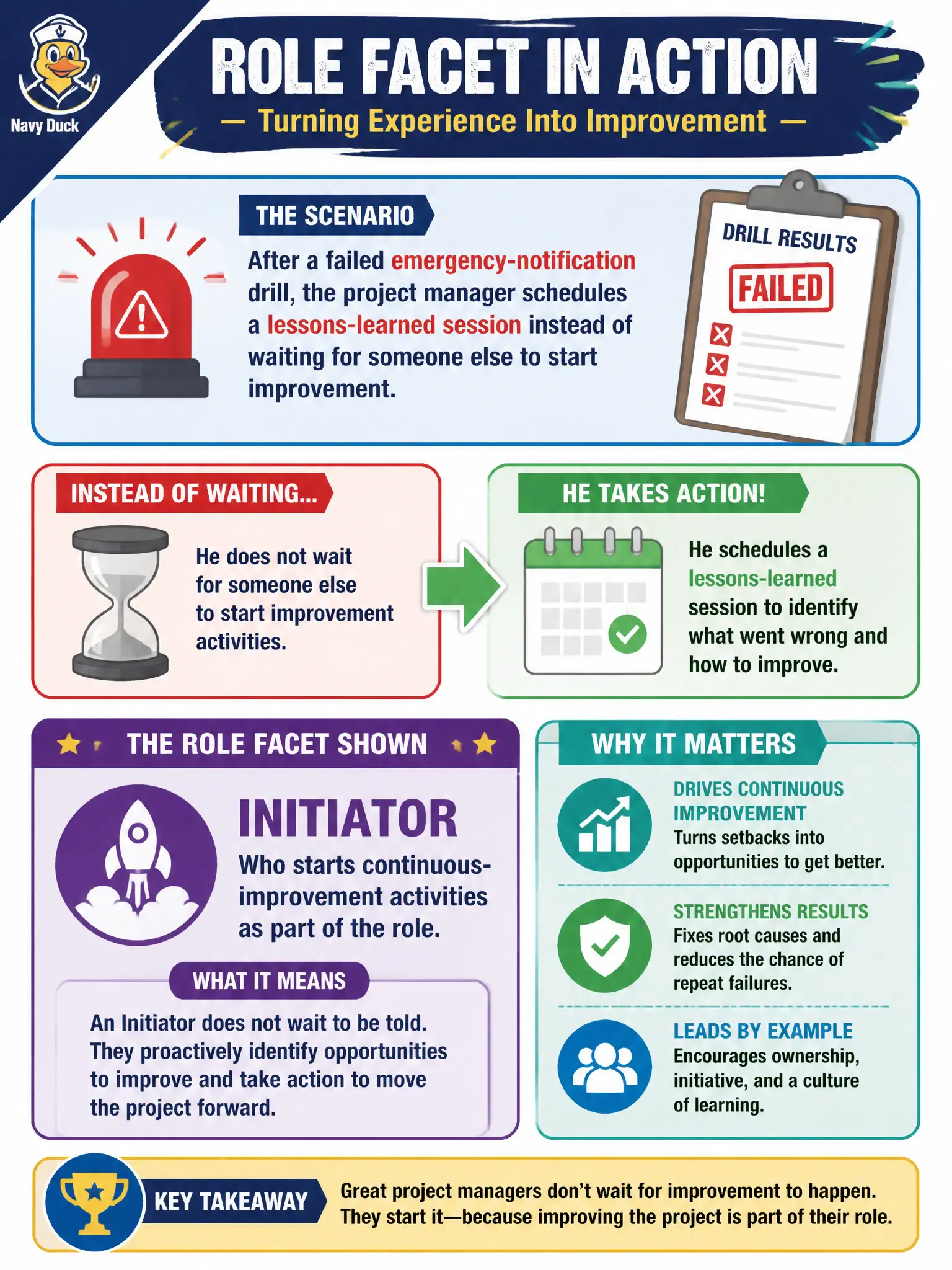
After a failed emergency-notification drill, the project manager schedules a lessons-learned session instead of waiting for someone else to start improvement. Which role facet does this show?
Select an answer to reveal the explanation.
Short Explanation
Waiting for 'somebody' to fix a failed drill is how the same miss repeats. The PM kicking off lessons learned is the initiator facet again—starting improvement on purpose. Capture what broke while the memory is fresh.
Full Explanation
Initiating continuous-improvement activities, including lessons learned after failures, is part of the project manager's role. After a failed emergency-notification drill, scheduling a lessons-learned session instead of waiting for someone else to start improvement shows the initiator facet in action. Saying the sponsor who must personally rewrite every emergency script fails by concept: sponsors enable and escalate, but rewriting scripts personally is not the improvement-initiation behavior described. Saying the avoider who delays improvement until the next fiscal year fails because deferring learning after a drill failure invites the same miss to recur when public safety communication is at stake. Saying the vendor who owns municipal continuous improvement by contract alone fails because contractual vendors may support remediation, but ownership of initiating project lessons learned remains with the project manager's role. Exam caveat: CAPM initiator items reward proactive start of improvement after failure—civic stems often tempt candidates to wait for sponsors, vendors, or the next budget cycle. Operational check: schedule the lessons-learned session promptly after the failed drill, capture what broke while memory is fresh, assign corrective actions with owners and dates, and treat initiation of improvement as expected project manager behavior.