
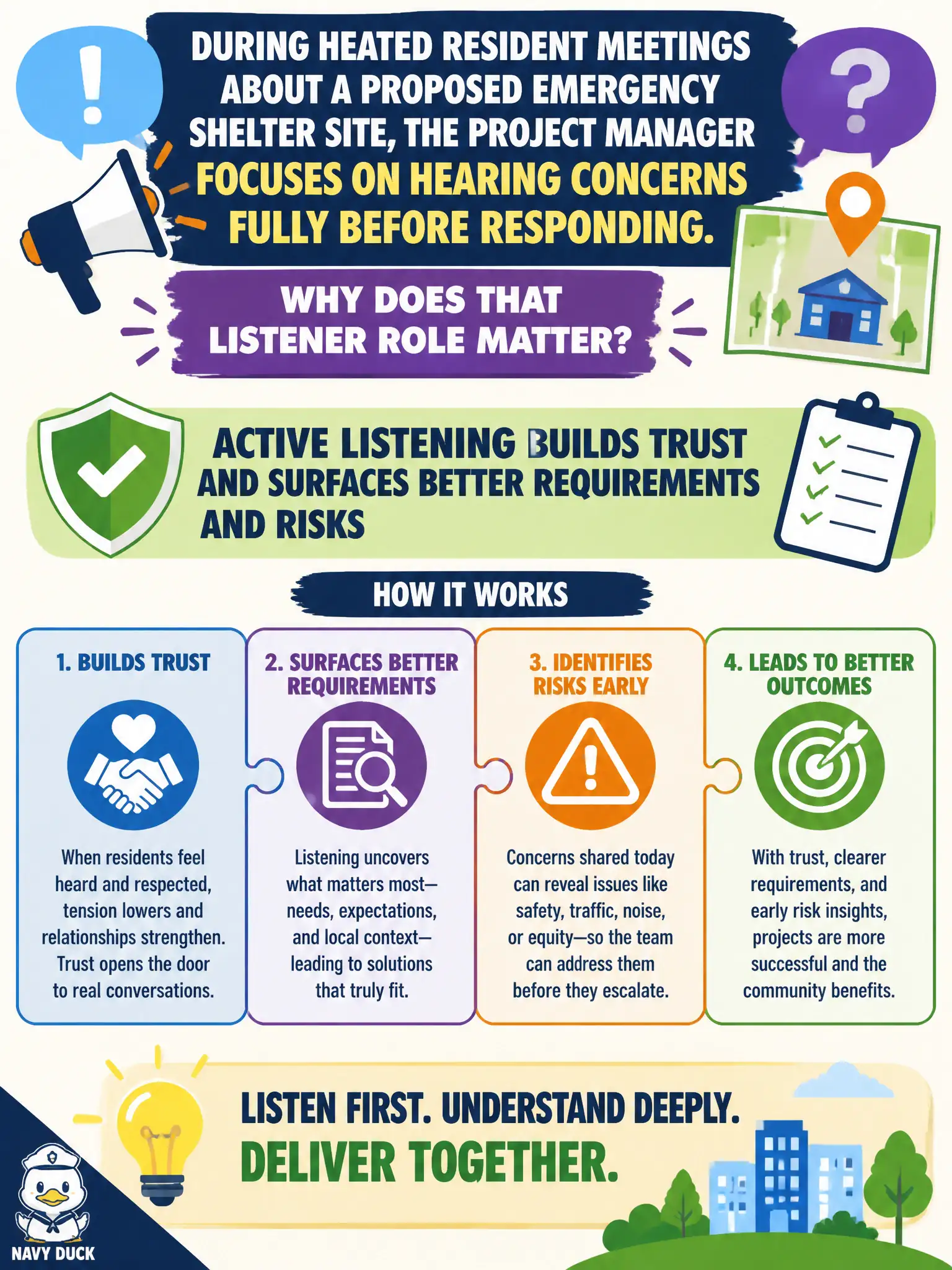
During heated resident meetings about a proposed emergency shelter site, the project manager focuses on hearing concerns fully before responding. Why does that listener role matter?
Select an answer to reveal the explanation.
Short Explanation
Hot community meetings cool down faster when someone actually listens first. That is not soft fluff—it surfaces real requirements and risks you would miss by talking over people. Trust follows when residents feel heard.
Full Explanation
Active listening builds trust and surfaces better requirements and risks. During heated resident meetings about a proposed emergency shelter site, focusing on hearing concerns fully before responding matters because it improves information quality and relationships under conflict. Saying listening replaces the need for any risk register or requirements documentation fails by concept: listening feeds those artifacts; it does not abolish disciplined documentation. Saying the project manager must remain silent for the entire project life cycle by policy fails because listening is interactive engagement, not permanent muteness after the meeting. Saying only the mayor may speak and the PM’s role is to record minutes only fails because project managers facilitate stakeholder engagement and may speak appropriately while still listening first. Exam caveat: CAPM interpersonal skills emphasize listening as a professional practice that improves outcomes—especially in contentious civic siting debates where residents feel unheard. Operational check: capture resident concerns as requirements, risks, or issues as appropriate, acknowledge them in follow-up communications, and show how the project will address or escalate items that cannot be resolved in the meeting.