
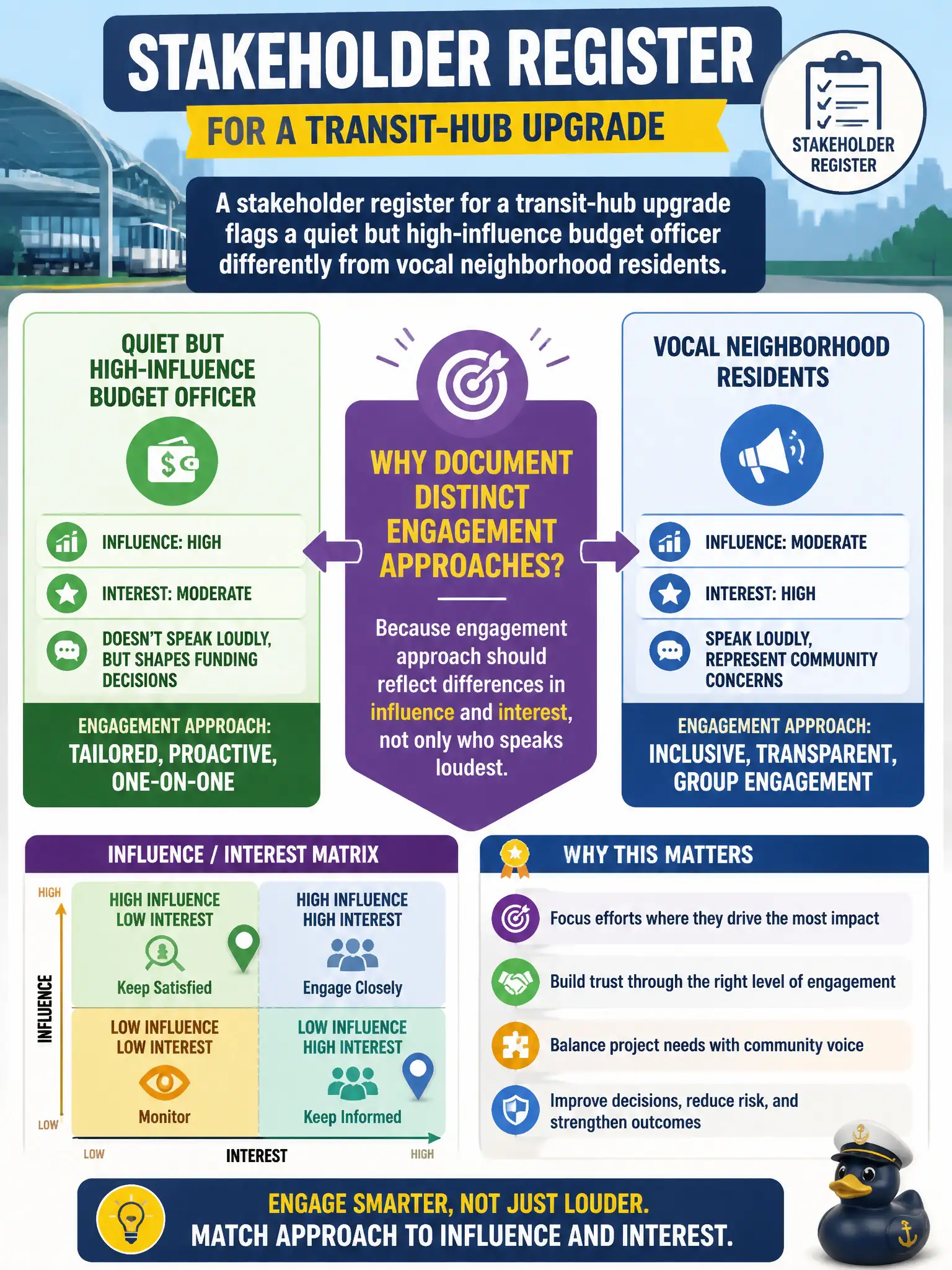
A stakeholder register for a transit-hub upgrade flags a quiet but high-influence budget officer differently from vocal neighborhood residents. Why document distinct engagement approaches?
Select an answer to reveal the explanation.
Short Explanation
The loudest voice in the room is not always the one who can stop the funding. Stakeholder registers pair clout and interest with a tailored engagement plan—quiet budget officers included.
Full Explanation
Engagement approach should reflect differences in influence and interest, not only who speaks loudest in public meetings. Flagging a quiet but high-influence budget officer differently from vocal neighborhood residents on a transit-hub stakeholder register is therefore appropriate. Saying silent stakeholders must be removed to reduce communication cost fails by concept: silence does not equal low influence, and removing them blinds the team to critical funding oversight. Saying all stakeholders must receive identical weekly town-hall invitations regardless of influence fails because one-size engagement wastes effort and misses the tailored information needs of high-influence roles. Saying budget officers are never stakeholders once funding is approved fails because funding overseers remain influential throughout delivery as changes, forecasts, and contingency draws arise. Exam caveat: CAPM stakeholder engagement stresses tailored strategies using power/interest or similar analysis—vocal participation is not the same as importance. Operational check: keep distinct engagement plans such as private forecast briefings for the budget officer versus community forums for residents, update influence assessments as the project evolves, and verify high-influence quiet stakeholders receive proactive outreach.