
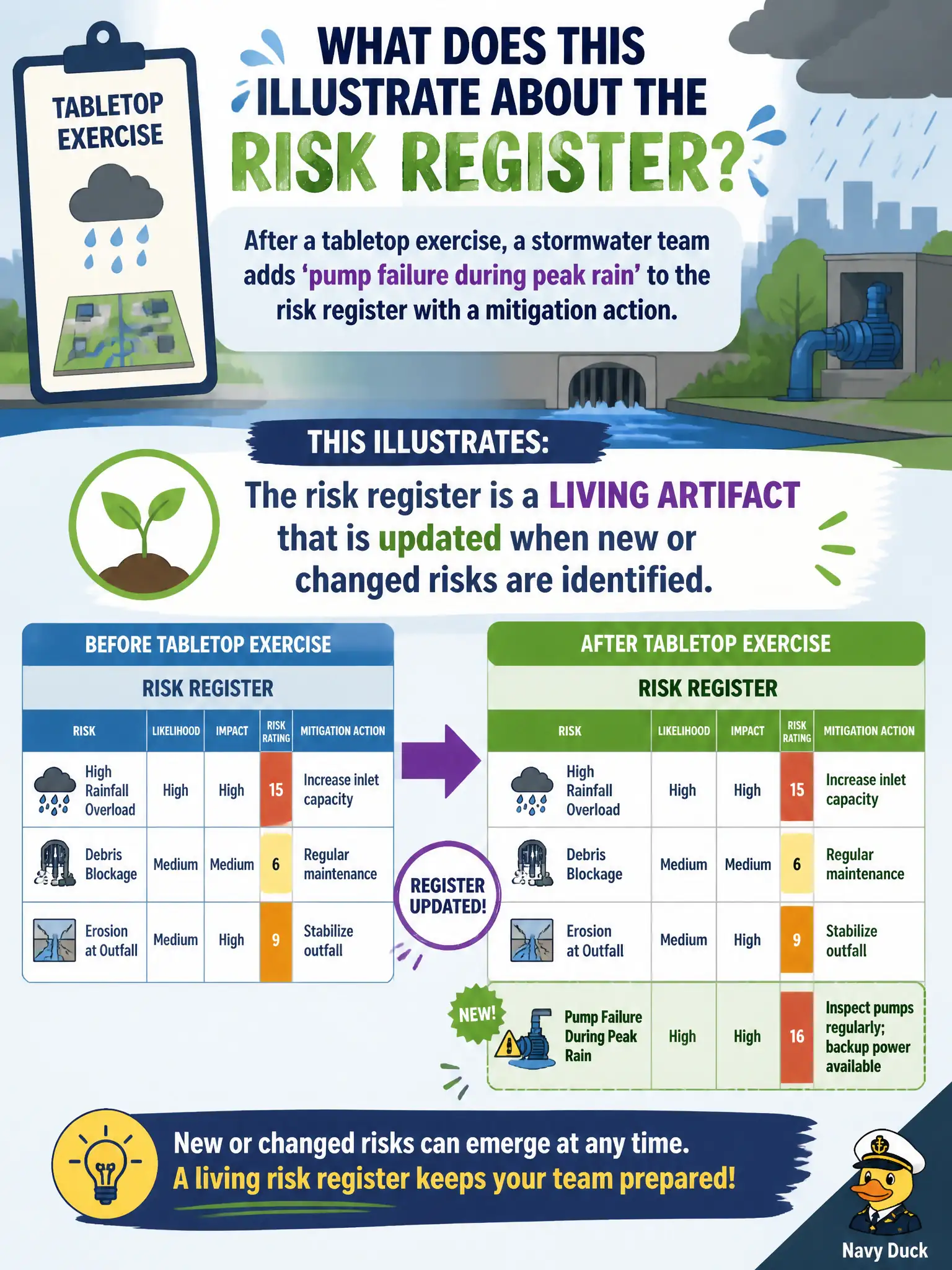
After a tabletop exercise, a stormwater team adds 'pump failure during peak rain' to the risk register with a mitigation action. What does this illustrate about the register?
Select an answer to reveal the explanation.
Short Explanation
Risk registers are not museum pieces sealed at kickoff. A tabletop finds a new pump-failure worry, you write it down with a mitigation—same notebook, fresh page.
Full Explanation
The risk register is a living artifact updated when new or changed risks are identified. Adding “pump failure during peak rain” with a mitigation action after a stormwater tabletop exercise illustrates that living use in municipal drainage programs. Saying registers are frozen at kickoff so new risks must wait for lessons learned at closeout fails by concept: risks emerge throughout the life cycle and should be added when discovered, not parked until the project ends. Saying mitigation actions belong only in the product roadmap and must never appear in the risk register fails because response planning is a core risk-register function and is unrelated to product roadmap themes. Saying tabletop exercises replace quantitative analysis so probability and impact fields should be deleted fails because tabletops inform qualitative (and sometimes quantitative) updates—they do not erase the need for analysis fields. Exam caveat: CAPM risk process is iterative; “living register” is a frequent correct theme against freeze-at-kickoff distractors on civic infrastructure work. Operational check: after each tabletop or after-action review, update the register with new risks and mitigations, assign owners with due dates, and verify mitigations appear in the schedule or operating procedures.