
A dam gate rehabilitation team skips the risk workshop 'to save time.' What is the primary value of risk planning they are forgoing?
Select an answer to reveal the explanation.
Short Explanation
Skipping risk planning to 'save time' is like refusing a weather check before a lake crossing—you might move faster until the squall shows up. Spotting threats and openings early beats scrambling mid-storm.
Full Explanation
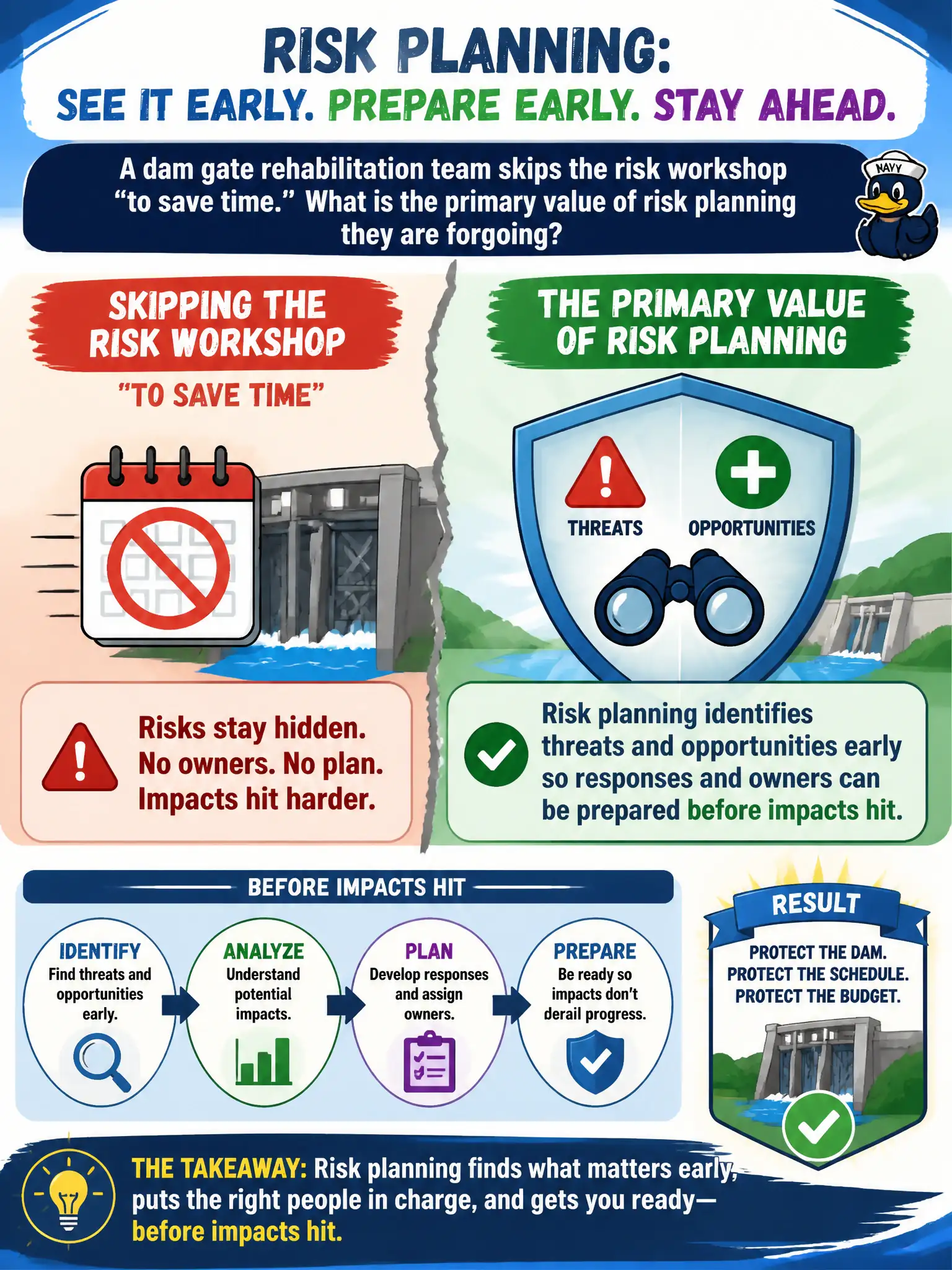
Risk planning identifies threats and opportunities early so responses and owners can be prepared before impacts hit. Skipping the dam-gate rehabilitation risk workshop “to save time” forgoes that preparatory value. Saying risk planning creates a fixed list of problems that will definitely occur so contingency can be spent immediately fails by concept: risks are uncertain; treating them as certain problems confuses risk with issues and encourages premature contingency spending. Saying risk planning replaces the schedule baseline because uncertain work cannot be sequenced fails because schedules and risk management coexist—uncertainty is managed with responses and buffers, not by abandoning sequencing. Saying risk planning is only required when insurers demand a workshop for municipal bonds fails because risk management is a project practice for objectives, not merely an insurance paperwork trigger. Exam caveat: CAPM risk content stresses early identification and ownership; skipping workshops to save time often costs more when unowned threats materialize mid-rehab. Operational check: run a facilitated risk identification session, populate the risk register with owners and responses, review residual risk against contingency, and revisit risks at major rehab gates.