
QA on a water-main replacement asks why quality planning must happen before crews dig. What is the main reason to plan quality upfront?
Select an answer to reveal the explanation.
Short Explanation
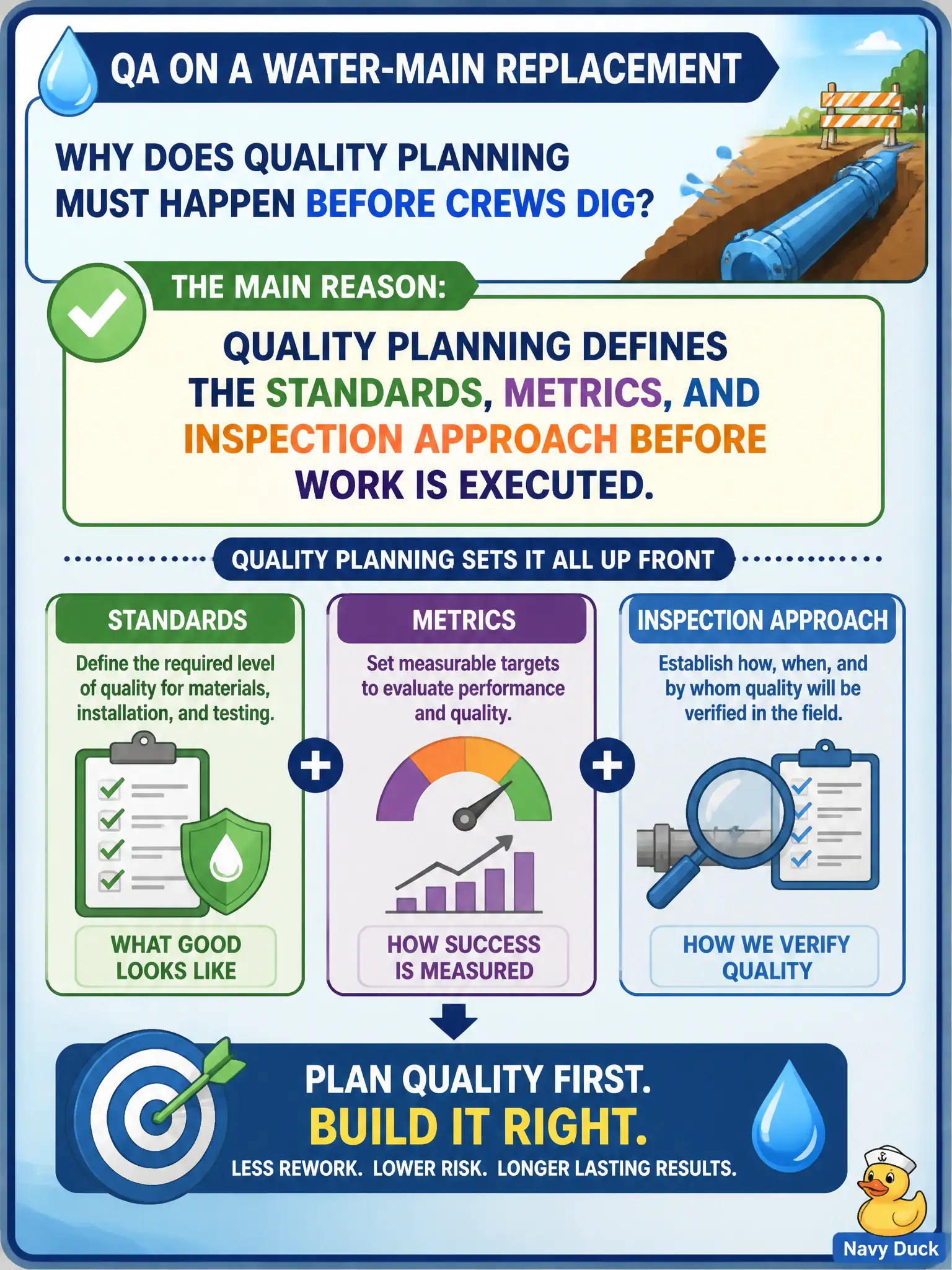
You do not invent the pass/fail test after the pipe is already underground. Upfront quality planning is writing the rulebook—pressure tests, specs, hold points—before the shovel hits dirt.
Full Explanation
Quality planning defines the standards, metrics, and inspection approach before work is executed so crews know what “done acceptably” means on a water-main replacement. Planning quality upfront is the main reason QA insists before digging. Saying quality planning is only a closeout form that documents defects after the pipe is buried fails by concept: planning precedes execution; after-the-fact defect logs are quality control or assurance outputs, not the plan that set criteria. Saying quality planning eliminates the need for any field inspections once drawings are stamped fails because plans define how inspections will occur—they do not cancel verification. Saying quality planning transfers all defect liability to the supplier so the city never defines acceptance criteria fails because the owner still must specify acceptance criteria and inspection methods regardless of contractual liability allocation. Exam caveat: CAPM separates quality planning (decide standards/approach) from quality control (inspect results)—stems that emphasize “before work” point to planning. Operational check: document pipe standards, test pressures, inspection hold points, and acceptance criteria in the quality management approach before excavation, and brief crews and inspectors on those criteria.