
A civic arena remodel team says schedule planning is unnecessary because 'everyone already knows opening night.' Why does schedule planning still matter?
Select an answer to reveal the explanation.
Short Explanation
Knowing opening night is like knowing Thanksgiving dinner is at 6—you still need a cooking timeline. Schedule planning lines up prep, oven time, and plating so the turkey is not still frozen at 5:55.
Full Explanation
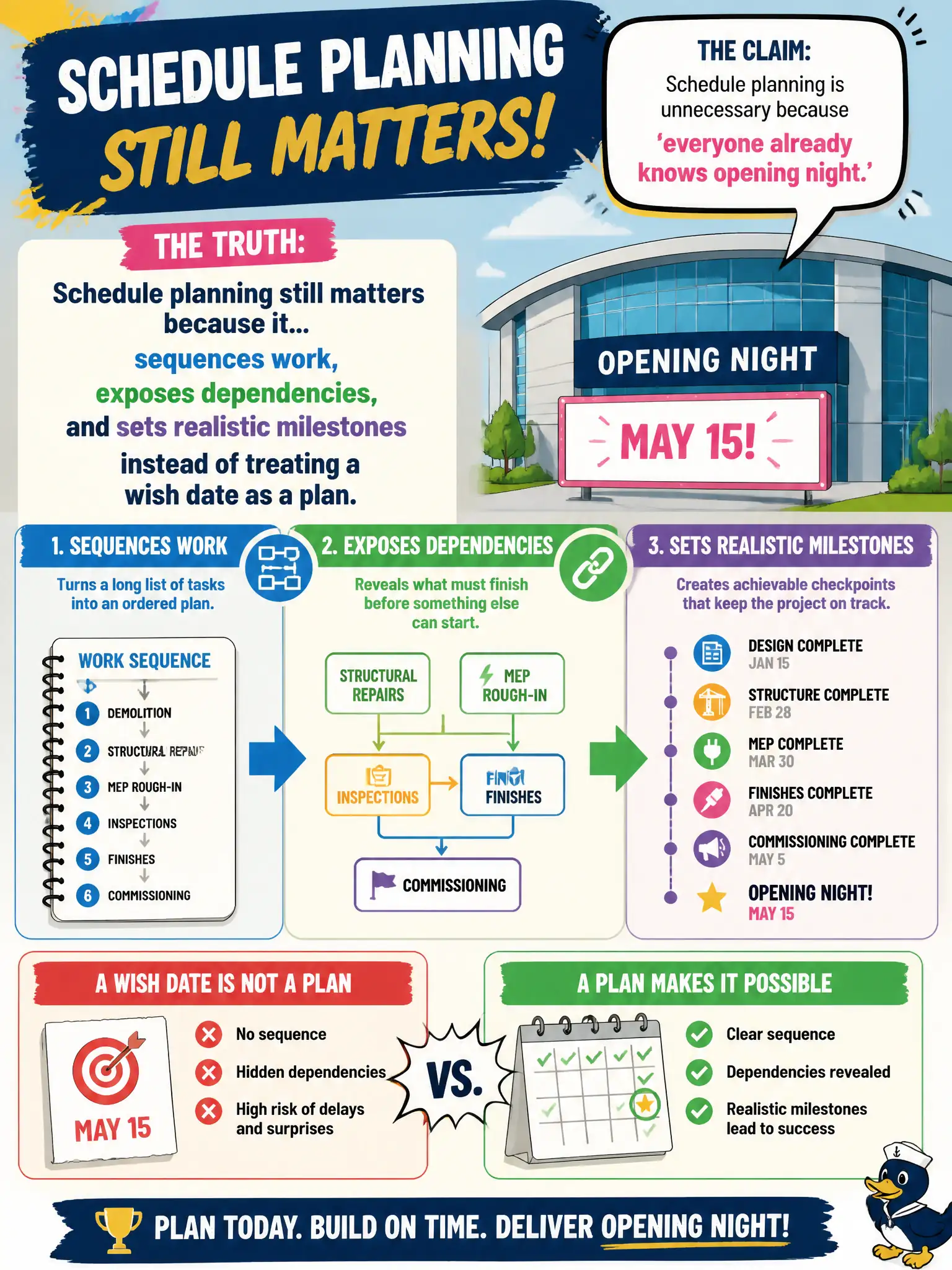
Schedule planning sequences activities, exposes dependencies, and establishes realistic milestones rather than treating a publicly known wish date as a plan. Even when a civic arena remodel team “already knows opening night,” the schedule still matters because opening night is a target milestone—not a substitute for sequenced work. Saying schedule planning replaces the need for a project charter once the opening date is announced fails by concept: a charter authorizes the project; a schedule plans how work will meet objectives. Saying it locks every activity to a fixed calendar day that can never change fails because schedules are baselines subject to change control when reality shifts—they are not immutable political tattoos. Saying schedule planning is required only for permits and has no value for coordinating the remodel team fails because the remodel team itself needs dependency-aware sequencing to coordinate trades and inspections. Exam caveat: CAPM associates should not confuse a publicly announced date with a developed schedule; announcement without dependency analysis is aspiration, not planning. Operational check: build an activity network to opening night, identify critical path and lag risks, publish milestones with owners, and update the baseline through change control if the opening target moves.