
A township is building a citizen permitting portal whose features keep evolving after each workshop with unclear final scope. Which delivery approach fits best?
Select an answer to reveal the explanation.
Short Explanation
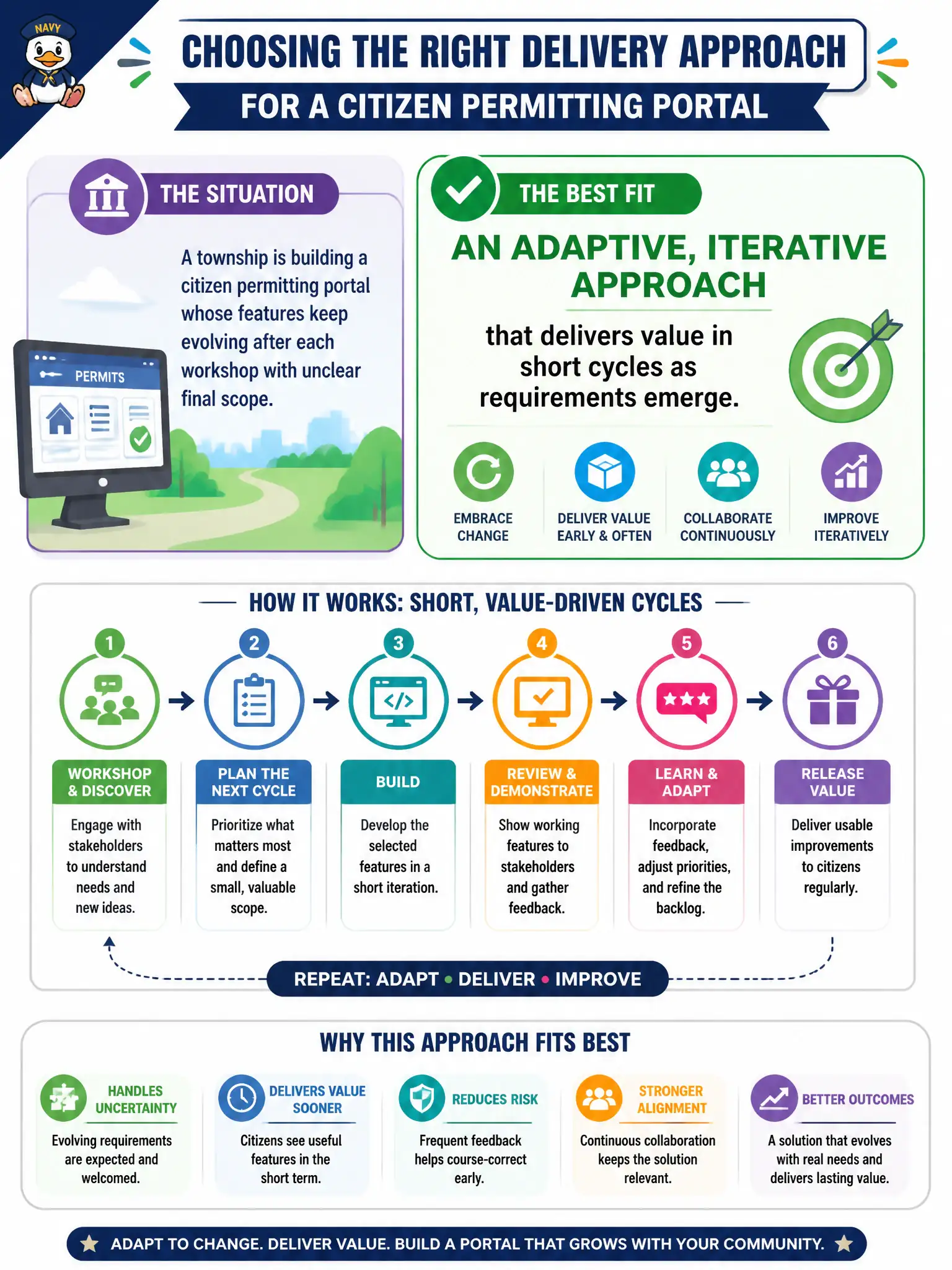
When citizens keep changing what “done” looks like after every workshop, locking a giant upfront blueprint is a trap. Adaptive delivery plans in short cycles and reshapes the backlog as learning arrives—still planned, just not frozen forever.
Full Explanation
Adaptive (iterative and incremental) approaches fit high uncertainty and evolving requirements by delivering value in short cycles and refining scope as stakeholder feedback arrives. A township permitting portal whose features keep changing after workshops with unclear final scope is a classic adaptive fit. A fully predictive plan that freezes every screen and rule before any build starts fails by concept when requirements are still emerging—early lock-in invites costly rework as workshops reveal new rules. Treating the portal as pure operations with no planned increments fails because delivering a new citizen-facing capability is project work, even if the clerking office continues afterward; operations alone will not produce the evolving product increments. A portfolio ranking exercise instead of any delivery approach fails because portfolio prioritization decides whether and when the initiative is funded—it does not replace a delivery method for building the portal. Exam caveat: CAPM associates should match approach to uncertainty—citizen digital services with emerging requirements favor adaptive cycles, while highly regulated stable construction often favors predictive plans. Operational check: establish a product backlog, short delivery cadence, workshop feedback loop, and Definition of Done for each increment before freezing a multi-year screen inventory.