
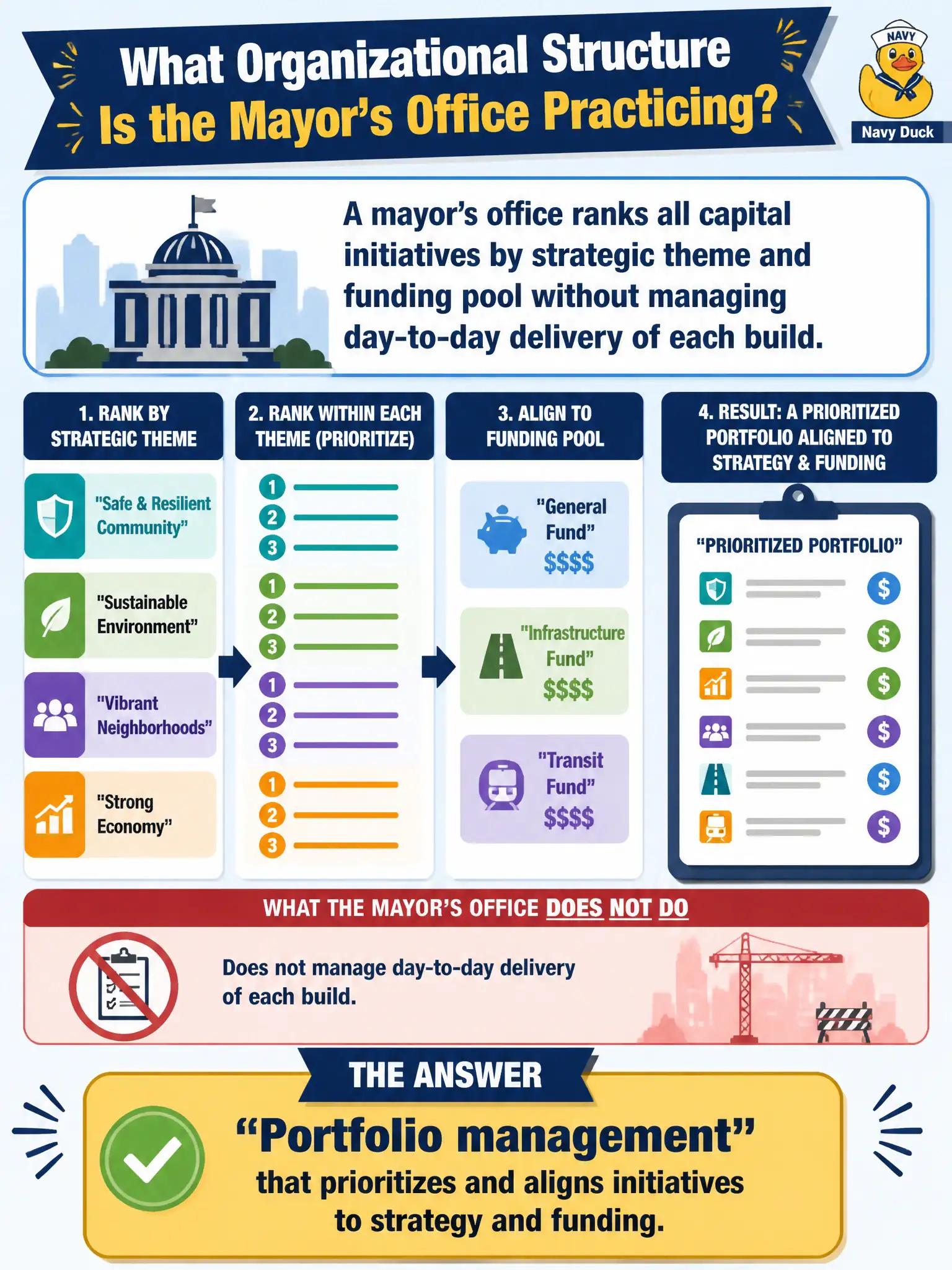
A mayor’s office ranks all capital initiatives by strategic theme and funding pool without managing day-to-day delivery of each build. Which organizational structure is that office primarily practicing?
Select an answer to reveal the explanation.
Short Explanation
The mayor’s office is sorting and ranking the whole pile of capital work by strategy and money—not swinging the hammer on each site. That sorting job is portfolio management. Programs and projects handle the coordinated and day-to-day delivery underneath.
Full Explanation
Portfolio management selects, prioritizes, and aligns programs and projects with organizational strategy and funding constraints. When the mayor’s office ranks all capital initiatives by strategic theme and funding pool without owning day-to-day delivery of each build, it is practicing portfolio oversight. Project management for each capital build’s daily work packages fails by concept because that is delivery-level direction of a single temporary endeavor, not enterprise ranking across the capital slate. Program management focused only on one related suite of station upgrades fails because a program coordinates related projects for combined benefits within that suite; ranking all capital initiatives across themes is wider than one program. Operations management of existing service desks fails because operations sustain ongoing services rather than prioritize which capital initiatives receive funding. Exam caveat: CAPM distinguishes portfolio (strategy and funding alignment), program (related-project benefits), and project (unique temporary delivery)—exam stems that emphasize ranking without delivery ownership point to portfolio. Operational check: verify the office maintains a prioritized capital list tied to strategic themes and funding pools, that individual project managers still own daily delivery, and that portfolio decisions are recorded when initiatives are deferred, accelerated, or stopped.