
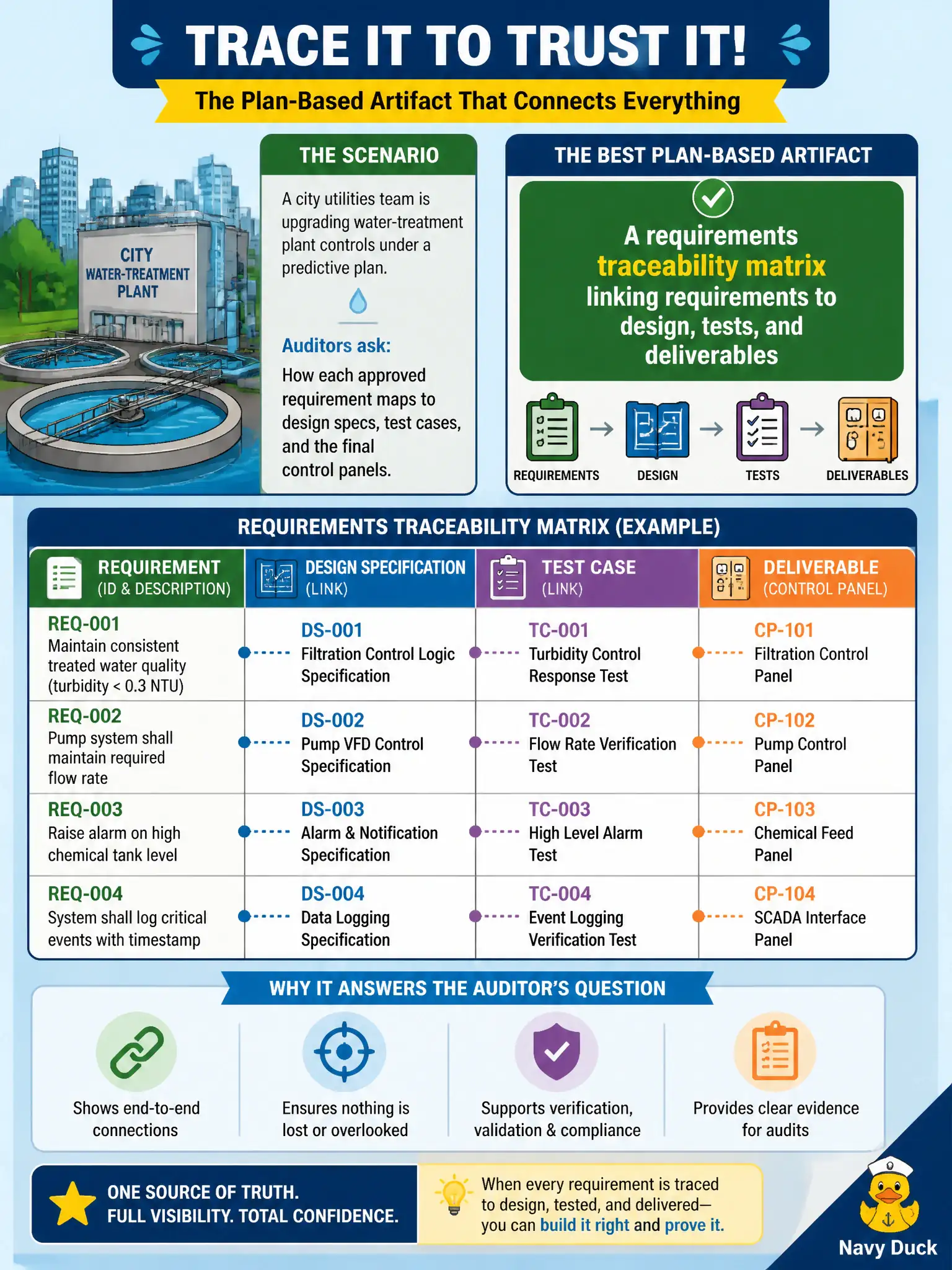
A city utilities team is upgrading water-treatment plant controls under a predictive plan. Auditors ask how each approved requirement maps to design specs, test cases, and the final control panels. Which plan-based artifact best answers that question?
Select an answer to reveal the explanation.
Short Explanation
Picture a baggage claim tag that follows a suitcase from check-in to the carousel — that is what a requirements traceability matrix does for plant requirements. It ties each approved need to design, tests, and the panels that ship, so auditors are not guessing. Attendance sheets and vision posters do not carry that chain.
Full Explanation
In predictive civic control sets, a requirements traceability matrix (RTM) is the artifact that documents how each approved requirement maps into design specifications, verification or test cases, and delivered components such as water-treatment control panels. For a municipal utilities upgrade under audit, that linkage answers how plant needs became engineered controls and how those controls were verified before acceptance. Traceability also supports change-impact analysis when a requirement shifts after baseline: reviewers can see which designs, tests, and panels are affected rather than relying on memory.
A sprint retrospective board that lists only team happiness scores fails conceptually because it captures sentiment, not requirement-to-deliverable mapping, and it belongs to adaptive team improvement rather than predictive audit evidence. A product vision poster without numbered requirements fails because vision communicates intent at a high level and cannot show how each approved need flowed into design, tests, and panels. A daily standup attendance sheet for the controls vendor fails because attendance proves presence at a ceremony, not verification coverage or design linkage for auditors.
Exam caveat: CAPM associates should not confuse cultural or collaboration aids with formal plan-based control documents; RTM is about forward and backward traceability of scope, not about team mood or vendor presence. Operational check: before the next utilities audit walkthrough, sample several approved requirements and confirm each row in the RTM points to a design reference, a test or inspection record, and a delivered panel or configuration item, then record gaps for corrective action in the municipal change and quality logs.