
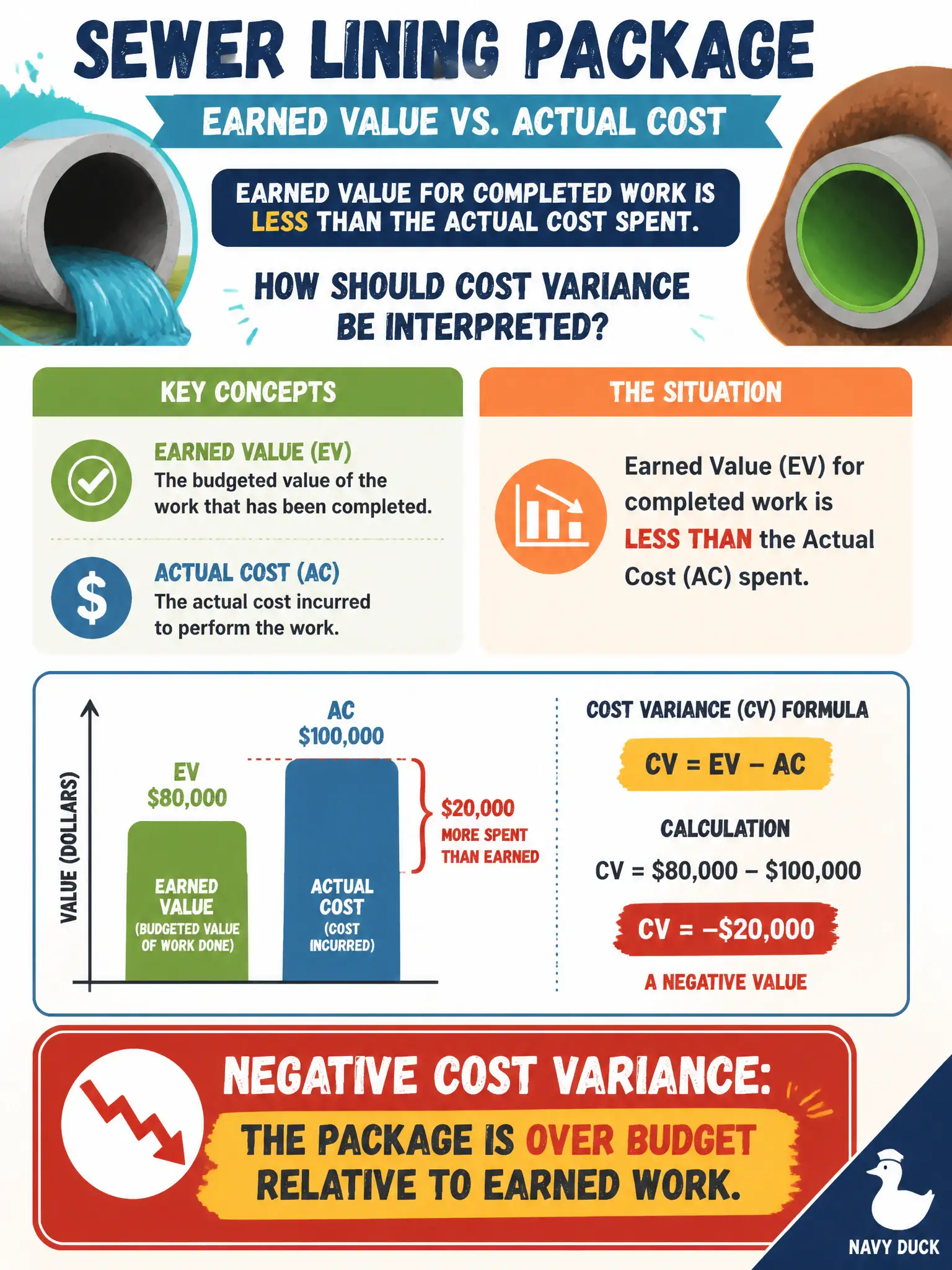
On a sewer lining package, earned value for completed work is less than the actual cost spent. How should cost variance be interpreted?
Select an answer to reveal the explanation.
Short Explanation
If you have spent more than the value you have earned, the wallet is underwater versus the work done—that is negative cost variance. Earned versus actual is the cost scoreboard, separate from the schedule scoreboard.
Full Explanation
On a sewer lining package where earned value for completed work is less than actual cost spent, cost variance is negative: the package is over budget relative to earned work. CV = EV − AC. When AC exceeds EV, the city is paying more for the work accomplished than the earned value represents.
Interpreting higher spending as positive cost variance reverses the definition—spending more than earned is not “under budget.” Calling the situation schedule variance only ignores that CV specifically uses EV and AC. Claiming zero variance whenever municipal contingency exists confuses the presence of reserves with current CV math; contingency may fund overruns but does not force CV to zero.
Exam caveat: Sign literacy for CV is essential. Associates must not let contingency accounting erase the meaning of EV versus AC.
Operational check: compute CV = EV − AC for the lining package, report overrun if negative, analyze drivers (productivity, pricing, rework), and decide on recovery or reserve drawdown through proper governance. Investigate whether EV measurement lags reality or true overruns exist before drawing contingency. Both problems need different management responses on sewer lining work.