
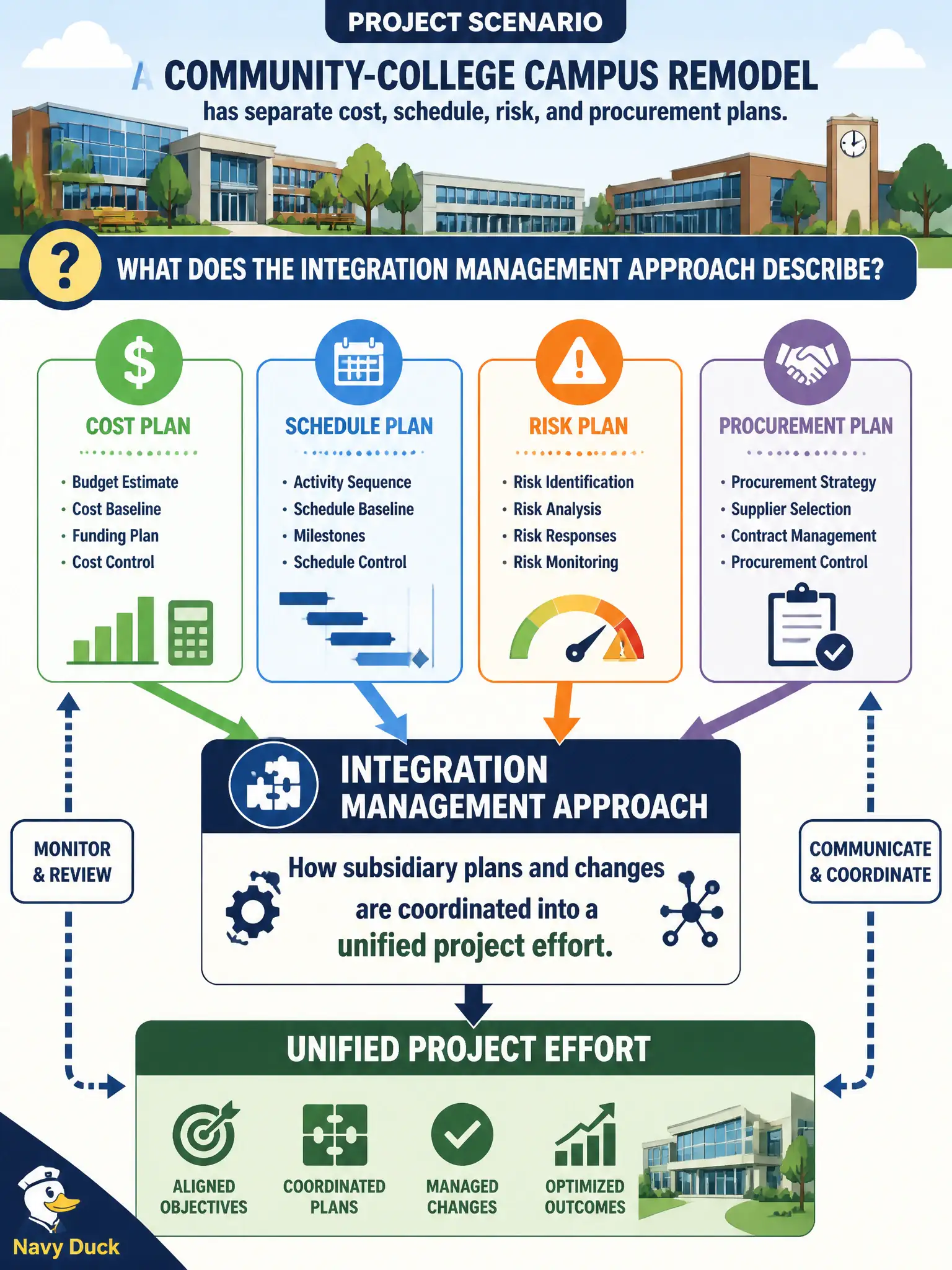
A community-college campus remodel has separate cost, schedule, risk, and procurement plans. What does the integration management approach describe?
Select an answer to reveal the explanation.
Short Explanation
Integration is the conductor for the remodel orchestra—cost, schedule, risk, and buying all play from the same score. The integration approach explains how those plans and any changes stay in sync instead of fighting each other.
Full Explanation
On a community-college campus remodel with separate cost, schedule, risk, and procurement plans, the integration management approach describes how subsidiary plans and changes are coordinated into a unified project effort. Integration is the glue across disciplines and baselines so the civic remodel does not optimize one plan while breaking another. Change reconciliation sits at the heart of that coordination.
Integration is not about deleting subsidiary plans once the first invoice is paid. Faculty syllabi do not replace the project management plan after kickoff. Banning change requests so plans never need reconciliation denies reality and disables controlled adaptation.
Exam caveat: CAPM predictive integration emphasizes unifying subsidiary components and managing cross-cutting changes. Associates should see integration as active coordination, not a document title alone.
Operational check: maintain a project management plan that references subsidiary plans, run integrated change control when impacts cross baselines, and verify cost, schedule, risk, and procurement documents stay aligned after each approved change. Hold a brief integration review whenever two or more subsidiary plans change in the same week. Campus remodels generate cross-impacts that single-plan owners may not see alone.