
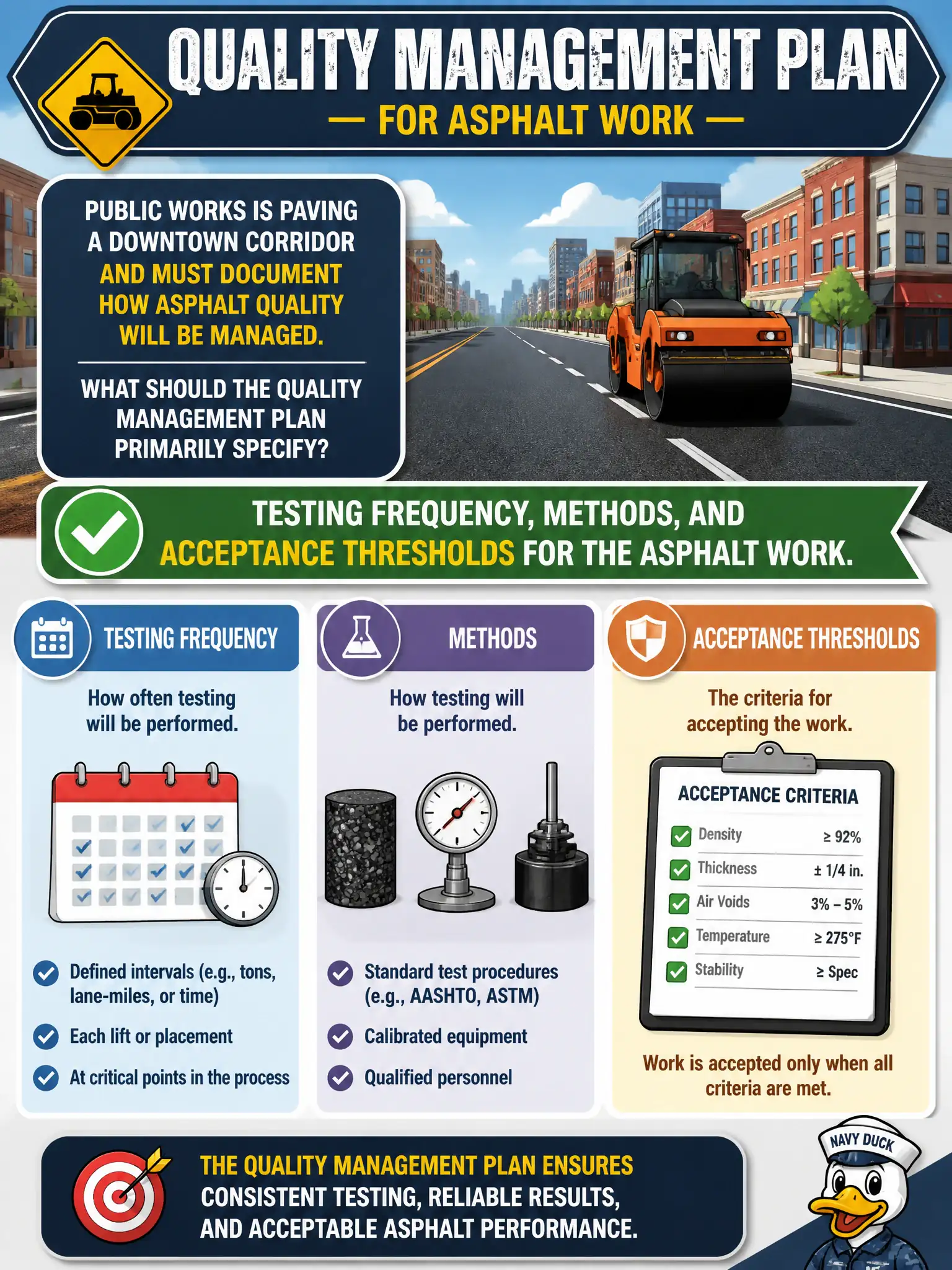
Public works is paving a downtown corridor and must document how asphalt quality will be managed. What should the quality management plan primarily specify for that work?
Select an answer to reveal the explanation.
Short Explanation
The quality management plan is the playbook for “how good is good enough” on the asphalt—how often you test, what you measure, and what pass/fail looks like. A guest list or weather trivia is not that playbook.
Full Explanation
Public works paving a downtown corridor should use the quality management plan primarily to specify testing frequency, methods, and acceptance thresholds for the asphalt work. Those elements turn quality intent into executable control on a civic pavement job. Without thresholds and methods, “quality” remains slogan-level.
A ribbon-cutting guest list and media talking points are communications/ceremony content, not asphalt quality controls. Final contractor payment percentage without test criteria is commercial closeout detail, not a quality plan core. Historical weather averages may inform scheduling risk but do not define asphalt acceptance testing.
Exam caveat: Associates should know what belongs in a quality management plan: how quality will be planned, assured, and controlled—including measurable acceptance criteria for work results.
Operational check: write asphalt test types, frequencies, labs/roles, and pass/fail thresholds into the quality management plan; train inspectors; and halt placement when thresholds fail per the defined response. Include roles for who samples, who tests, who accepts, and what happens on failure. Quality plans without response paths stall crews when asphalt tests fail mid-placement.