
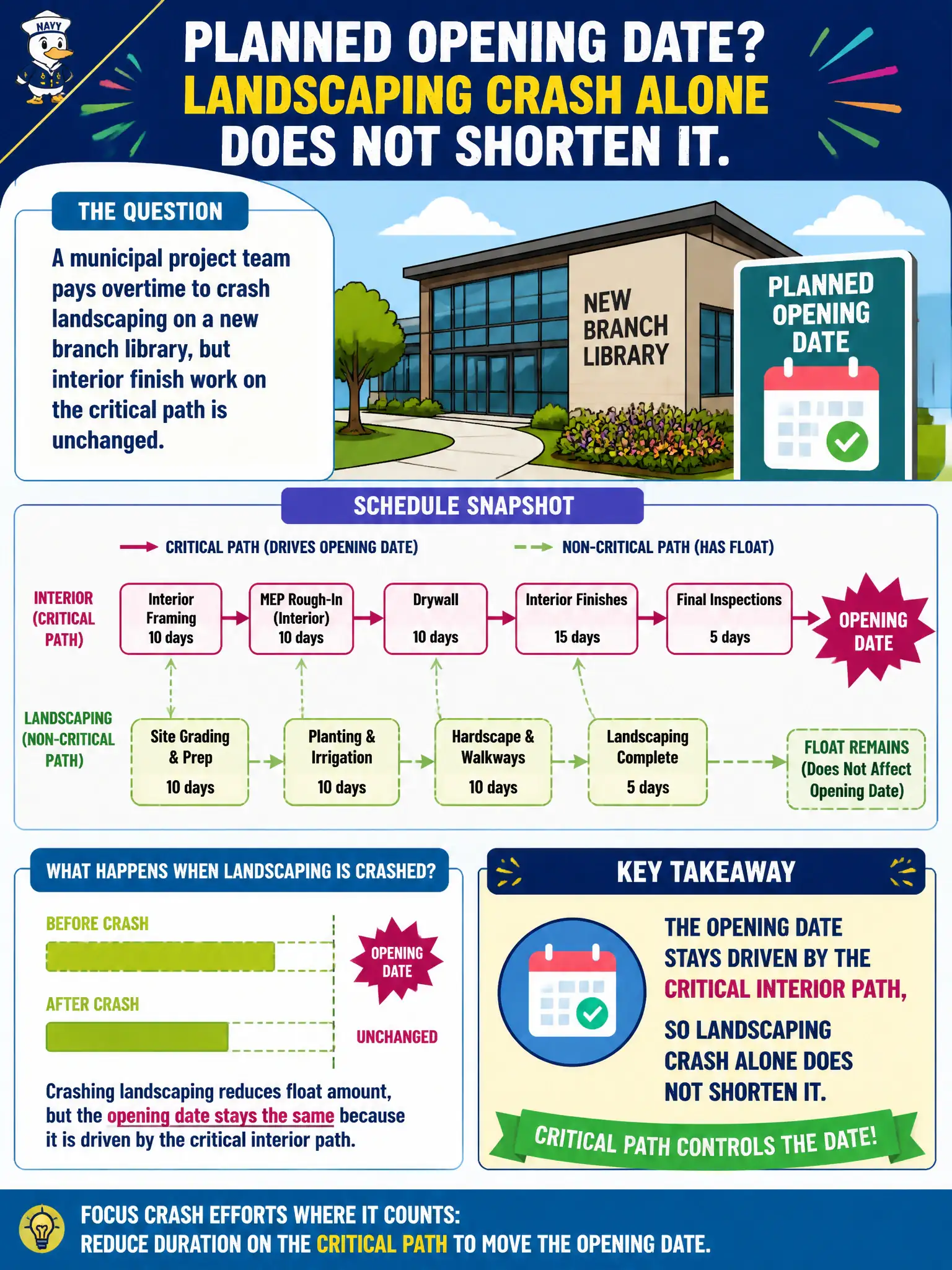
A municipal project team pays overtime to crash landscaping on a new branch library, but interior finish work on the critical path is unchanged. What should the team expect for the planned opening date?
Select an answer to reveal the explanation.
Short Explanation
Crashing the flower beds while the drywall chain is still the bottleneck is like speeding up the side street when the main bridge is closed. The library still opens when the critical interior work finishes.
Full Explanation
Paying overtime to crash landscaping on a new branch library while interior finish work on the critical path remains unchanged should not move the planned opening earlier. Crashing shortens duration only when applied to critical-path activities. Landscaping crash alone spends money without buying opening-date improvement if interiors still gate completion.
Expecting the opening to move earlier by the same number of days landscaping was crashed misapplies crashing to a noncritical path. Expecting the opening to move later because overtime always consumes contingency confuses cost tactics with schedule directionality. Claiming the opening becomes unpredictable until the cost baseline is also crashed mixes cost rebasing with schedule logic unnecessarily.
Exam caveat: CAPM schedule compression literacy requires applying fast-tracking or crashing to critical work. Noncritical crashing is a common distractor that wastes budget on civic projects.
Operational check: before approving overtime, verify whether the targeted activities are critical; if interiors are critical, crash or resequence those activities instead, and leave landscaping float alone unless benefits other than opening date justify the spend.