
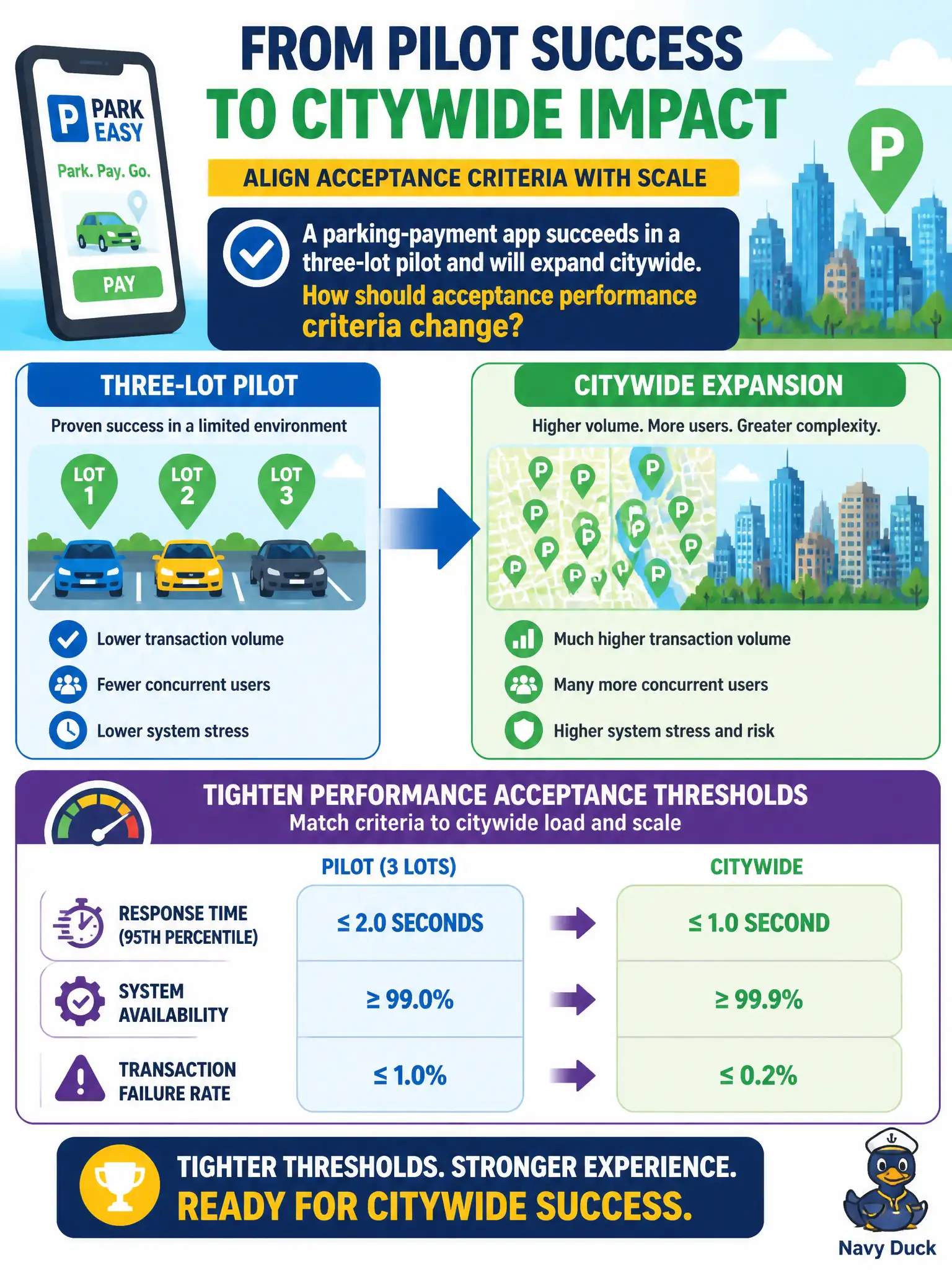
A parking-payment app succeeds in a three-lot pilot and will expand citywide. How should acceptance performance criteria change?
Select an answer to reveal the explanation.
Short Explanation
Pilot lots are a quiet road; citywide is rush hour. Tighten the performance acceptance bar for the bigger load—what passed for three lots may fail for three hundred.
Full Explanation
When a parking-payment app succeeds in a three-lot pilot and will expand citywide, acceptance performance criteria should tighten to match citywide load and scale. Pilot thresholds validated on small volume are not automatically safe for citywide concurrency, peak events, and broader network conditions. Civic scale-up without retuned performance acceptance risks citywide failure after a misleadingly successful local pilot.
Keeping pilot-only thresholds forever because they already passed once fails conceptually because scale changes the performance risk profile the city must accept. Removing all performance criteria after the pilot celebration fails because expansion increases, not eliminates, the need for performance gates. Loosening criteria citywide so slower response times always pass fails because expansion is the moment to strengthen, not weaken, performance acceptance for residents citywide.
Exam caveat: Scale-out from pilot to citywide requires retuning performance acceptance to the larger load, not reusing or relaxing pilot thresholds. Operational check: redefine parking-payment performance acceptance for citywide load projections, run scaled performance tests, compare against the tighter thresholds, and block citywide expansion until those criteria pass.