
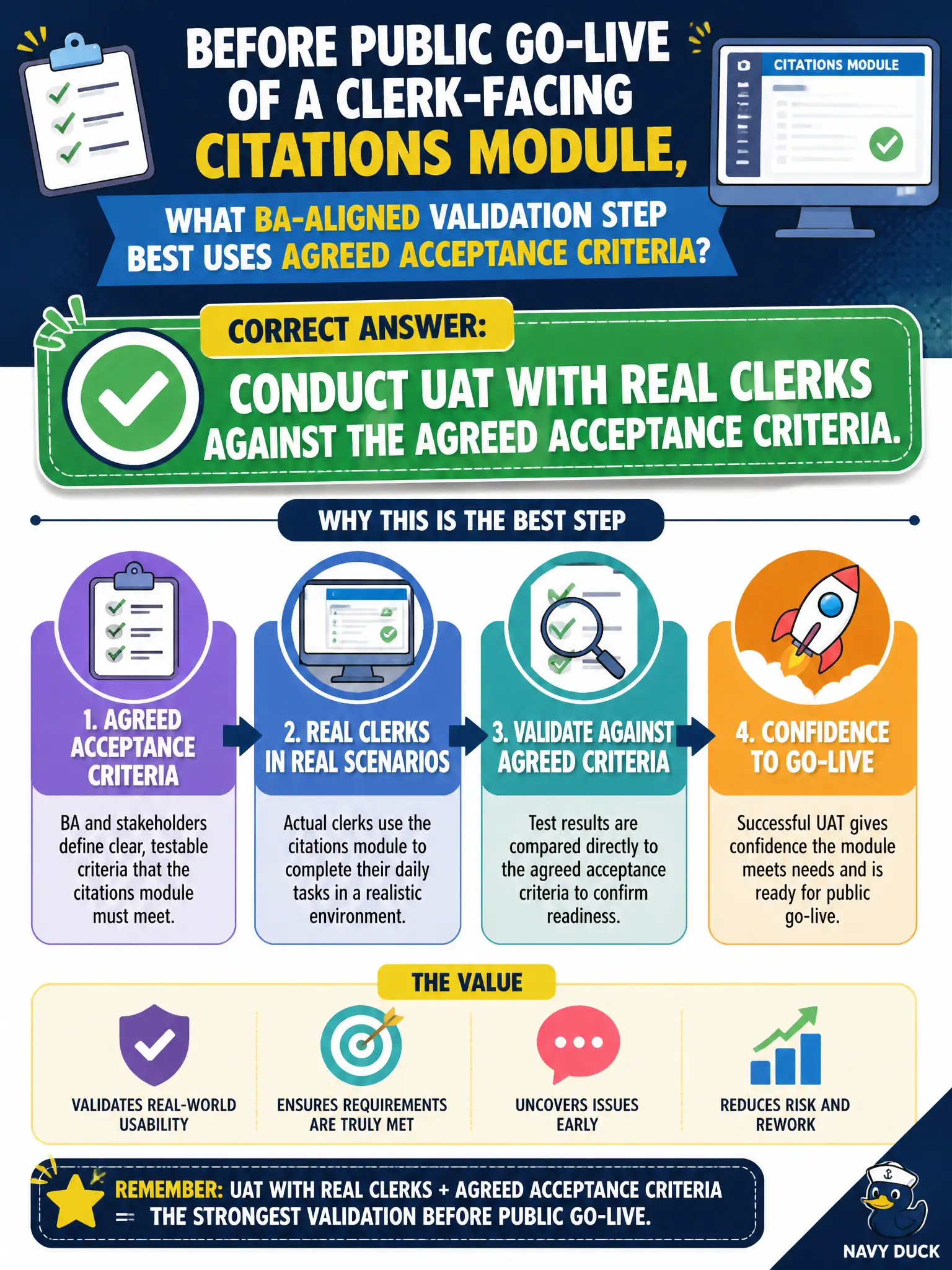
Before public go-live of a clerk-facing citations module, what BA-aligned validation step best uses agreed acceptance criteria?
Select an answer to reveal the explanation.
Short Explanation
Put real clerks on the citations screens and run the acceptance checklist before the public sees it. That’s UAT earning its keep—unit tests alone aren’t the whole story.
Full Explanation
Before public go-live of a clerk-facing citations module, the BA-aligned validation step that best uses agreed acceptance criteria is conducting UAT with real clerks against those criteria. Real users exercising real workflows provide acceptance evidence that unit tests alone cannot. Civic clerk tools should not go public without that validation when acceptance criteria exist and operational accuracy matters for residents and due process.
Skipping user checks because unit tests already exist fails conceptually because unit tests do not replace user acceptance of operational clerk workflows. Launching publicly first and collecting criteria feedback afterward only fails because public launch is too late to be the first acceptance gate for clerk-facing defects. Asking only vendors to accept criteria without municipal users fails because vendors are not the operational users of the citations module day to day.
Exam caveat: UAT against agreed acceptance criteria with real users is a core readiness practice for civic operational modules. Operational check: schedule clerk UAT for the citations module mapped to acceptance criteria, log defects, resolve blockers, obtain acceptance sign-off, and only then approve public go-live.