
Mid-project, the city council changes ordinance fees for business licenses. What should happen to related acceptance criteria?
Select an answer to reveal the explanation.
Short Explanation
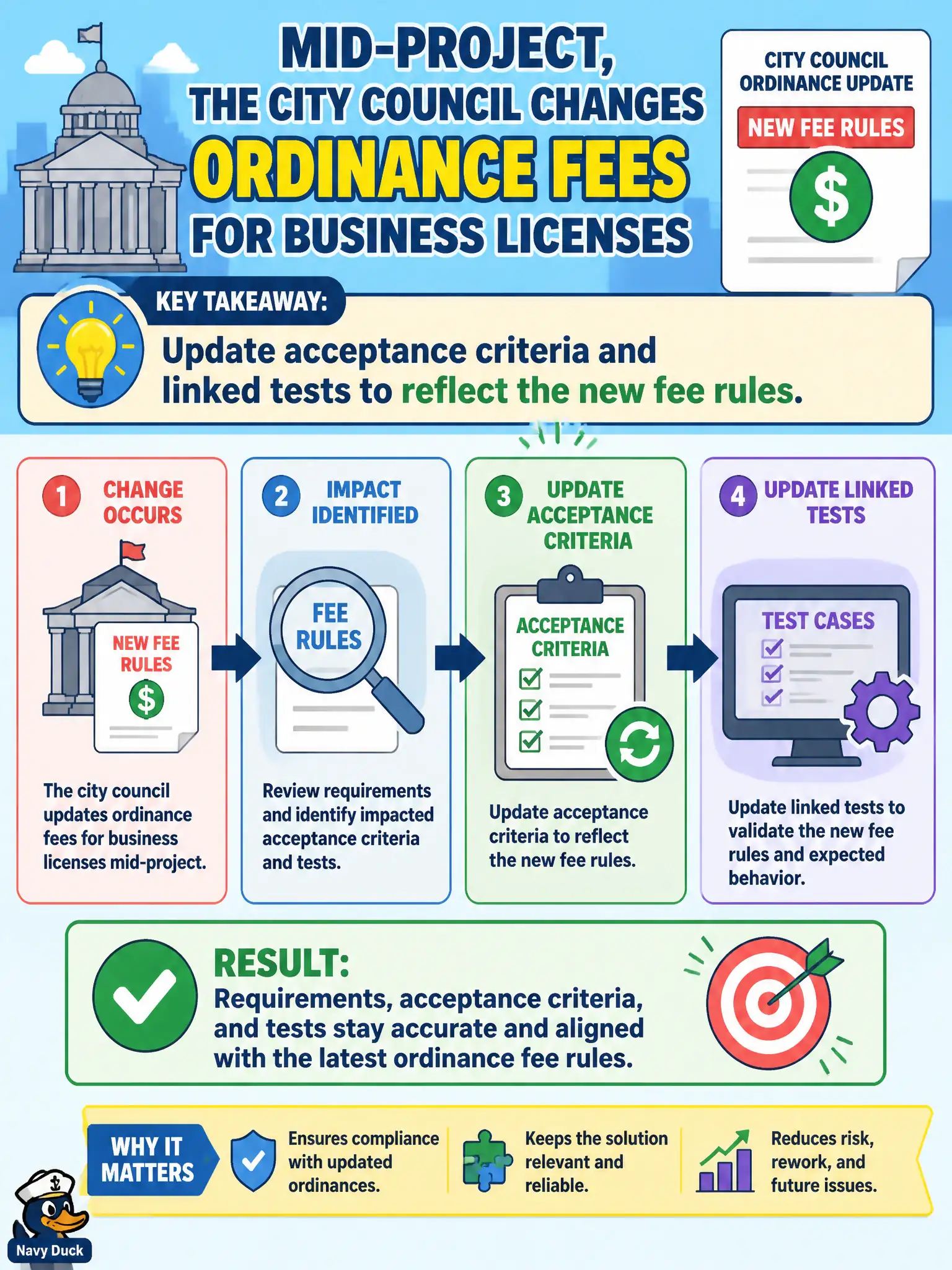
When the fee ordinance flips, the acceptance checklist flips with it—old dollar amounts would pass the wrong test. Situation changed, criteria change.
Full Explanation
When mid-project the city council changes ordinance fees for business licenses, related acceptance criteria and linked tests should be updated to reflect the new fee rules. Acceptance criteria are living verification contracts tied to current rules; leaving them stale guarantees false passes against obsolete law. Civic fee changes must flow into testable acceptance quickly so clerks do not collect the wrong amounts under a green test suite.
Leaving old fee criteria unchanged to protect the original sprint plan fails conceptually because protecting a plan date cannot justify verifying the wrong fees. Hiding the ordinance change from the BA until after go-live fails because concealment creates noncompliant licensing behavior at launch and surprises operations. Converting fee checks into optional cosmetic preferences fails because fees are substantive legal requirements, not visual preferences that can be waved away.
Exam caveat: When rules change, update acceptance criteria and tests—do not preserve obsolete criteria for schedule comfort. Operational check: revise business-license fee acceptance criteria to the new ordinance amounts, update automated or UAT scripts, execute them, and confirm RTM or backlog links reflect the change before the next release candidate.