
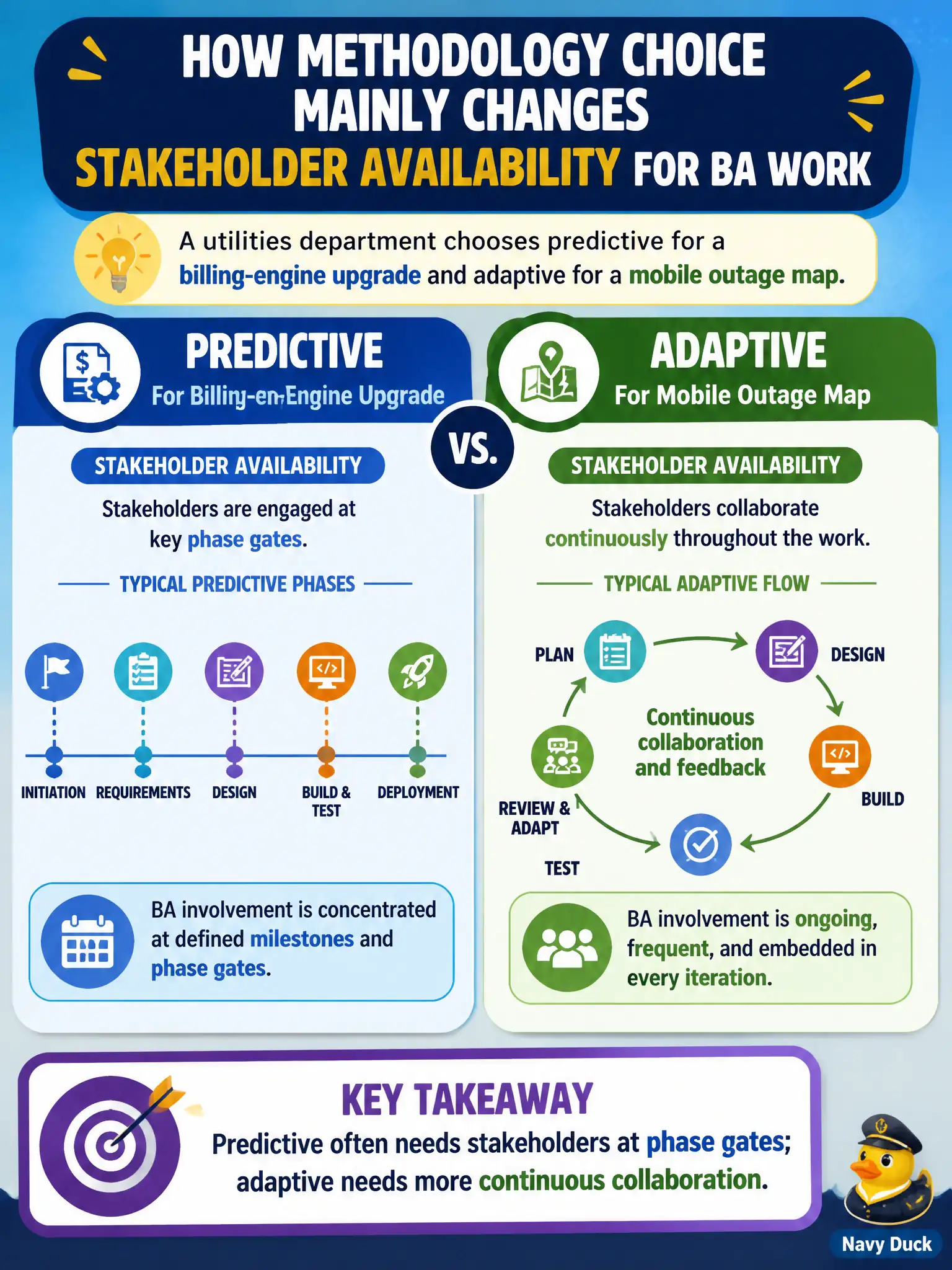
A utilities department chooses predictive for a billing-engine upgrade and adaptive for a mobile outage map. How does methodology choice mainly change stakeholder availability for BA work?
Select an answer to reveal the explanation.
Short Explanation
Methodology sets the meeting rhythm. Predictive calls people to the table at big gates; adaptive needs them popping in regularly. Same stakeholders, different BA calendar.
Full Explanation
When a utilities department chooses predictive for a billing-engine upgrade and adaptive for a mobile outage map, methodology choice mainly changes stakeholder availability patterns for BA work: predictive often needs stakeholders at phase gates, while adaptive needs more continuous collaboration. Stakeholder time is still required in both; the calendar shape differs. Civic BA planning should set expectations accordingly so sponsors do not under-allocate people to adaptive streams.
Claiming stakeholders are never needed once the charter is signed fails conceptually because both approaches continue to need domain input for requirements quality. Claiming adaptive work needs stakeholders only at annual budget hearings fails because adaptive delivery depends on frequent collaboration, not annual appearances. Claiming predictive forbids workshops while adaptive forbids phase reviews fails because both techniques can appear; the dominant pattern differs, not absolute bans.
Exam caveat: Life-cycle choice changes stakeholder engagement cadence more than it eliminates stakeholder need. Operational check: for billing-engine predictive gates, schedule formal stakeholder reviews; for the outage-map adaptive stream, book recurring collaboration time with operations SMEs; and publish both expectations in the engagement plan.