
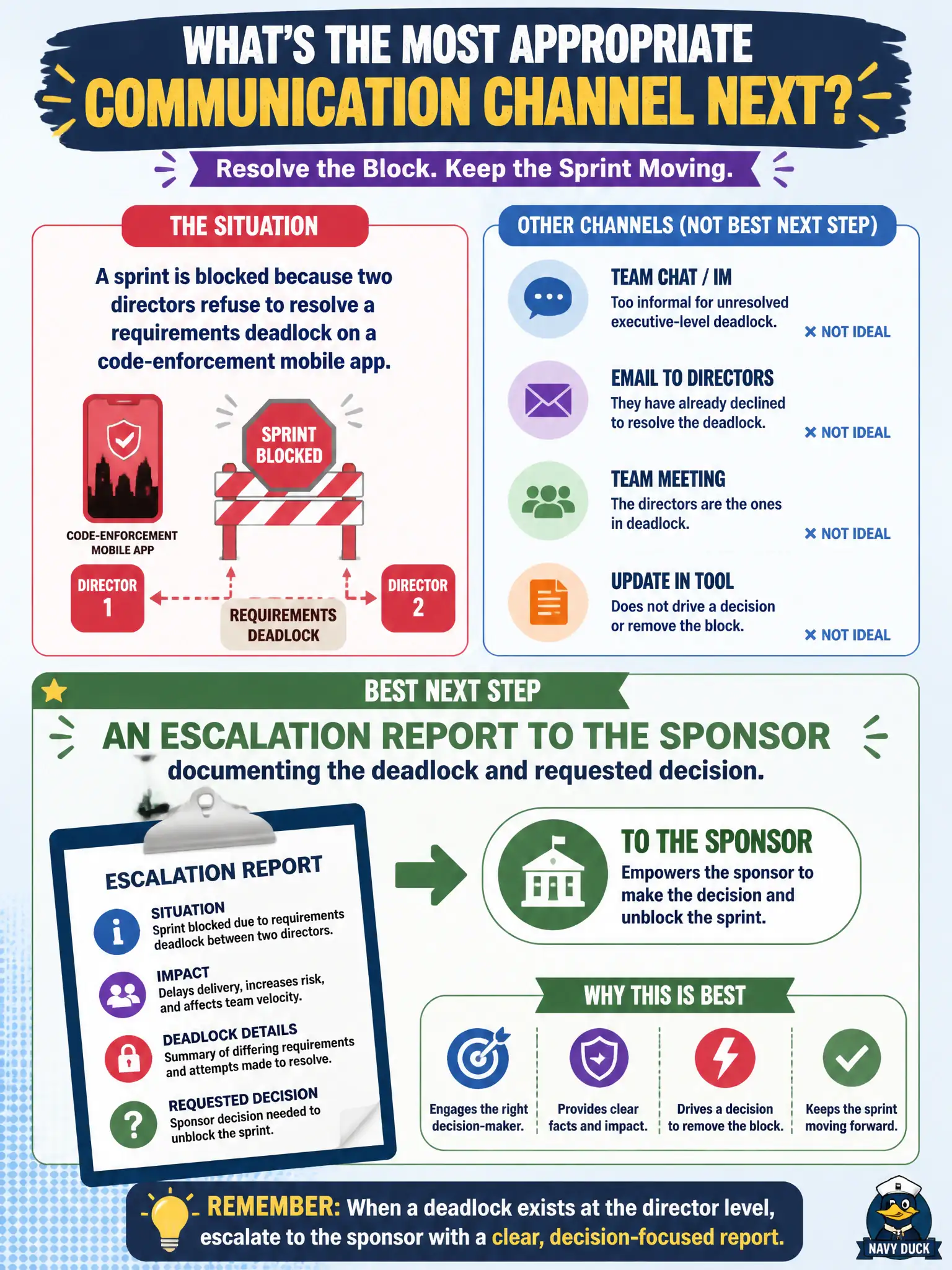
A sprint is blocked because two directors refuse to resolve a requirements deadlock on a code-enforcement mobile app. What communication channel is most appropriate next?
Select an answer to reveal the explanation.
Short Explanation
When two directors dig in and the sprint stalls, don’t keep whispering in the same thread—write it up and escalate to the sponsor who can break the tie.
Full Explanation
When a sprint is blocked because two directors refuse to resolve a requirements deadlock on a code-enforcement mobile app, the appropriate next communication channel is an escalation report to the sponsor documenting the deadlock and the decision requested. Escalation converts a stalled peer conflict into a governed decision with an owner who can break the tie. Continuing informal pings to the same stuck parties rarely unlocks civic delivery.
Another informal chat ping with no escalation path fails conceptually because repeating a failed informal channel does not create decision authority. Closing the sprint early and hiding the deadlock from governance fails because concealment removes oversight and leaves the underlying conflict unresolved for the next iteration. A public social-media poll asking residents to break the tie fails because public polls are not a substitute for internal requirements governance between directors on operational enforcement workflows.
Exam caveat: CAPM communication and escalation paths exist precisely for decision deadlocks that block delivery. Operational check: draft a concise escalation to the sponsor stating the contested requirements, impacts on the sprint, and the decision needed by a date; send it through the project’s escalation path and pause conflicting build work until the sponsor decides.