
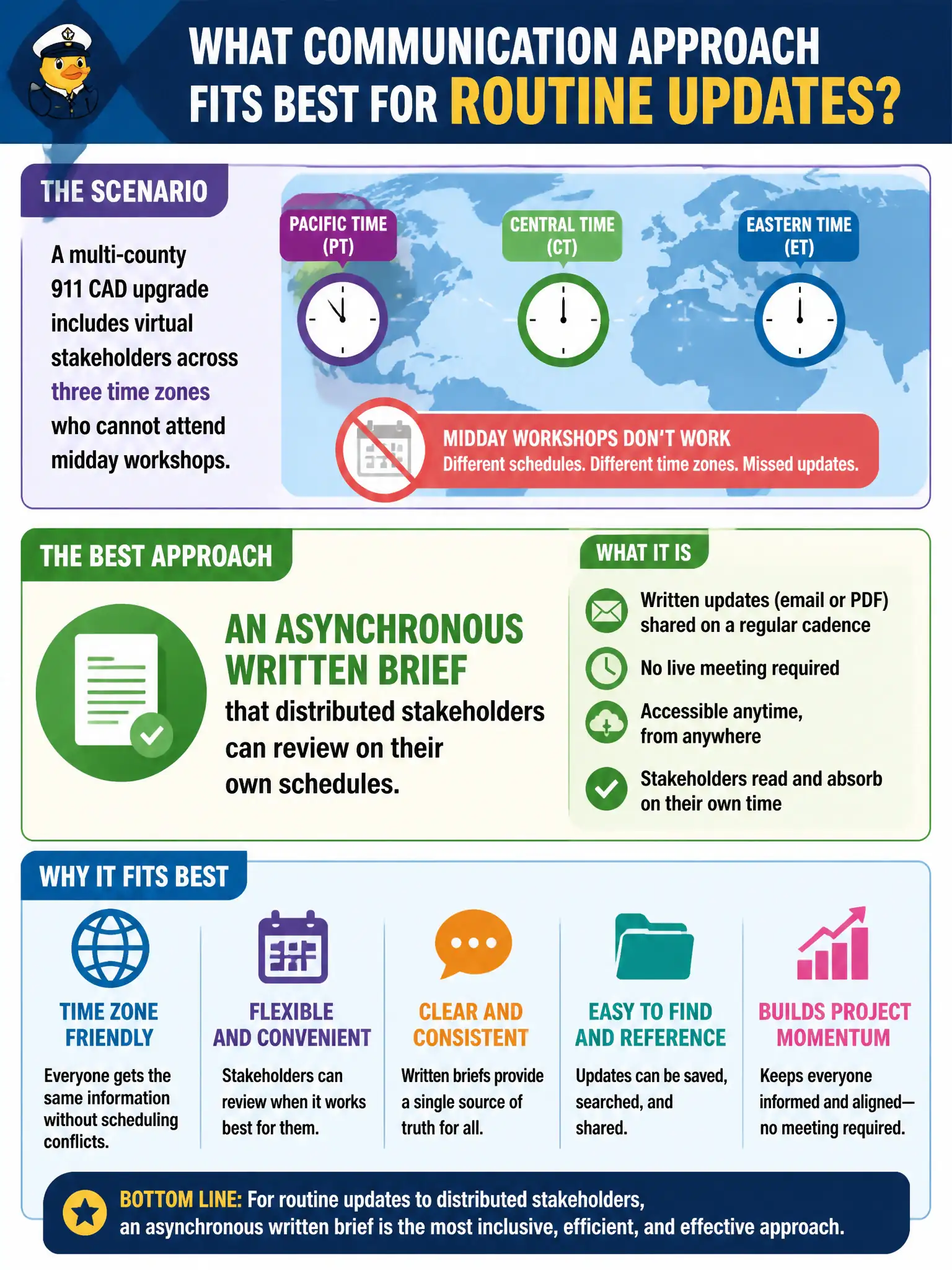
A multi-county 911 CAD upgrade includes virtual stakeholders across three time zones who cannot attend midday workshops. What communication approach fits best for routine updates?
Select an answer to reveal the explanation.
Short Explanation
Folks in three counties can’t all hop on at lunch. A clear async written brief lets distributed stakeholders catch up without turning every update into a calendar war.
Full Explanation
A multi-county 911 CAD upgrade with virtual stakeholders across three time zones cannot rely on midday workshops as the only routine update channel. An asynchronous written brief that distributed stakeholders can review on their own schedules fits routine updates because it preserves inclusion without forcing impossible synchronous attendance. Civic multi-jurisdiction programs succeed when communication respects geography and duty schedules.
Only synchronous noon workshops with no written follow-up fails conceptually because absentees across time zones are systematically excluded and lack a durable update record. Unscheduled phone blasts that require immediate answers fail because they are interruptive, inequitable across shifts, and poor as a standing update mechanism. In-person hallway conversations limited to the host county’s office fail because they exclude remote counties and create an insider information channel that undermines multi-county governance.
Exam caveat: Associates should choose async written updates for distributed routine status while reserving sync workshops for decisions that truly need dialogue. Operational check: establish a recurring asynchronous CAD upgrade brief with a clear owner and review-by date, distribute it to all county stakeholders, and reserve live workshops for contested requirements rather than every status cycle.