
When shaping near-term scope for an adaptive municipal licensing portal, which inputs should the team emphasize rather than relying only on a frozen statement of work?
Select an answer to reveal the explanation.
Short Explanation
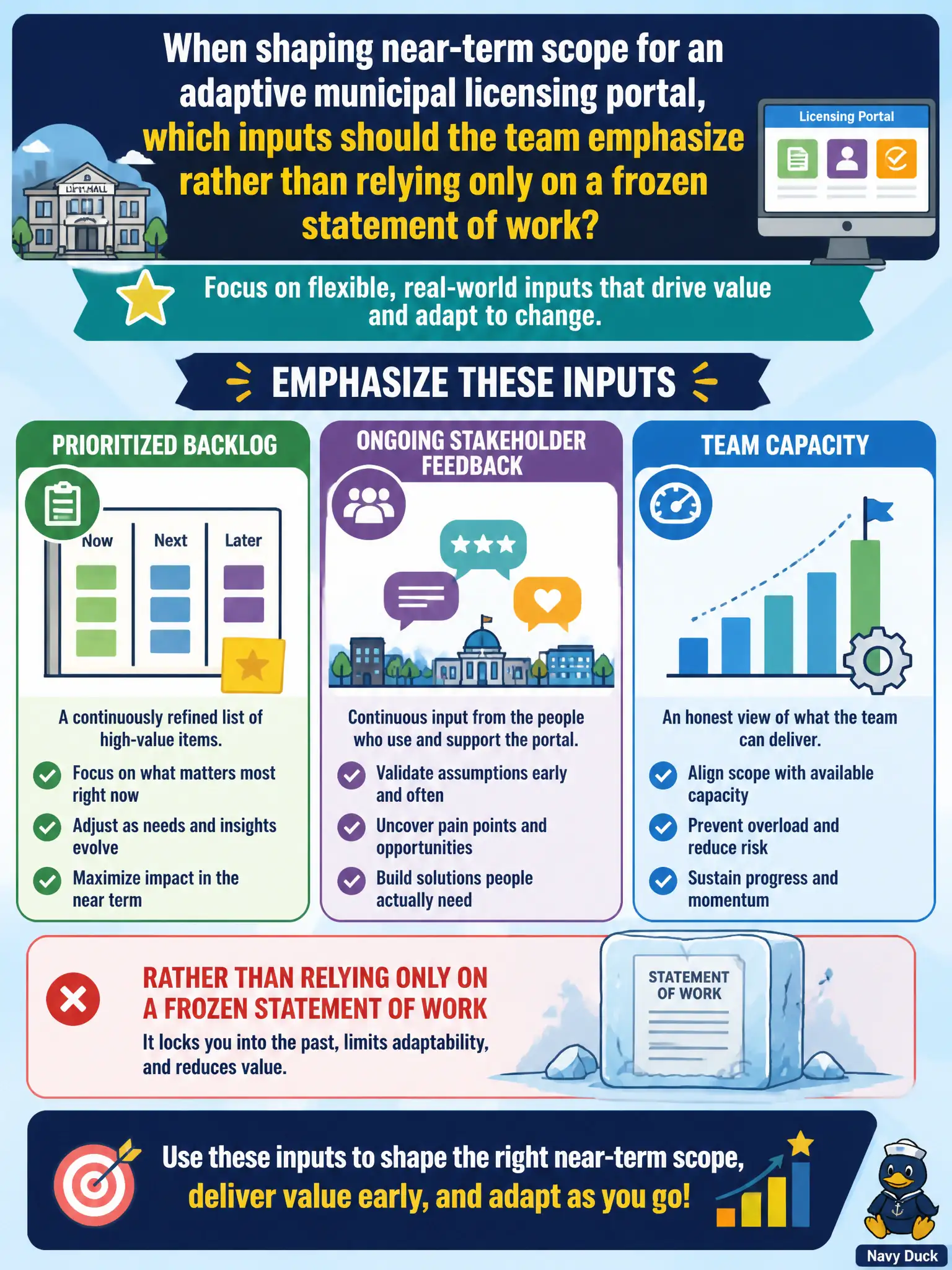
Adaptive scope is more like a living grocery list than a sealed five-year pantry contract — prioritized backlog, fresh stakeholder feedback, and how much the team can carry this cycle. A frozen SOW alone starves learning. Capacity keeps the list honest.
Full Explanation
When shaping near-term scope for an adaptive municipal licensing portal, the team should emphasize a prioritized backlog, ongoing stakeholder feedback, and team capacity rather than relying only on a frozen statement of work. Adaptive scope determination draws on ordered product needs, learning from stakeholders, and how much work the team can complete in the next cycle so near-term scope can emerge and adjust responsibly.
Relying only on a multi-year SOW that bans all backlog changes fails conceptually because forbidding backlog evolution contradicts adaptive practice when licensing needs shift. Relying only on a facilities lease document with no product priorities fails because a lease is not a product scope ordering tool. Relying only on a vendor holiday calendar without stakeholder feedback fails because calendars constrain availability but do not define or prioritize citizen-facing licensing scope.
Exam caveat: Adaptive near-term scope inputs are backlog, feedback, and capacity—not single frozen contracts or unrelated facilities/vendor documents as sole sources. Operational check: refine the licensing portal backlog with stakeholder input, check capacity for the next iteration, select a realistic slice, and revisit priorities when feedback arrives.