
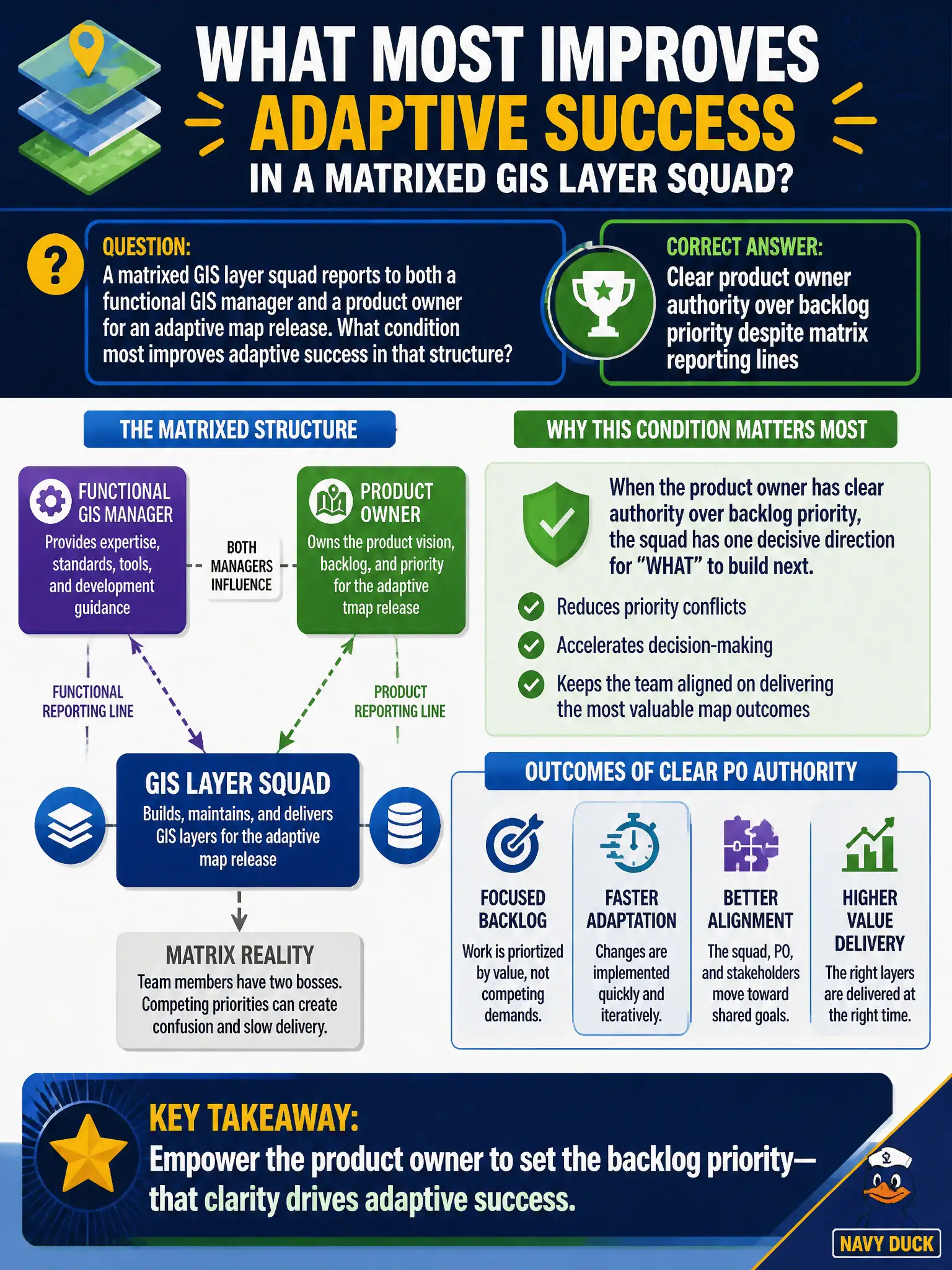
A matrixed GIS layer squad reports to both a functional GIS manager and a product owner for an adaptive map release. What condition most improves adaptive success in that structure?
Select an answer to reveal the explanation.
Short Explanation
In a matrix, the GIS squad can still move fast if one product owner clearly owns what gets built next — otherwise two bosses yank the backlog like a tug-of-war rope. Clear product authority is the glue. Undefined priority or silencing the product owner stalls adaptive work.
Full Explanation
In a matrixed GIS layer squad that reports to both a functional GIS manager and a product owner for an adaptive map release, adaptive success most improves when product owner authority over backlog priority remains clear despite matrix reporting lines. Adaptive flow depends on an unambiguous ordering of work and acceptance direction; conflicting daily overrides from multiple bosses stall delivery. Clear product ownership of priority is the condition that keeps the civic map release moving.
Leaving backlog priority authority undefined so every manager overrides daily fails conceptually because undefined rights create thrash and destroy focus. Banning the product owner from speaking to stakeholders fails because product ownership requires stakeholder engagement for value and acceptance. Treating the functional manager as the only voice on every story acceptance fails by collapsing product acceptance into functional line control and removing the product role adaptive methods rely on.
Exam caveat: Matrix structures are common in government; CAPM suitability thinking still requires clarity of product priority authority for adaptive teams. Operational check: publish a working agreement that the product owner orders the GIS backlog and accepts stories, while the functional manager supports capacity and standards; escalate conflicts through governance rather than silent dual command.