
A project lead is turning a proof of concept into a governed production workflow. What is the best way to handle change management while staying aligned with the certification objectives?
Select an answer to reveal the explanation.
Short Explanation and Infographic
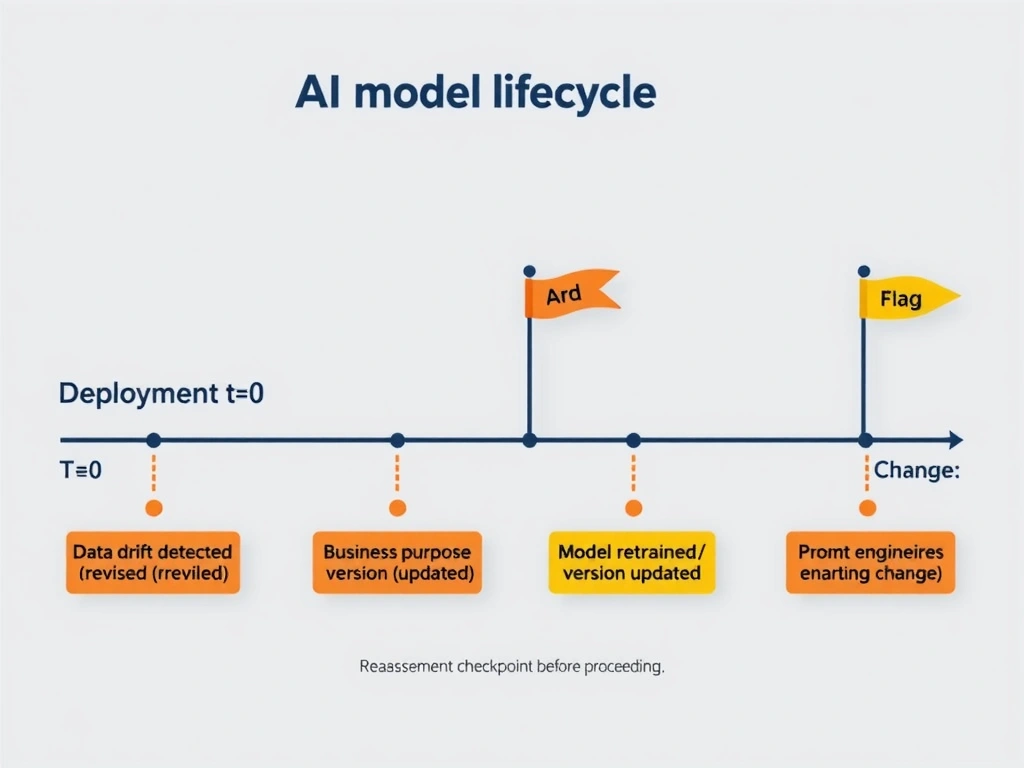
AI models aren't like static software—they're living systems that change over time. When new data flows in, the model drifts. If the business need shifts, the model might not fit anymore. When you upgrade to a new version or change a prompt, it's a new model that needs review. Constant reassessment keeps governance aligned with reality!
Full explanation below image
Full Explanation
The correct answer is d. AI systems require continuous governance because material changes trigger re-evaluation: data drift, shifts in business purpose, version upgrades, prompt modifications (in generative AI), or changed risk conditions. Each significant change warrants reassessment before continued production use. Option a (permanent approval) ignores the dynamic nature of AI and causes governance to lag reality. Option b (ignoring prompt changes) is dangerous—prompt modifications alter model behavior just like code changes, requiring reassessment. Option c (monitoring only the first version) misses risks introduced by updates. IBM watsonx.governance requires lifecycle management with periodic reassessment gates tied to material changes in data, purpose, version, and risk factors.