
During a design review, an architect asks which choice best matches the IBM guidance. What is the best way to handle roles and permissions while staying aligned with the certification objectives?
Select an answer to reveal the explanation.
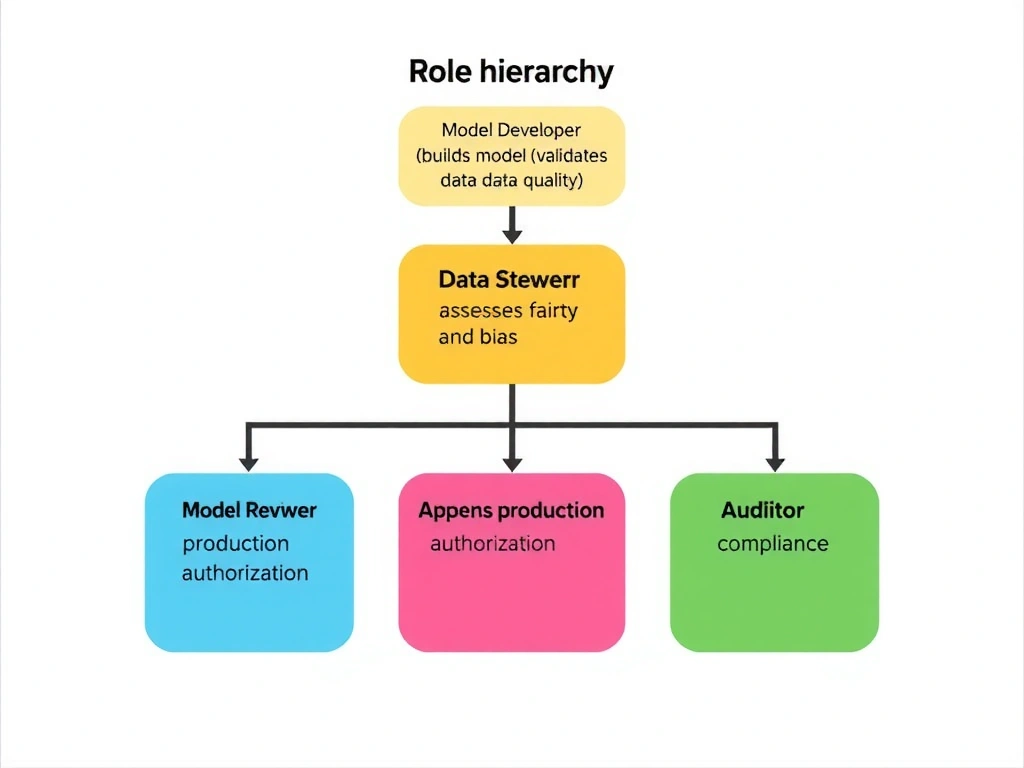
Short Explanation and Infographic
Governance roles are like security in a bank vault—the teller, the manager, and the auditor each have different keys and responsibilities. Nobody should have all the keys! Separation of duties means the person who builds the model doesn't approve it, and someone independent watches over both. That's how you prevent rubber-stamping and conflicts of interest!
Full explanation below image
Full Explanation
The correct answer is b. Proper role-based access control requires assigning distinct governance roles (model developer, reviewer, approver, monitor) to different people based on their responsibilities. Separation of duties prevents conflicts of interest—the model builder should not approve their own work. Least privilege means each role has only the permissions needed for their job. Option a (everyone is owner) eliminates accountability and creates chaos. Option c (shared admin account) breaks auditability and violates compliance standards. Option d (erasing evidence) destroys governance trails and enables fraud. IBM watsonx.governance enforces role-based permissions with separation of duties and least privilege to maintain control integrity and audit trails.