
A team is preparing a production rollout and needs to avoid a design mistake. What is the best way to handle trustworthy AI pillars while staying aligned with the certification objectives?
Select an answer to reveal the explanation.
Short Explanation and Infographic
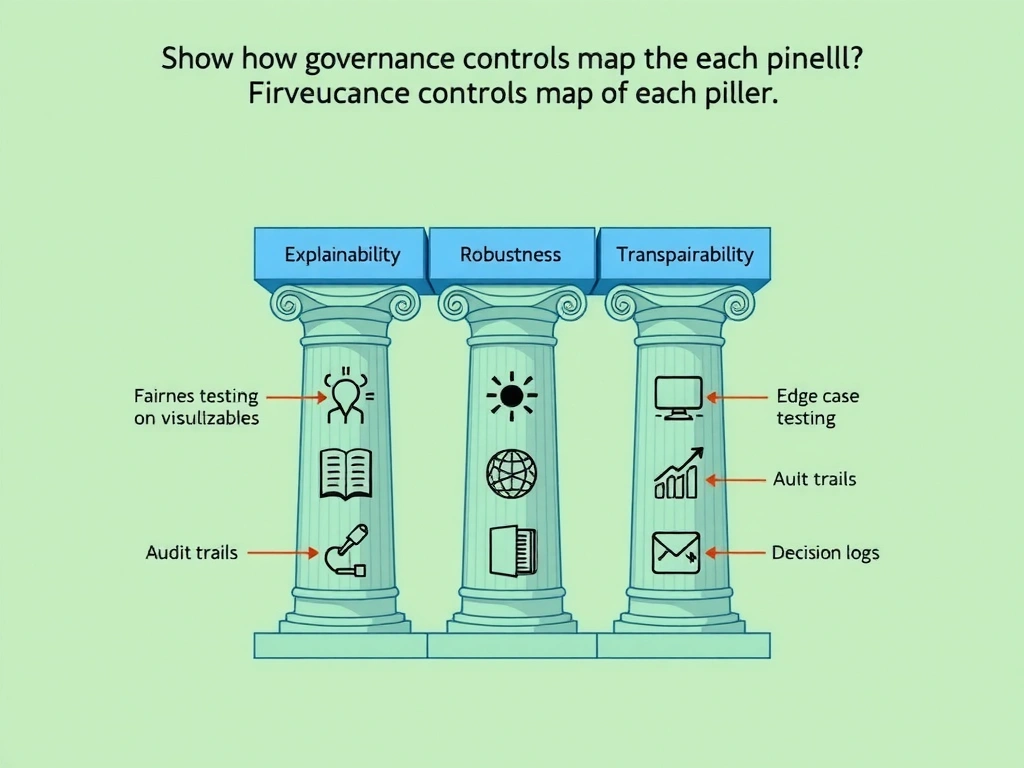
Trustworthy AI has five pillars—think of them like the structural supports in a bridge. Fairness prevents bias, explainability builds trust, robustness handles edge cases, transparency shows what's happening, and accountability means someone owns the outcomes. Use all five pillars, not just accuracy, or your governance will collapse when stress tests arrive!
Full explanation below image
Full Explanation
The correct answer is a. The five trustworthy AI pillars—fairness, explainability, robustness, transparency, and accountability—provide a comprehensive framework for AI governance that goes beyond traditional model metrics. These pillars address regulatory, ethical, and operational risks. Option b (accuracy only) misses bias, explainability, and robustness concerns that regulators and users care about. Option c (dashboards only) ignores the AI model itself. Option d (delegating accountability to vendors) violates the principle that the organization deploying AI retains governance responsibility. IBM watsonx.governance aligns all controls to these five pillars, ensuring balanced risk management across fairness, explainability, robustness, transparency, and accountability dimensions.