
A team is preparing a production rollout and needs to avoid a design mistake. The team is focused on inventory accountability. Which recommendation is most appropriate?
Select an answer to reveal the explanation.
Short Explanation and Infographic
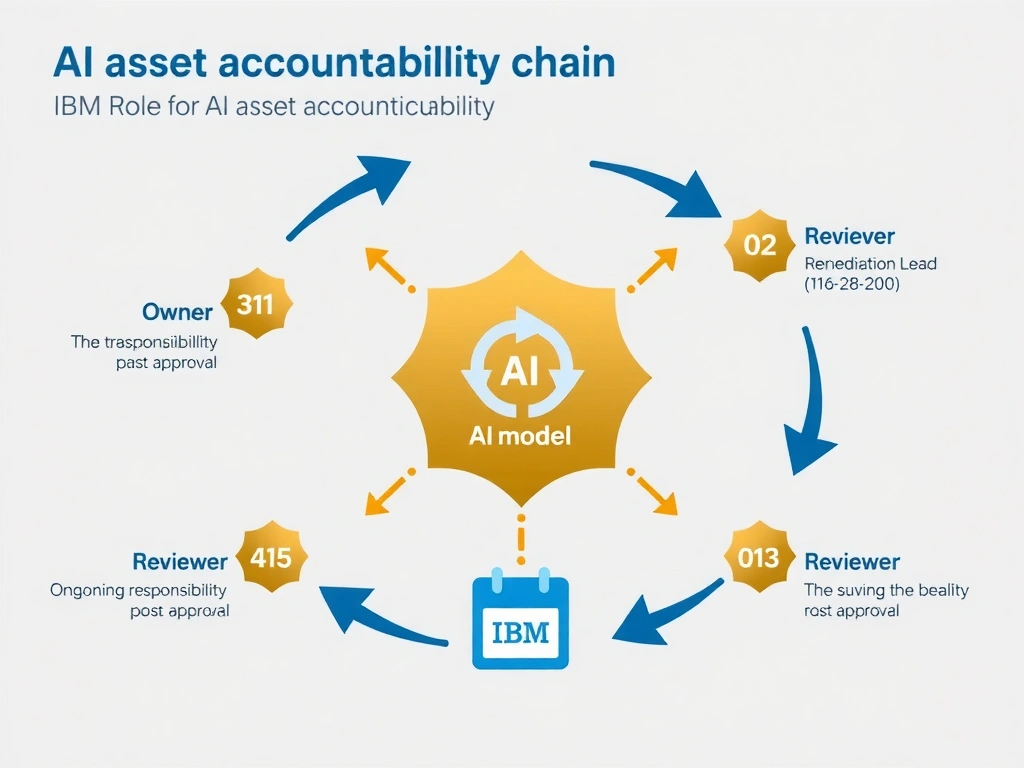
Inventory accountability works like a chain of custody in a legal case — every handoff is documented with a named person, a date, and a clear record of what was done. IBM watsonx.governance requires that owners and reviewers remain on the hook for updates, decisions, and fixing problems — not just at the moment of approval but throughout the model's operational life. Anonymous owners and expiring accountability are the fastest way to orphan a high-risk AI system with no one willing to own the remediation. Name the owner and the owner stays the owner — that's how governance holds!
Full explanation below image
Full Explanation
The correct answer is C. Keep owners and reviewers accountable for updates, decisions, and remediation actions. IBM's Define and Govern AI Use Case Inventory objective requires sustained accountability throughout the AI asset lifecycle, not just at the point of initial registration or deployment approval. Named owners are responsible for keeping inventory records current as models evolve, ensuring that alerts are acted upon, and completing any remediation tasks that arise from monitoring findings. Option A is incorrect because allowing ownership to expire after approval creates a governance gap: once a model is deployed, it still needs ongoing oversight, and if ownership lapses, no one is formally responsible for responding to drift alerts, fairness violations, or regulatory changes. Option B is incorrect because anonymous ownership of sensitive systems defeats the core accountability principle — in an audit or incident response scenario, you cannot trace decisions or corrective actions to individuals, which undermines both regulatory defensibility and organizational learning. Option D is incorrect because avoiding remediation task assignment leaves identified problems unresolved — governance is not just about detecting issues but about driving them to closure through assigned, tracked actions. IBM's AI Use Case Inventory framework explicitly requires named accountable parties at every stage.