
A consultant is advising a customer that wants a scalable implementation. For IBM Certified watsonx Governance Lifecycle Advisor, the topic is generative AI evaluation. What should the team do?
Select an answer to reveal the explanation.
Short Explanation and Infographic
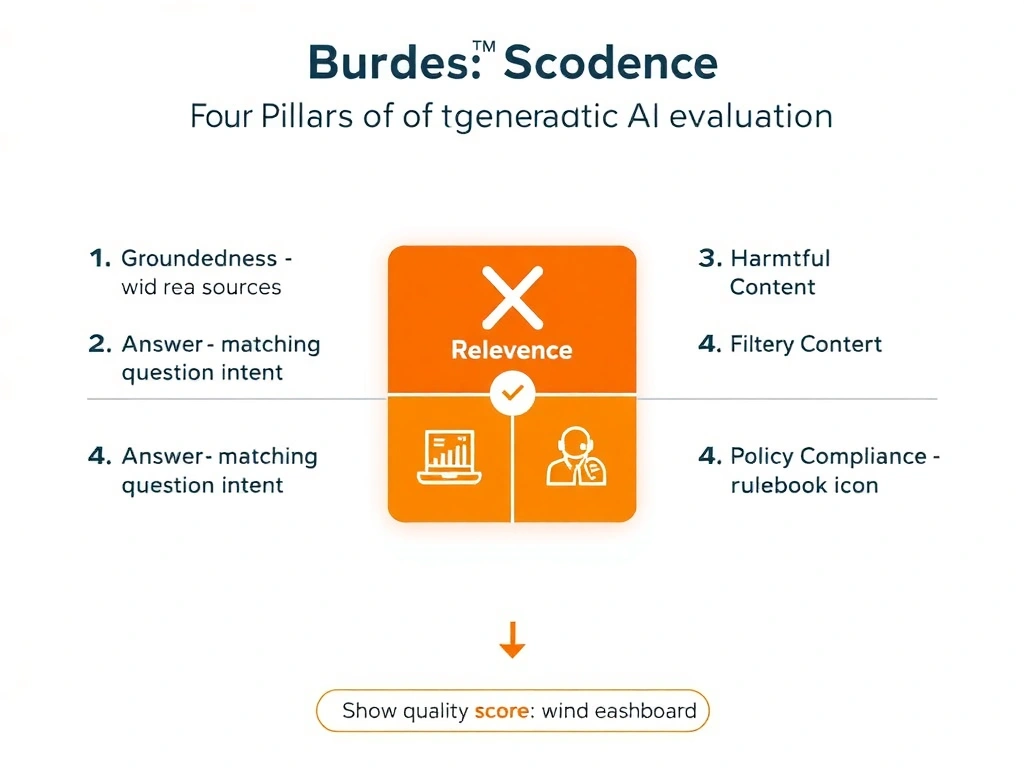
Generative AI is amazing but also risky—it can confidently make up facts that sound plausible (hallucination). Smart evaluation means checking whether answers are grounded in real sources (not invented), whether they're actually relevant to the question, whether they contain harmful stereotypes or misinformation, and whether they align with your policies. Think of it like fact-checking before publishing—it takes discipline, but it's how you maintain trust in your AI.
Full explanation below image
Full Explanation
The correct answer is c. Comprehensive evaluation of generative AI systems must assess groundedness (are answers rooted in real data/sources or hallucinated?), relevance (does the answer address the question?), harmful content (bias, misinformation, inappropriate material), and policy compliance (does the output align with organizational standards?). These dimensions together determine whether the system is safe for production. Option a is naive because answer length is irrelevant to quality; a brief, grounded answer is superior to a verbose hallucination. Option b is dangerous because source grounding is critical in enterprise contexts; if users cannot verify where information came from, they have no basis to trust it, and the system becomes unreliable. Option d is problematic because users lack expertise to reliably evaluate AI-generated safety risks; systematic, consistent evaluation by trained reviewers is necessary for scalable, defensible governance.