
A senior engineer reviews the current plan and notices that one key control is missing. For IBM Certified watsonx Governance Lifecycle Advisor, the topic is regulatory alignment. What should the team do?
Select an answer to reveal the explanation.
Short Explanation and Infographic
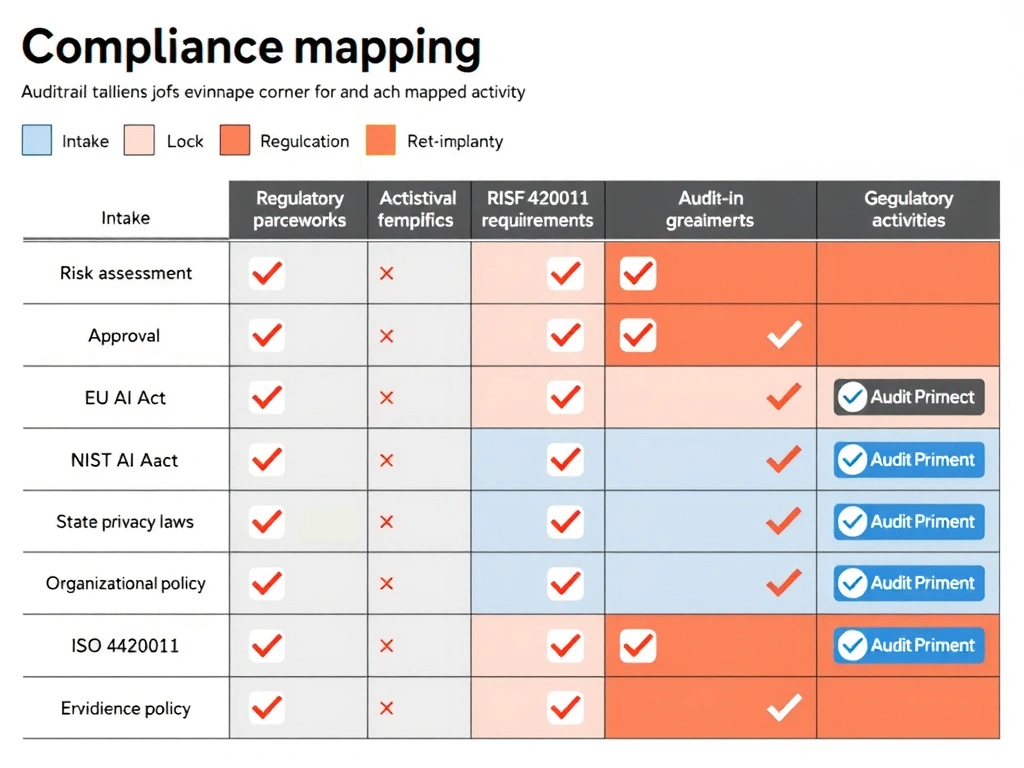
Regulatory alignment is like translation—you don't assume English rules work in France! If you operate in California, EU, Canada, and Asia, you need to understand each region's AI laws, industry standards (NIST, ISO), and your company's own policies. Then you map your governance activities (audits, approvals, monitoring) to those requirements so you can prove compliance. It's not extra red tape; it's the foundation of trust with regulators and customers.
Full explanation below image
Full Explanation
The correct answer is d. Effective governance requires explicitly mapping governance activities and controls to applicable regulations, standards, and organizational policies. This ensures the organization can demonstrate compliance with relevant AI regulations (EU AI Act, state-level rules), industry standards (NIST AI RMF, ISO 42001), and internal policies. This mapping is the evidence regulators and auditors demand. Option a is dangerous because different jurisdictions have different AI regulations and risk tolerances; a one-size-fits-all approach exposes the organization to compliance failures. Option b is wrong because audit evidence must be collected continuously throughout the lifecycle, not retroactively; after-the-fact evidence gathering is incomplete and cannot demonstrate real-time compliance decisions. Option c is severely risky because documentation is compliance evidence; removing it eliminates the proof needed in regulatory examinations or legal disputes and constitutes obstruction.