
A senior engineer reviews the current plan and notices that one key control is missing. What is the best way to handle drift monitoring while staying aligned with the certification objectives?
Select an answer to reveal the explanation.
Short Explanation and Infographic
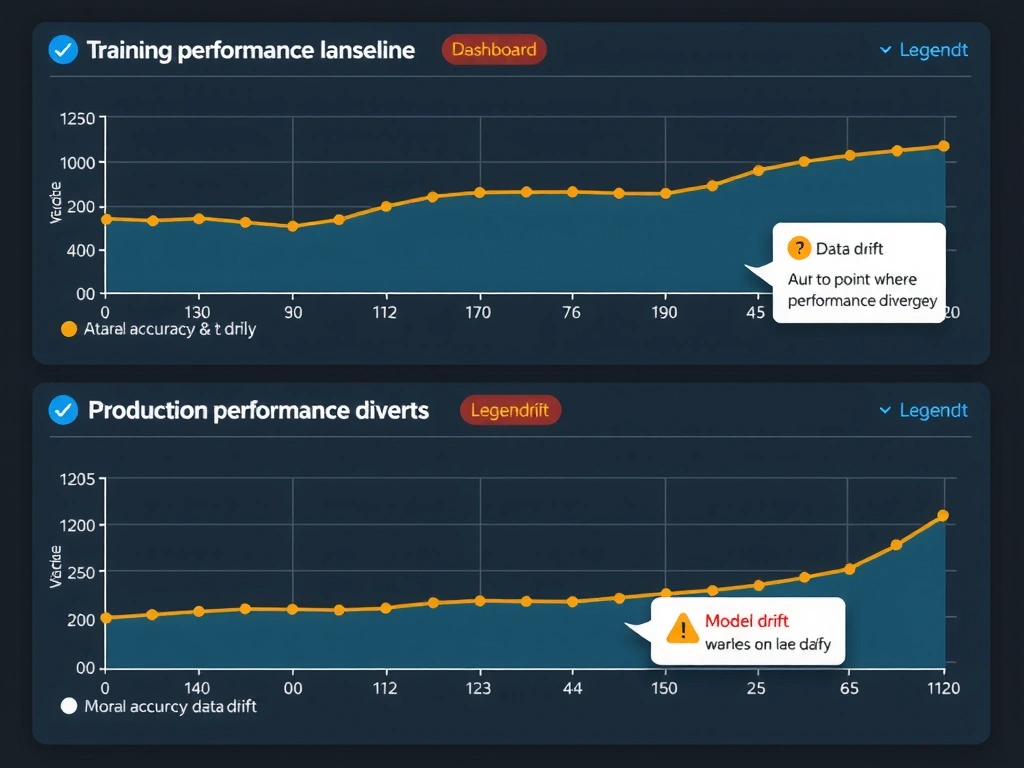
Models in production are like cars on the road—they don't stay the same forever. Data changes, user patterns shift, and the world evolves. If you assume your model will work today like it did six months ago, you're ignoring reality. Active drift monitoring is like regularly checking your car's oil and alignment; it tells you when something is drifting out of spec so you can fix it before a breakdown happens. That's operational excellence!
Full explanation below image
Full Explanation
The correct answer is b. Continuous drift monitoring is a critical control that detects when model behavior or data characteristics change after deployment. This allows teams to identify degradation, retraining needs, or business logic shifts in real time. Option a is dangerously false because model performance degrades over time as data distributions change (data drift) and the relationship between input and output evolves (model drift). Option c is incorrect because dismissing drift alerts removes an essential early warning system; alert tuning is legitimate, but disabling alerts is negligent. Option d is irrelevant because CPU monitoring is infrastructure-level telemetry unrelated to model governance; model drift specifically concerns prediction quality and data characteristics, not server resources.