
A consultant is advising a customer that wants a scalable implementation. What is the best way to handle model lifecycle tracking while staying aligned with the certification objectives?
Select an answer to reveal the explanation.
Short Explanation and Infographic
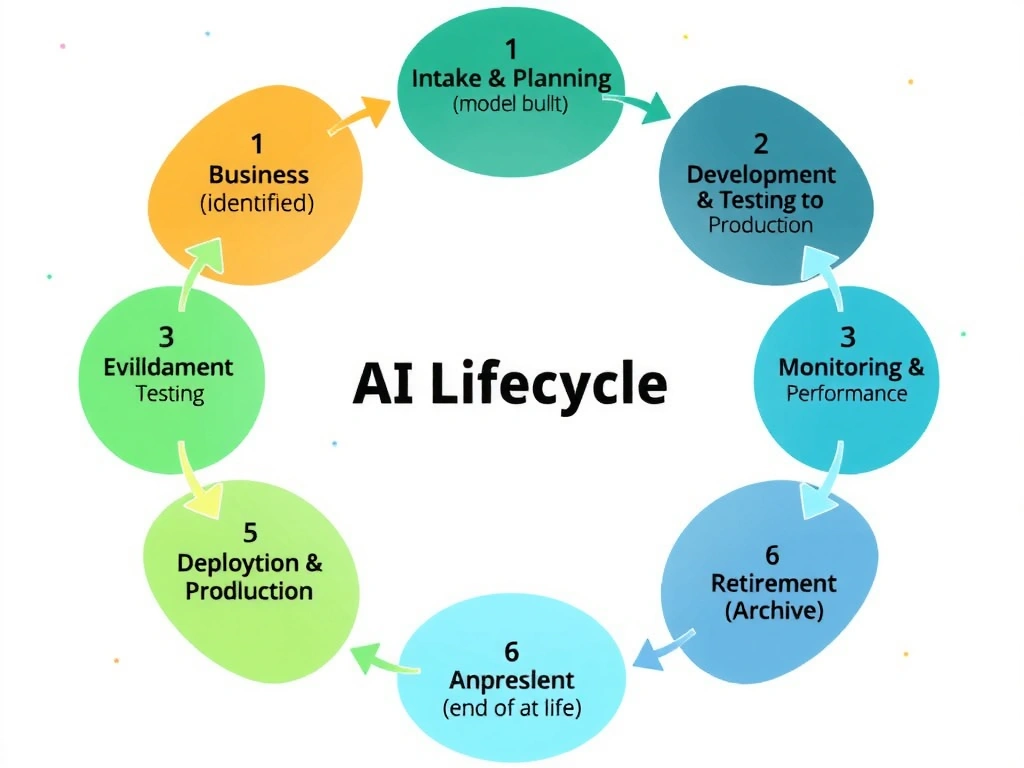
Imagine building a house but only inspecting it after move-in—you've missed the chance to catch problems in the foundation! Full lifecycle tracking means watching your AI model from the day someone says 'we need this' all the way through to retirement. Intake, development, validation, deployment, monitoring, retirement—each stage matters, and recording all of it gives you the visibility you need to govern responsibly.
Full explanation below image
Full Explanation
The correct answer is a. Comprehensive lifecycle governance requires tracking AI assets from intake (when the need is identified) through all stages—development, validation, deployment, monitoring, and eventually retirement or archival. This end-to-end visibility enables evidence collection, control verification, and compliance documentation at every stage. Option b is inadequate because governance must start early; tracking only after production release misses critical design and approval decisions and leaves pre-deployment risks ungoverned. Option c is incorrect because lifecycle governance encompasses use cases, business context, and ownership, not just code repositories; a repository view misses the business and governance context. Option d is wrong because lifecycle records are permanent audit evidence and must be retained indefinitely for compliance, regulatory inspection, and historical accountability.