
A project lead is turning a proof of concept into a governed production workflow. The team is focused on retirement and archive. Which recommendation is most appropriate?
Select an answer to reveal the explanation.
Short Explanation and Infographic
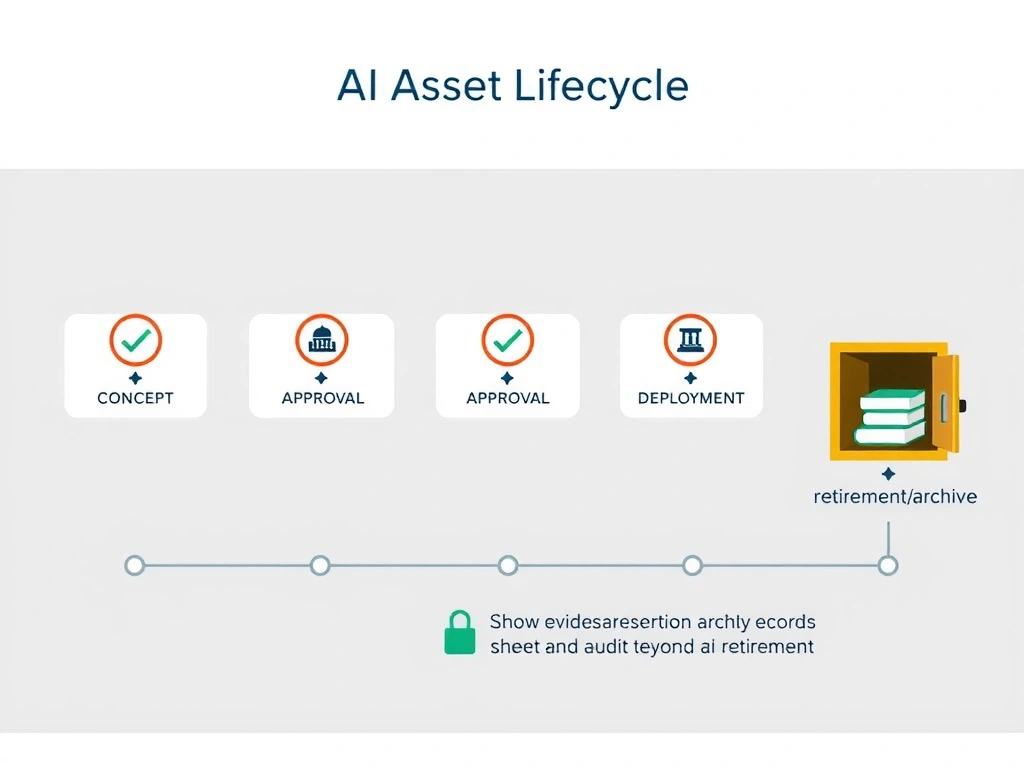
Think of retiring a model like archiving old tax returns—you need to keep the paperwork for compliance, but move it to cold storage so you're not tripping over it every day. Deleting evidence is like burning your records; leaving it active is like having 20-year-old files cluttering your desk. Smart governance means retiring the asset cleanly while holding onto the evidence that proves you governed it properly. That's maturity!
Full explanation below image
Full Explanation
The correct answer is d. When an AI asset reaches the end of its useful life, it should be formally retired or archived while preserving all evidence of its governance, approvals, and performance history. This maintains the complete audit trail required for regulatory compliance and organizational accountability. Option a is dangerous because deleting evidence eliminates proof of compliance and destroys the historical record needed for audits and investigations. Option b is incorrect because leaving retired models active in inventory creates confusion about what is actually in use and wastes resources on monitoring inactive assets. Option c is wrong because approval decisions are contextual and model-specific; reusing old approvals ignores the unique risk profile, data characteristics, and business requirements of unrelated use cases.