
A team is preparing a production rollout and needs to avoid a design mistake. Which approach best demonstrates policy configuration in a IBM Certified watsonx Governance Lifecycle Advisor environment?
Select an answer to reveal the explanation.
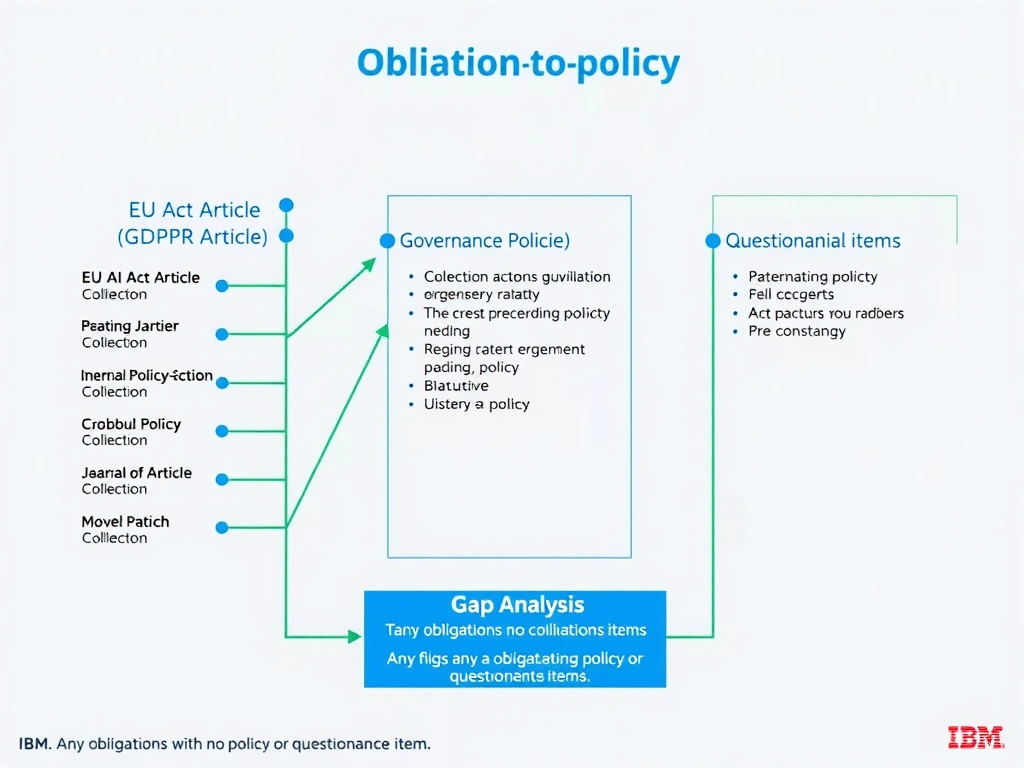
Short Explanation and Infographic
A policy that does not map to a real obligation is like a fire drill with no evacuation route — you practiced, but no one knows where to go when it matters. Option C fixes this: policies, questionnaires, and workflow requirements are configured to match actual governance obligations. Default text creates false confidence. Disabling required questions for high-risk assets is the opposite of risk-appropriate governance. One-time demo setup means the system never enforces anything real. Mapped, enforced, operational policies — option C!
Full explanation below image
Full Explanation
The correct answer is C. Configure policies, questionnaires, and workflow requirements that match organizational governance obligations. aligns directly with the 3.0 Configure watsonx.governance exam objective and reflects how IBM watsonx.governance operationalizes this practice in enterprise environments. IBM watsonx.governance is designed to provide the tooling, workflows, and evidence collection mechanisms that make AI trustworthy and auditable from intake through retirement. Choosing this option ensures the implementation is both defensible to regulators and maintainable by governance teams across the full AI lifecycle. Option A is incorrect because it does not address the core governance requirement described in the scenario and would leave an important control gap in production. Option B is incorrect because it eliminates a required control and leaves the governance program without a critical safeguard. Option D is incorrect because it treats a recurring operational requirement as a one-off or optional activity and leaves governance inactive. On scenario-based exam questions, the correct answer is consistently the one that operationalizes the IBM governance practice with structured controls rather than approximating it with shortcuts, manual workarounds, or oversimplified rules.