
A senior engineer reviews the current plan and notices that one key control is missing. Which approach best demonstrates AI risk management in a IBM Certified watsonx Governance Lifecycle Advisor environment?
Select an answer to reveal the explanation.
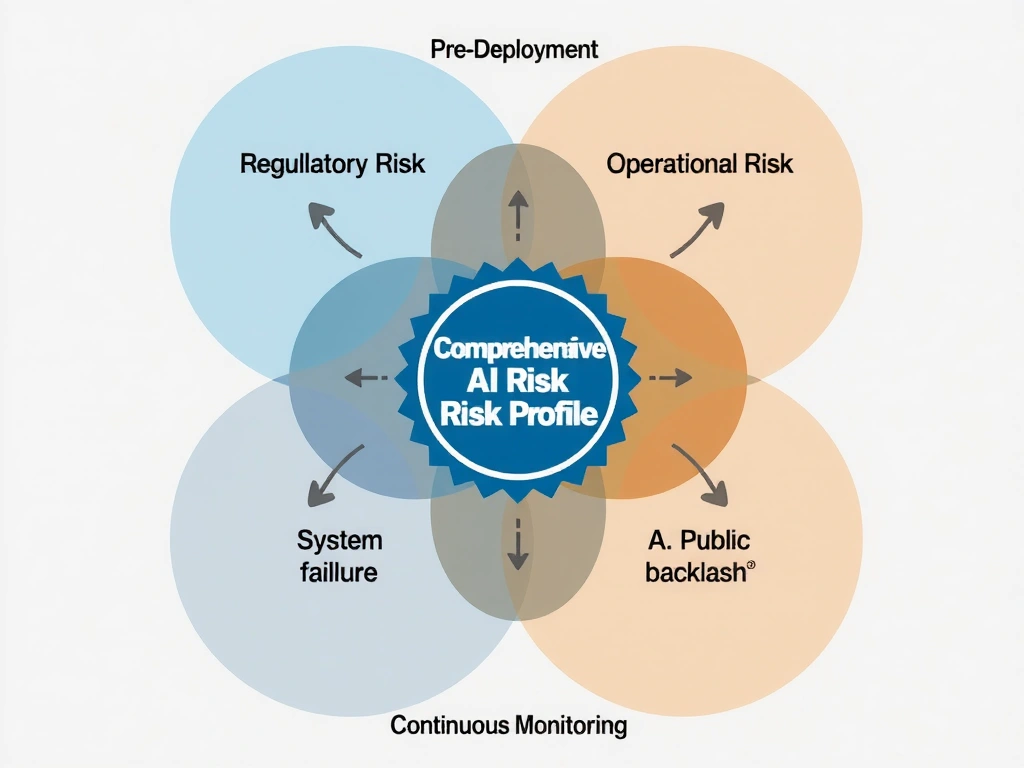
Short Explanation and Infographic
Risk management for AI is like a pre-flight checklist — you do not discover hydraulic failure at 30,000 feet if you checked it on the ground. Option B is the pre-flight checklist: identify regulatory, ethical, operational, and reputational risks before and during deployment. Waiting for regulators means problems are already flying. Classifying everything as low risk is skipping the checklist entirely. Ignoring generative AI risk is skipping the new instrument panel. Check before you fly — option B!
Full explanation below image
Full Explanation
The correct answer is B. Identify regulatory, ethical, operational, and reputational risks before and during AI deployment. aligns directly with the 1.0 AI Governance Overview exam objective and reflects how IBM watsonx.governance operationalizes this practice in enterprise environments. IBM watsonx.governance is designed to provide the tooling, workflows, and evidence collection mechanisms that make AI trustworthy and auditable from intake through retirement. Choosing this option ensures the implementation is both defensible to regulators and maintainable by governance teams across the full AI lifecycle. Option A is incorrect because it narrows the scope to a single artifact or metric and misses the full governance requirement. Option C is incorrect because it applies an overbroad rule that eliminates meaningful differentiation and accountability. Option D is incorrect because it eliminates a required control and leaves the governance program without a critical safeguard. On scenario-based exam questions, the correct answer is consistently the one that operationalizes the IBM governance practice with structured controls rather than approximating it with shortcuts, manual workarounds, or oversimplified rules.