
During a design review, an architect asks which choice best matches the IBM guidance. Which approach best demonstrates retirement and archive in a IBM Certified watsonx Governance Lifecycle Advisor environment?
Select an answer to reveal the explanation.
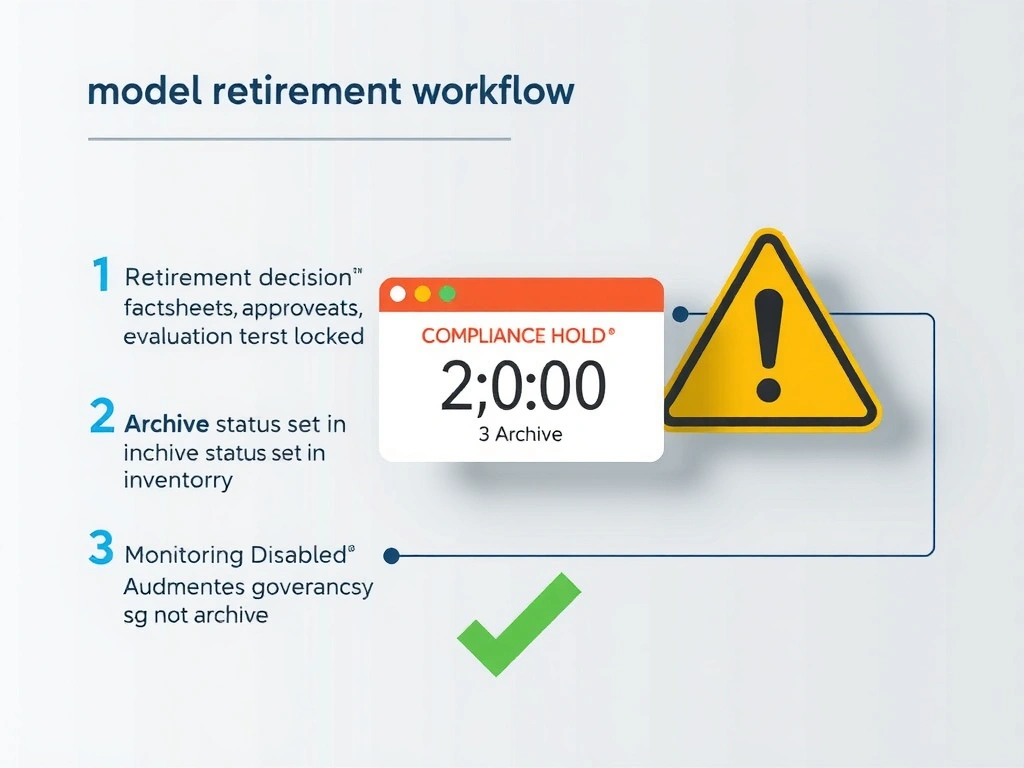
Short Explanation and Infographic
Decommissioning a server without keeping the configuration baseline is IT malpractice — you need the records when the incident happens six months later. Option D applies the same discipline to AI: retire or archive assets when no longer used, but preserve the required evidence. Deleting evidence on retirement destroys accountability. Keeping retired models active in inventory adds noise to governance. Recycling old approvals for new use cases is reusing a stale configuration baseline. Documented retirement, preserved records — option D!
Full explanation below image
Full Explanation
The correct answer is D. Retire or archive AI assets when they are no longer used while preserving required evidence. aligns directly with the 5.0 Define and Govern AI Use Case Inventory exam objective and reflects how IBM watsonx.governance operationalizes this practice in enterprise environments. IBM watsonx.governance is designed to provide the tooling, workflows, and evidence collection mechanisms that make AI trustworthy and auditable from intake through retirement. Choosing this option ensures the implementation is both defensible to regulators and maintainable by governance teams across the full AI lifecycle. Option A is incorrect because it eliminates a required control and leaves the governance program without a critical safeguard. Option B is incorrect because it does not address the core governance requirement described in the scenario and would leave an important control gap in production. Option C is incorrect because it does not address the core governance requirement described in the scenario and would leave an important control gap in production. On scenario-based exam questions, the correct answer is consistently the one that operationalizes the IBM governance practice with structured controls rather than approximating it with shortcuts, manual workarounds, or oversimplified rules.