
A consultant is advising a customer that wants a scalable implementation. Which approach best demonstrates fairness evaluation in a IBM Certified watsonx Governance Lifecycle Advisor environment?
Select an answer to reveal the explanation.
Short Explanation and Infographic
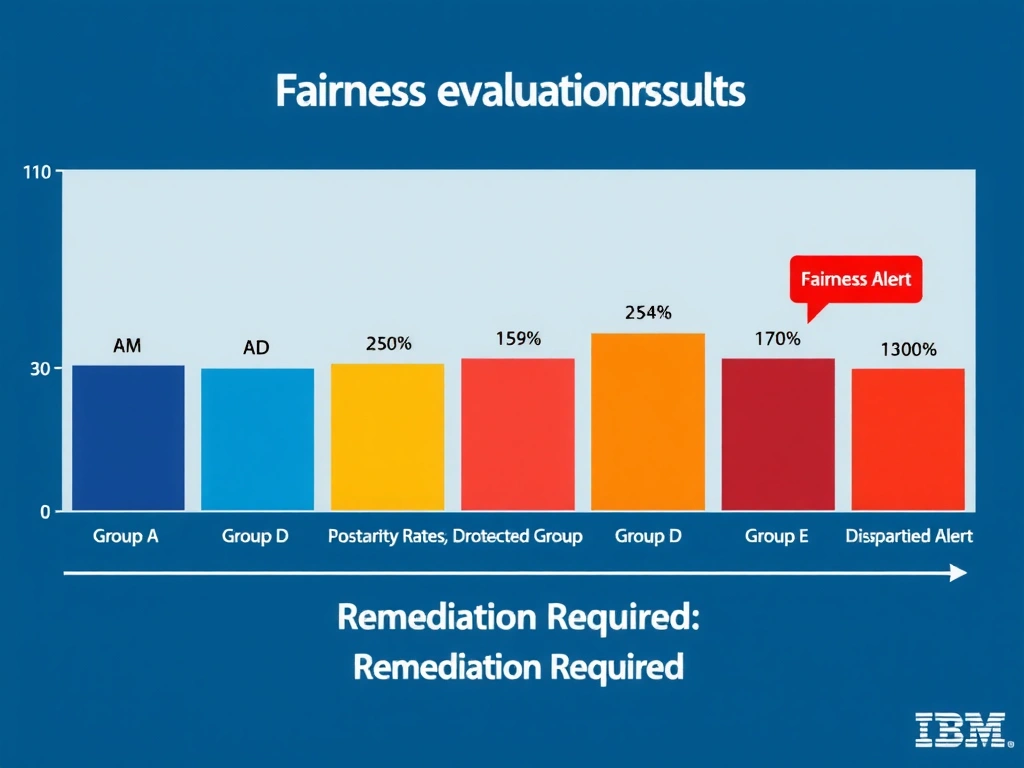
Imagine a judge who only reviews verdicts for one zip code and calls the court system fair — that is aggregate accuracy masquerading as fairness. Option A demands the full review: evaluate outcomes across protected and relevant groups wherever fairness risk exists. Aggregate numbers hide subgroup harm. Skipping checks on sensitive data is backwards — that is where bias lives. Testing only the majority group is not testing fairness at all. Group-level evaluation is the heart of fairness governance — option A!
Full explanation below image
Full Explanation
The correct answer is A. Evaluate outcomes for protected or relevant groups where fairness risk exists. aligns directly with the 4.0 Configure Evaluation and Monitoring exam objective and reflects how IBM watsonx.governance operationalizes this practice in enterprise environments. IBM watsonx.governance is designed to provide the tooling, workflows, and evidence collection mechanisms that make AI trustworthy and auditable from intake through retirement. Choosing this option ensures the implementation is both defensible to regulators and maintainable by governance teams across the full AI lifecycle. Option B is incorrect because it does not address the core governance requirement described in the scenario and would leave an important control gap in production. Option C is incorrect because it eliminates a required control and leaves the governance program without a critical safeguard. Option D is incorrect because it narrows the scope to a single artifact or metric and misses the full governance requirement. On scenario-based exam questions, the correct answer is consistently the one that operationalizes the IBM governance practice with structured controls rather than approximating it with shortcuts, manual workarounds, or oversimplified rules.