
A municipal government proposes using an AI system that performs real-time biometric identification of individuals in public spaces to identify persons of interest during routine law enforcement operations without any individualized suspicion or prior authorization. Under the EU AI Act, how is this system classified?
Select an answer to reveal the explanation.
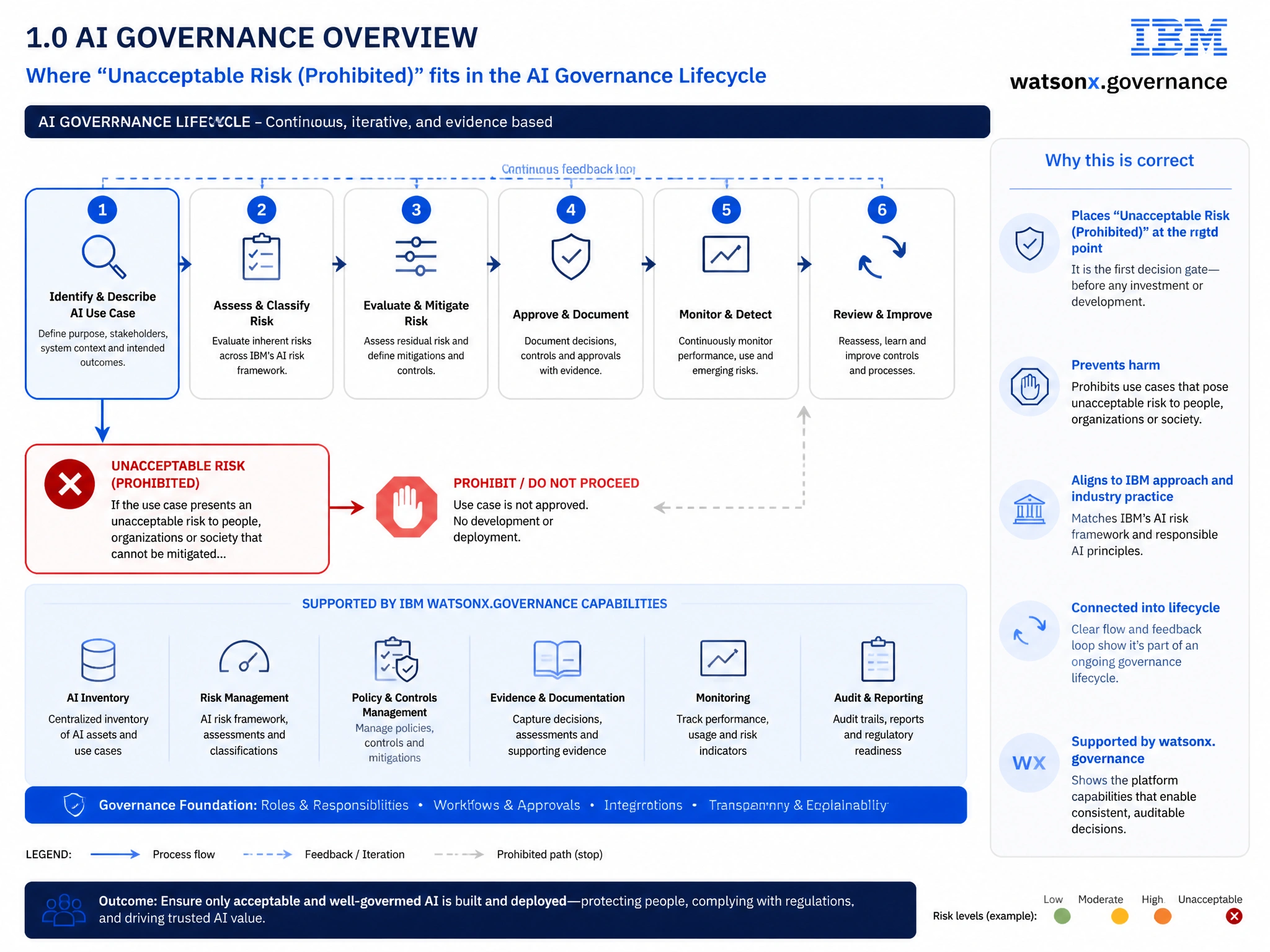
Short Explanation and Infographic
Think of it this way: in real-world AI governance, unacceptable risk (prohibited) is exactly what teams reach for when they need to handle this scenario. The EU AI Act explicitly prohibits real-time remote biometric identification systems used in publicly accessible spaces for law enforcement as an Unacceptable Risk, recognizing the severe threat such systems pose to fundamental rights and civil liberties. On the exam, remember that this falls squarely under the 1.0 AI Governance Overview domain.
Full explanation below image
Full Explanation
The EU AI Act explicitly prohibits real-time remote biometric identification systems used in publicly accessible spaces for law enforcement as an Unacceptable Risk, recognizing the severe threat such systems pose to fundamental rights and civil liberties. Narrow exceptions exist for specific circumstances such as searching for abducted children or preventing imminent terrorist threats, but these require prior judicial or administrative authorization. This prohibition entered force for new systems in February 2025 under the Act's phased implementation schedule. The correct answer, "Unacceptable Risk (Prohibited)", directly addresses the scenario described because it aligns with the specific governance requirement in question. The incorrect options ("High-Risk", "Limited Risk", "Minimal Risk") may seem plausible but do not satisfy the core requirement. Understanding the distinction between these concepts is critical for IBM watsonx.governance implementations and is frequently tested in the 1.0 AI Governance Overview section of the certification exam.