
A company uses a proprietary incident management platform that accepts JSON payloads via HTTP POST requests on a specific endpoint URL. They want Instana to automatically notify this system when critical alerts are triggered. Which Instana alert channel type should they configure, and in what format will the notification payload be sent?
Select an answer to reveal the explanation.
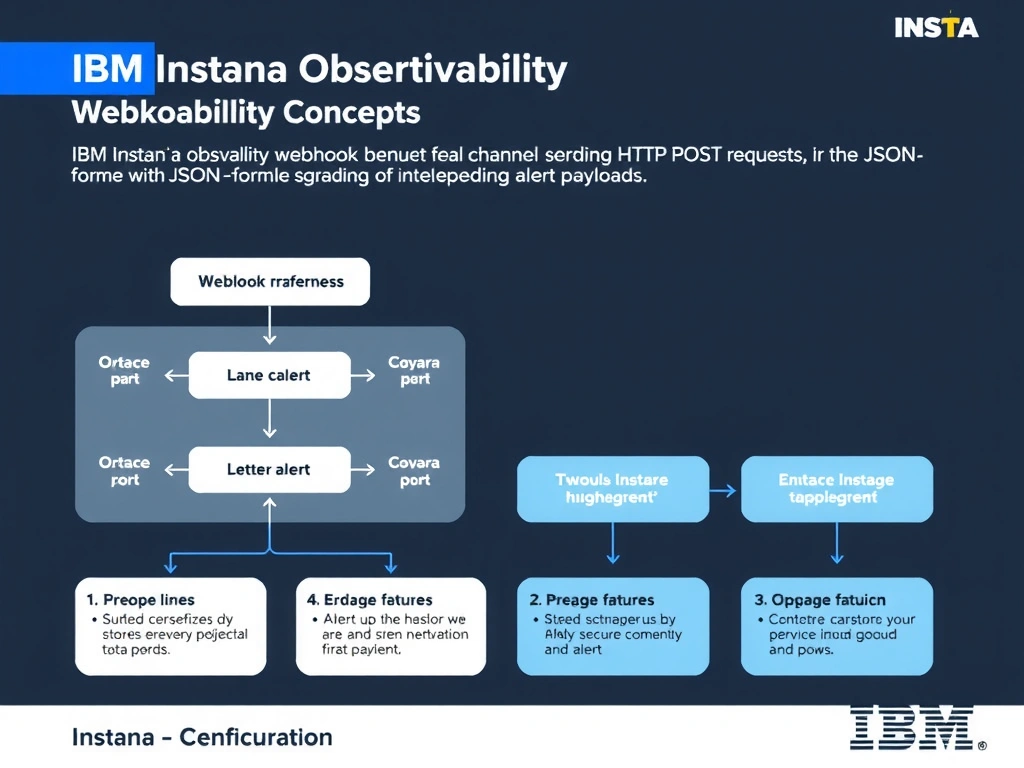
Short Explanation and Infographic
Instana's webhook alert channel sends HTTP POST requests containing JSON-formatted event data to a user-specified URL endpoint. The payload includes details such as the affected entity, triggered metric, threshold value, alert severity, and event timestamp. This generic mechanism supports integration with any HTTP-capable system including proprietary incident platforms without requiring a native Instana integration.
Full explanation below image
Full Explanation
Instana's webhook alert channel sends HTTP POST requests containing JSON-formatted event data to a user-specified URL endpoint. The payload includes details such as the affected entity, triggered metric, threshold value, alert severity, and event timestamp. This generic mechanism supports integration with any HTTP-capable system including proprietary incident platforms without requiring a native Instana integration. The correct answer is 'Webhook channel sending HTTP POST requests with JSON-formatted alert payloads'. The incorrect options — 'Generic REST channel using XML-formatted payloads with SOAP envelope headers', 'Custom SMTP channel configured with an HTML body representing the alert details', 'OpsGenie channel configured with a custom HTTP endpoint URL override' — are wrong because they do not align with IBM Instana's architecture or recommended practices for this scenario. Understanding this concept is essential for the Domain 2: Configuration domain of the IBM Instana Observability certification.