
An operations team wants to alert on unusual error rate spikes for any service in their e-commerce application without manually setting thresholds for each of the 40 services individually. Which Instana feature best addresses this requirement?
Select an answer to reveal the explanation.
Short Explanation and Infographic
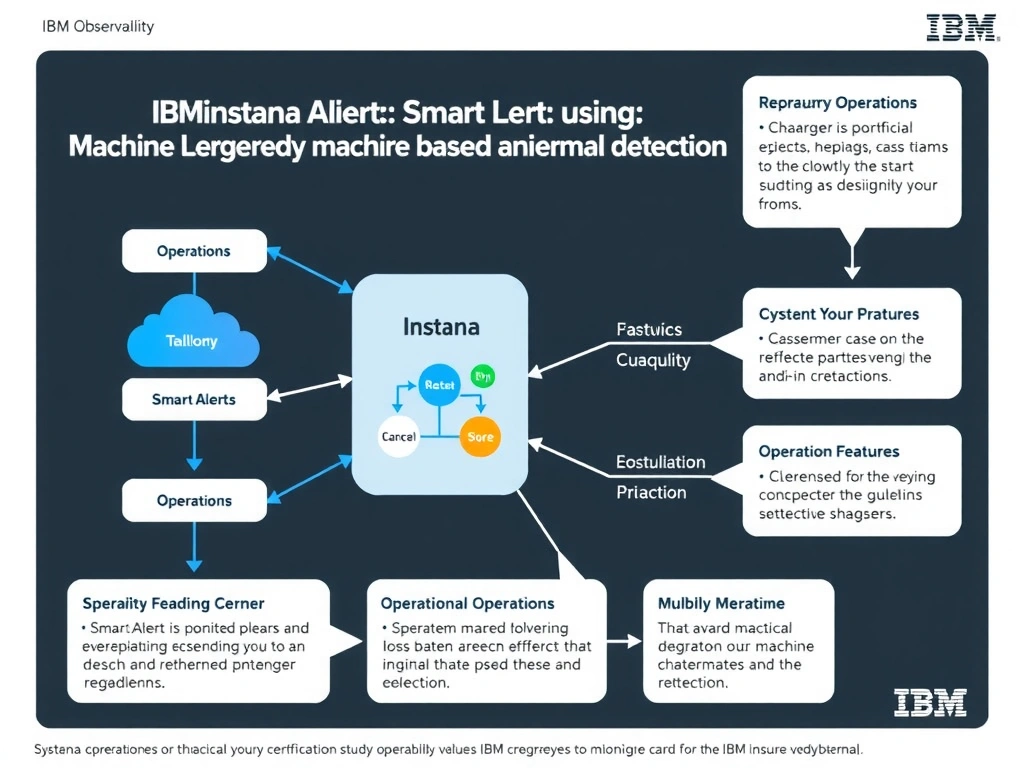
Smart Alerts in Instana use machine learning to automatically establish baselines per service and detect anomalies without requiring administrators to define static thresholds for every service. Standard threshold alerts require manual threshold definition per service and do not scale well across dozens of services. Alert channels define notification destinations, not detection logic—they have no role in determining when an alert should fire.
Full explanation below image
Full Explanation
Smart Alerts in Instana use machine learning to automatically establish baselines per service and detect anomalies without requiring administrators to define static thresholds for every service. Standard threshold alerts require manual threshold definition per service and do not scale well across dozens of services. Alert channels define notification destinations, not detection logic—they have no role in determining when an alert should fire. The correct answer is 'Smart Alerts using machine learning-based anomaly detection'. The incorrect options — 'Standard metric threshold alerts configured individually per service', 'Custom event rules using static threshold expressions in the event definition', 'Alert channels configured with webhook integrations to a ticketing system' — are wrong because they do not align with IBM Instana's architecture or recommended practices for this scenario. Understanding this concept is essential for the Domain 1: Operations domain of the IBM Instana Observability certification.