
A senior engineer reviews the current plan and notices that one key control is missing. For IBM Certified watsonx Data Lakehouse Engineer, the topic is ACID table behavior. What should the team do?
Select an answer to reveal the explanation.
Short Explanation and Infographic
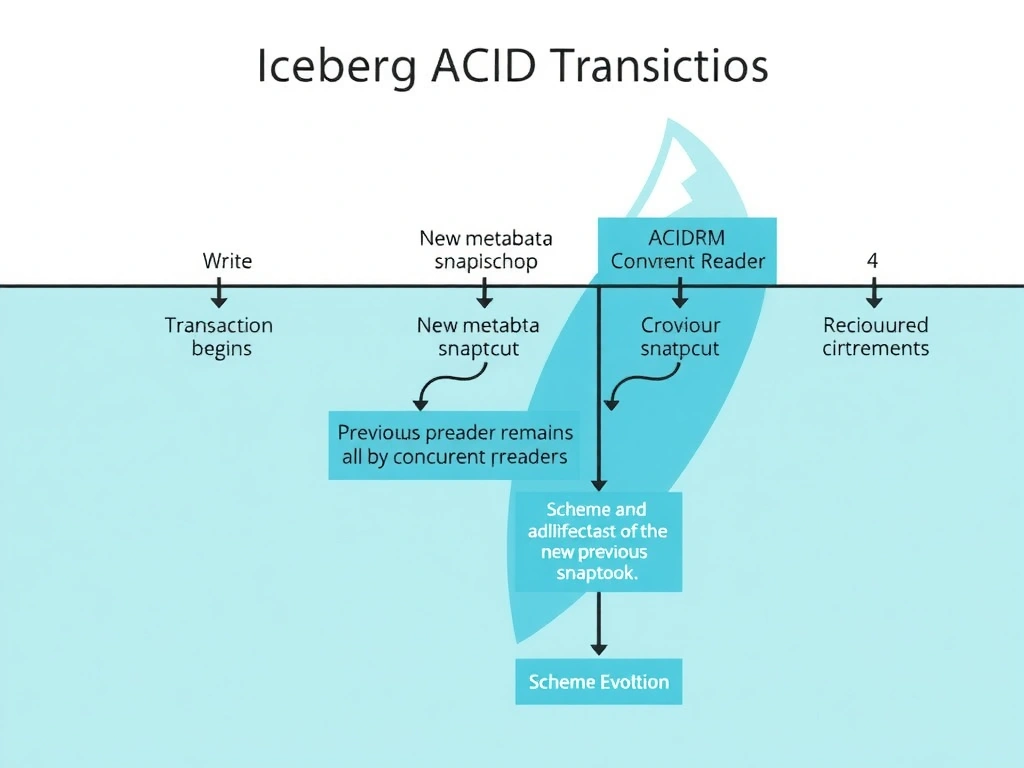
IBM watsonx.data adopts Apache Iceberg as its primary table format because Iceberg delivers ACID transactions, partition evolution, hidden partitioning, and snapshot isolation over standard object storage. These properties mean that concurrent writes from Spark pipelines and concurrent reads from Presto analytics proceed without conflicts or stale data. The exam tests Iceberg knowledge because choosing the right table format is a foundational architectural decision that affects everything downstream — performance, consistency, and multi-engine compatibility.
Full explanation below image
Full Explanation
The correct answer is option B: Use table formats that provide transactional consistency, schema evolution, and reliable concurrent access.. This aligns with IBM's Data lakehouse fundamentals guidance, which emphasizes use table formats that provide transactional consistency, schema evolution, and reliable concurrent access as the recommended approach for production deployments. Option A (Depend on file naming conventions for transactions) is incorrect because it either bypasses IBM's recommended architecture or introduces operational risk that the correct approach is specifically designed to avoid. Option C (Disable metadata tracking to reduce overhead) is incorrect because it either bypasses IBM's recommended architecture or introduces operational risk that the correct approach is specifically designed to avoid. Option D (Allow each query engine to rewrite files independently) is incorrect because it either bypasses IBM's recommended architecture or introduces operational risk that the correct approach is specifically designed to avoid. Understanding this distinction is critical for the C9007300 exam: IBM watsonx.data is designed to enforce governance, performance, and operational best practices through its built-in architecture, and the correct answers consistently reflect those architectural constraints rather than shortcut alternatives.