
A consultant is advising a customer that wants a scalable implementation. For IBM Certified watsonx Data Lakehouse Engineer, the topic is source integration. What should the team do?
Select an answer to reveal the explanation.
Short Explanation and Infographic
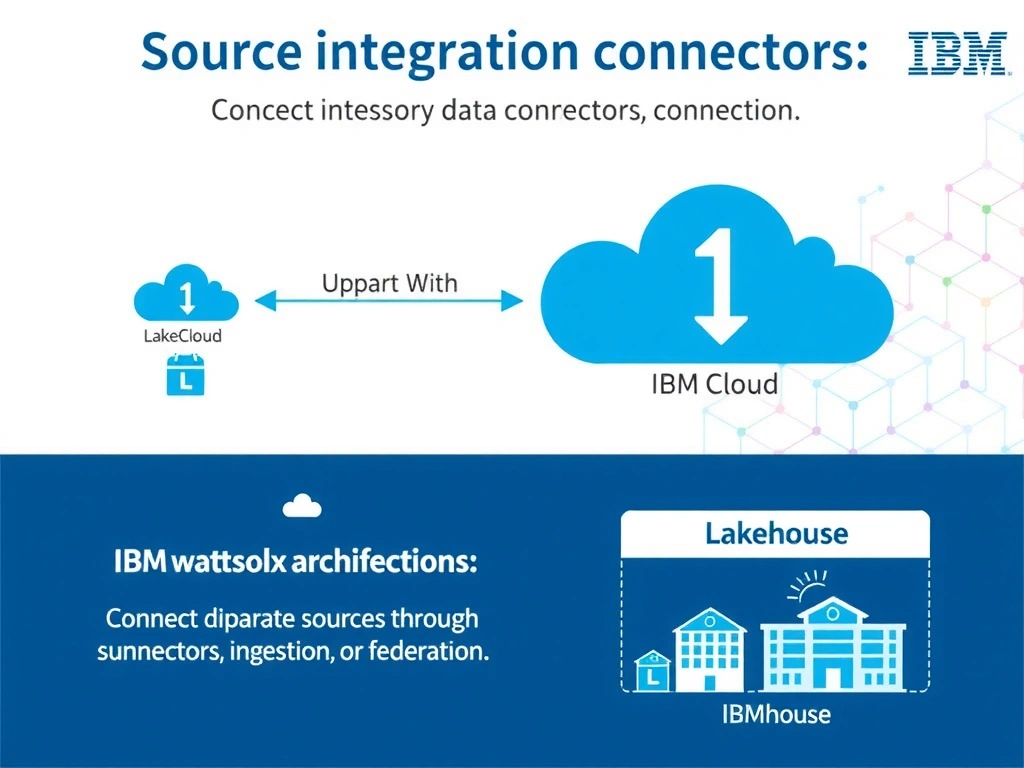
IBM watsonx.data supports data federation through Presto's connector framework, enabling SQL queries that span local Iceberg tables and registered remote data sources like relational databases, cloud warehouses, or remote object storage. Federation is architecturally appropriate when data must remain at its source for governance or operational reasons, when queries are low-frequency enough to tolerate network latency, or when a migration is in progress. The exam tests federation versus ingestion because the choice has material implications for performance, cost, and compliance.
Full explanation below image
Full Explanation
The correct answer is option A: Connect disparate sources through supported connectors, ingestion, or federation based on latency and use-case needs.. This aligns with IBM's Data integration patterns guidance, which emphasizes connect disparate sources through supported connectors, ingestion, or federation based on latency and use-case needs as the recommended approach for production deployments. Option B (Manually paste source data into SQL worksheets) is incorrect because it either bypasses IBM's recommended architecture or introduces operational risk that the correct approach is specifically designed to avoid. Option C (Require all data to be exported as screenshots) is incorrect because it either bypasses IBM's recommended architecture or introduces operational risk that the correct approach is specifically designed to avoid. Option D (Use only one connector for all source types) is incorrect because it either bypasses IBM's recommended architecture or introduces operational risk that the correct approach is specifically designed to avoid. Understanding this distinction is critical for the C9007300 exam: IBM watsonx.data is designed to enforce governance, performance, and operational best practices through its built-in architecture, and the correct answers consistently reflect those architectural constraints rather than shortcut alternatives.