
A project lead is turning a proof of concept into a governed production workflow. The team is focused on predictive vs exploratory analytics. Which recommendation is most appropriate?
Select an answer to reveal the explanation.
Short Explanation and Infographic
Here's the practical architecture take: a watsonx.data deployment that coordinates storage, metadata, query engines, governance, and workload management correctly provides consistent performance, predictable costs, and auditable access across all workloads. Implementations that optimize one layer while neglecting another — fast storage with no governance, governance with no workload management — create production operational problems that show up six months after launch.
Full explanation below image
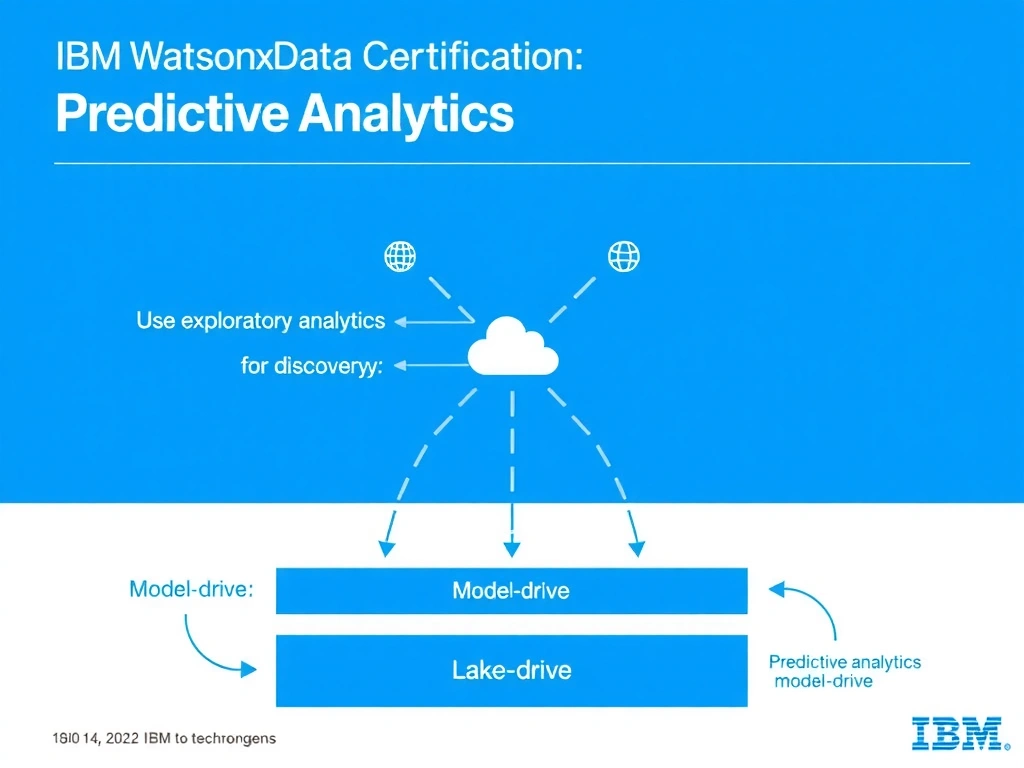
Full Explanation
The correct answer is option B: Use exploratory analytics for discovery and predictive analytics for model-driven forecasting or scoring.. This aligns with IBM's Data consumption and analytics guidance, which emphasizes use exploratory analytics for discovery and predictive analytics for model-driven forecasting or scoring as the recommended approach for production deployments. Option A (Treat ad hoc filtering as a trained predictive model) is incorrect because it either bypasses IBM's recommended architecture or introduces operational risk that the correct approach is specifically designed to avoid. Option C (Use predictive analytics when no target or history exists) is incorrect because it either bypasses IBM's recommended architecture or introduces operational risk that the correct approach is specifically designed to avoid. Option D (Avoid exploratory work before modeling) is incorrect because it either bypasses IBM's recommended architecture or introduces operational risk that the correct approach is specifically designed to avoid. Understanding this distinction is critical for the C9007300 exam: IBM watsonx.data is designed to enforce governance, performance, and operational best practices through its built-in architecture, and the correct answers consistently reflect those architectural constraints rather than shortcut alternatives.