
During a design review, an architect asks which choice best matches the IBM guidance. Which approach best demonstrates cloud object storage in a IBM Certified watsonx Data Lakehouse Engineer environment?
Select an answer to reveal the explanation.
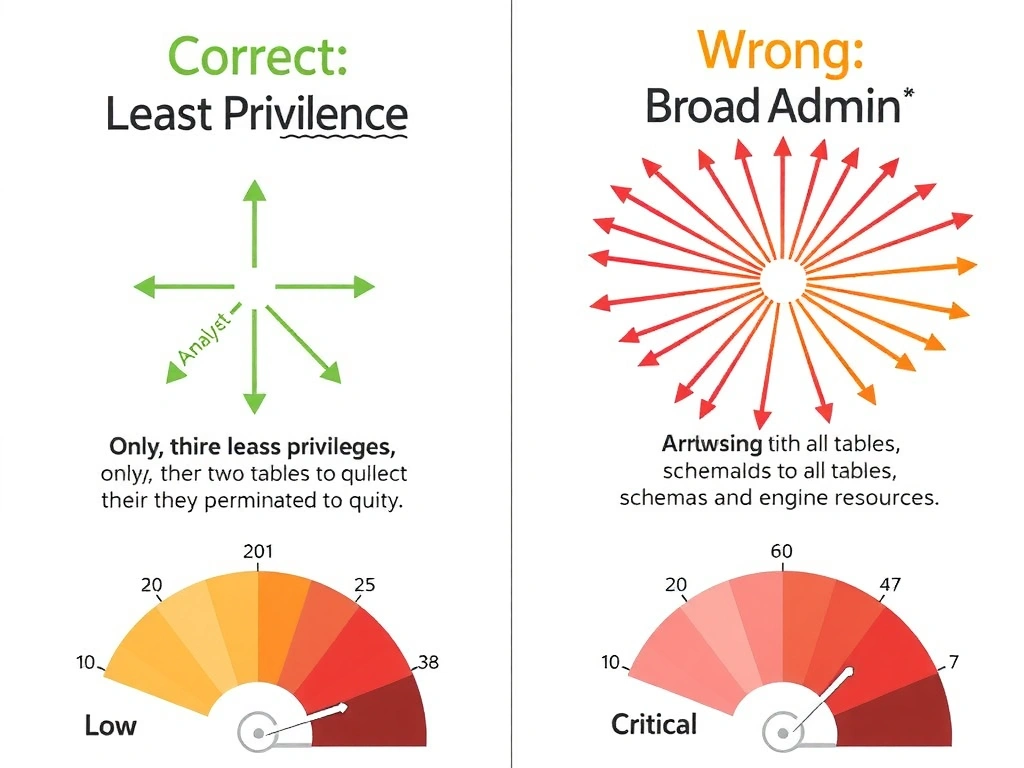
Short Explanation and Infographic
In watsonx.data, object storage — whether IBM Cloud Object Storage, AWS S3, or on-premises MinIO — provides the durable, scalable foundation that all query engines share. The key principle is that data lives once in object storage and is queried in place by whichever engine is appropriate for the workload. Proprietary formats tied to a specific engine's storage are the anti-pattern this architecture explicitly replaces.
Full explanation below image
Full Explanation
The correct answer is option D: Use object storage as scalable, durable lakehouse storage while managing metadata and access controls.. This aligns with IBM's Data lakehouse fundamentals guidance, which emphasizes use object storage as scalable, durable lakehouse storage while managing metadata and access controls as the recommended approach for production deployments. Option A (Treat object storage like a local POSIX filesystem) is incorrect because it either bypasses IBM's recommended architecture or introduces operational risk that the correct approach is specifically designed to avoid. Option B (Avoid object storage because SQL cannot query it) is incorrect because it either bypasses IBM's recommended architecture or introduces operational risk that the correct approach is specifically designed to avoid. Option C (Store credentials in table names) is incorrect because it either bypasses IBM's recommended architecture or introduces operational risk that the correct approach is specifically designed to avoid. Understanding this distinction is critical for the C9007300 exam: IBM watsonx.data is designed to enforce governance, performance, and operational best practices through its built-in architecture, and the correct answers consistently reflect those architectural constraints rather than shortcut alternatives.