
A team is preparing a production rollout and needs to avoid a design mistake. Which approach best demonstrates federated queries in a IBM Certified watsonx Data Lakehouse Engineer environment?
Select an answer to reveal the explanation.
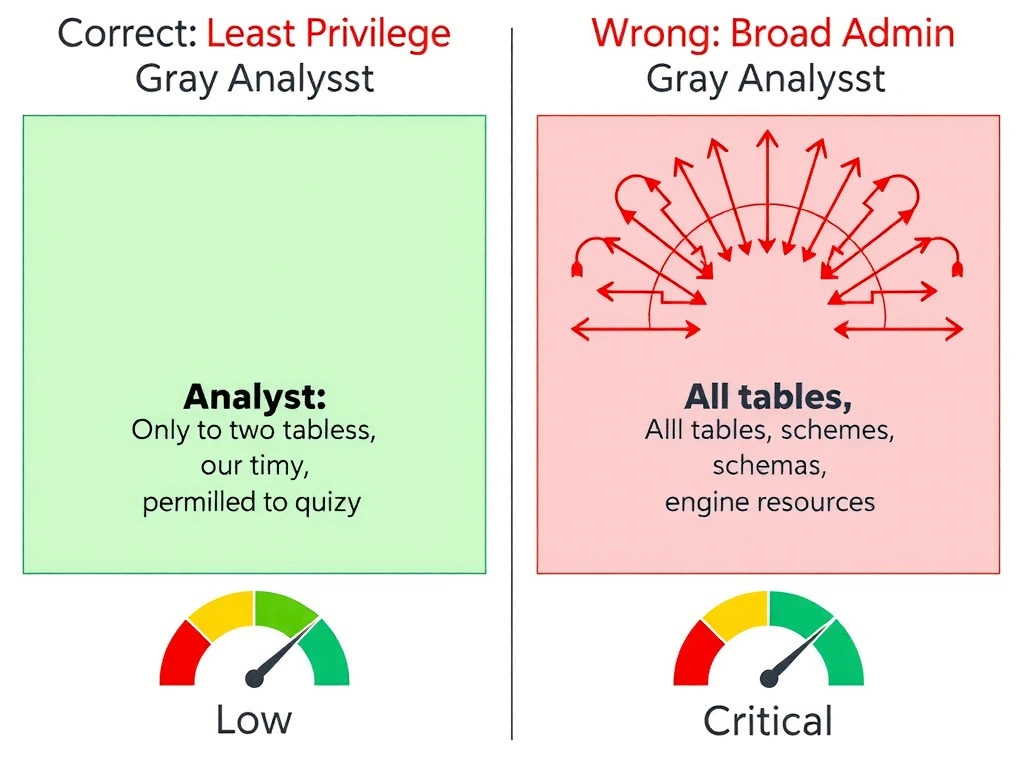
Short Explanation and Infographic
Think of watsonx.data's federation capability as a remote query line: instead of pulling the file to your desk, you reach out over the network and read it where it lives. Presto's connector framework makes this transparent — you register a remote source, and it shows up as a schema in your SQL interface like any other. The exam tests when to use federation versus ingestion because choosing wrong (federating high-frequency queries, or ingesting data that must stay in place) creates either performance problems or compliance violations.
Full explanation below image
Full Explanation
The correct answer is option C: Use federation when data should be queried across sources without unnecessary movement.. This aligns with IBM's Data integration patterns guidance, which emphasizes use federation when data should be queried across sources without unnecessary movement as the recommended approach for production deployments. Option A (Federate only after duplicating every source locally) is incorrect because it either bypasses IBM's recommended architecture or introduces operational risk that the correct approach is specifically designed to avoid. Option B (Use federation to avoid all access controls) is incorrect because it either bypasses IBM's recommended architecture or introduces operational risk that the correct approach is specifically designed to avoid. Option D (Assume federation makes slow remote sources local) is incorrect because it either bypasses IBM's recommended architecture or introduces operational risk that the correct approach is specifically designed to avoid. Understanding this distinction is critical for the C9007300 exam: IBM watsonx.data is designed to enforce governance, performance, and operational best practices through its built-in architecture, and the correct answers consistently reflect those architectural constraints rather than shortcut alternatives.