
A consultant is advising a customer that wants a scalable implementation. What is the best way to handle Query workspace and history while staying aligned with the certification objectives?
Select an answer to reveal the explanation.
Short Explanation and Infographic
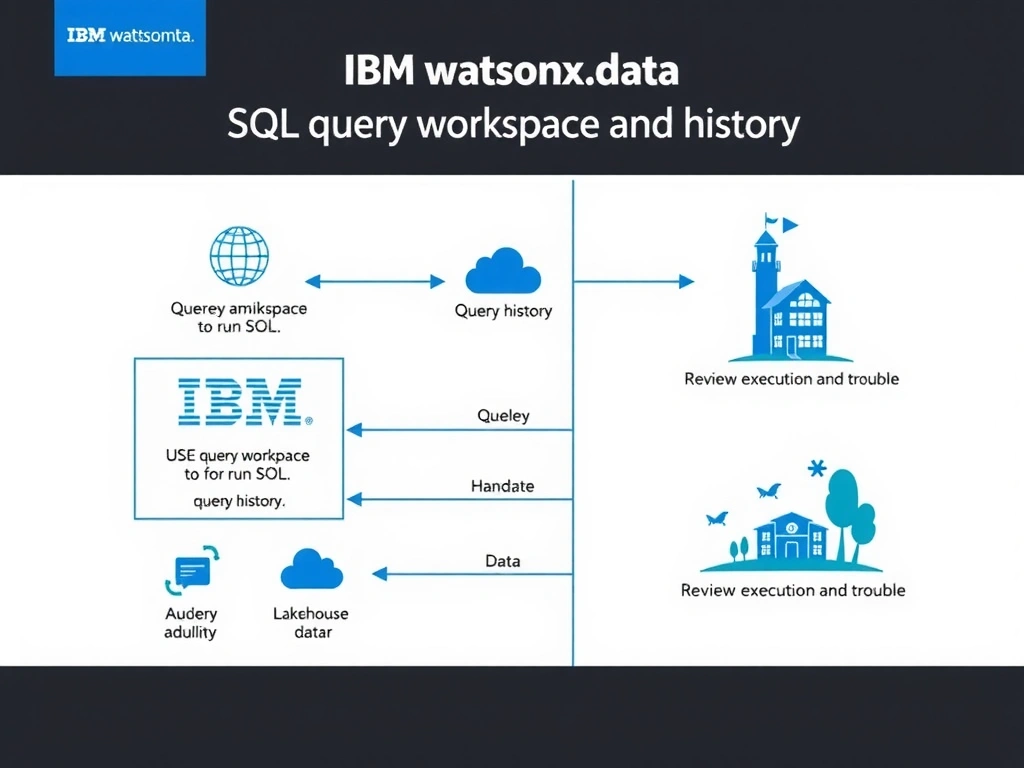
Here's the deal: watsonx.data's Query Workspace is where you write SQL, run it against governed tables, and immediately see execution history, resource usage, and query plans — all in one interface. It's not just a text box; it's a diagnostic and development environment that ties your SQL directly to the governance and monitoring layer. Debugging a bad query by guessing is what you did before you had this tool; now you have execution history to tell you exactly what happened and when.
Full explanation below image
Full Explanation
The correct answer is option C: Use query workspace to run SQL and query history to review execution and troubleshoot behavior.. This aligns with IBM's Platform operations and administration guidance, which emphasizes use query workspace to run sql and query history to review execution and troubleshoot behavior as the recommended approach for production deployments. Option A (Troubleshoot failed SQL from storage bills only) is incorrect because it either bypasses IBM's recommended architecture or introduces operational risk that the correct approach is specifically designed to avoid. Option B (Delete query history to improve performance) is incorrect because it either bypasses IBM's recommended architecture or introduces operational risk that the correct approach is specifically designed to avoid. Option D (Use access control screens to write SQL) is incorrect because it either bypasses IBM's recommended architecture or introduces operational risk that the correct approach is specifically designed to avoid. Understanding this distinction is critical for the C9007300 exam: IBM watsonx.data is designed to enforce governance, performance, and operational best practices through its built-in architecture, and the correct answers consistently reflect those architectural constraints rather than shortcut alternatives.