
An administrator is troubleshooting a pilot deployment and wants the most appropriate next step. What is the best way to handle source integration while staying aligned with the certification objectives?
Select an answer to reveal the explanation.
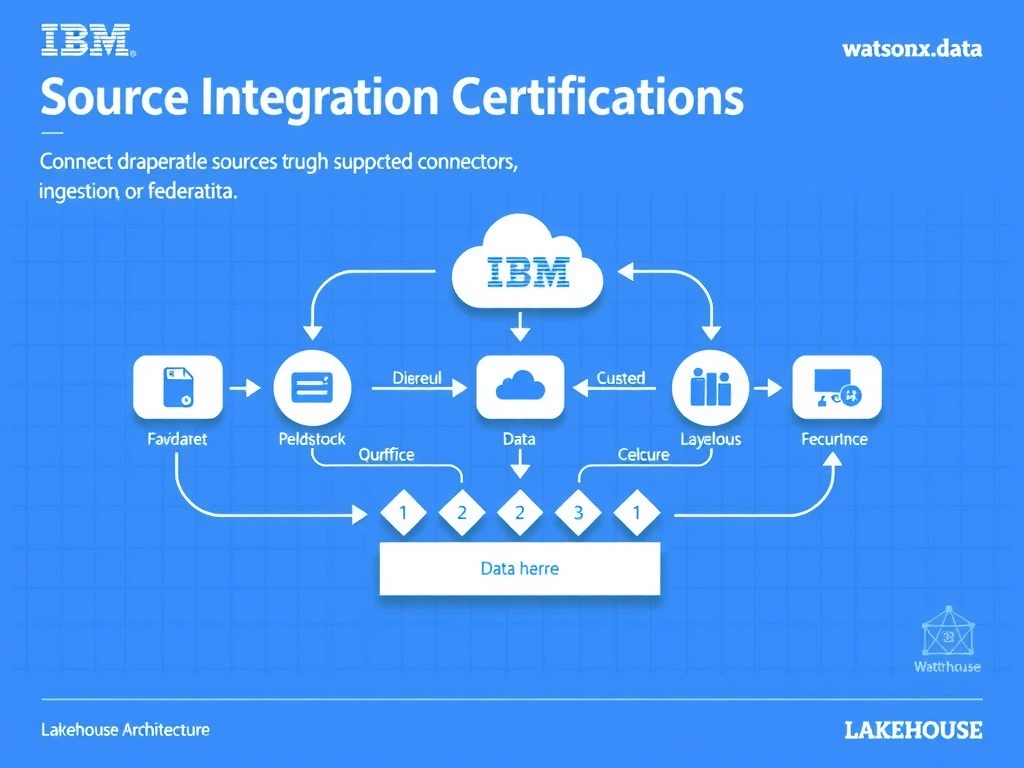
Short Explanation and Infographic
In watsonx.data, federation lets you query registered remote data sources through Presto without ETL-ing the data into the lakehouse first. This is the right pattern when data must remain in its source system for compliance, when you're running a phased migration, or when the query is infrequent enough that replication cost outweighs query latency. Federation is not a replacement for ingestion when data needs to be queried frequently or transformed — it's the right tool for read-across-source scenarios where movement isn't practical.
Full explanation below image
Full Explanation
The correct answer is option A: Connect disparate sources through supported connectors, ingestion, or federation based on latency and use-case needs.. This aligns with IBM's Data integration patterns guidance, which emphasizes connect disparate sources through supported connectors, ingestion, or federation based on latency and use-case needs as the recommended approach for production deployments. Option B (Manually paste source data into SQL worksheets) is incorrect because it either bypasses IBM's recommended architecture or introduces operational risk that the correct approach is specifically designed to avoid. Option C (Require all data to be exported as screenshots) is incorrect because it either bypasses IBM's recommended architecture or introduces operational risk that the correct approach is specifically designed to avoid. Option D (Use only one connector for all source types) is incorrect because it either bypasses IBM's recommended architecture or introduces operational risk that the correct approach is specifically designed to avoid. Understanding this distinction is critical for the C9007300 exam: IBM watsonx.data is designed to enforce governance, performance, and operational best practices through its built-in architecture, and the correct answers consistently reflect those architectural constraints rather than shortcut alternatives.