
During a design review, an architect asks which choice best matches the IBM guidance. The team is focused on governance practices. Which recommendation is most appropriate?
Select an answer to reveal the explanation.
Short Explanation and Infographic
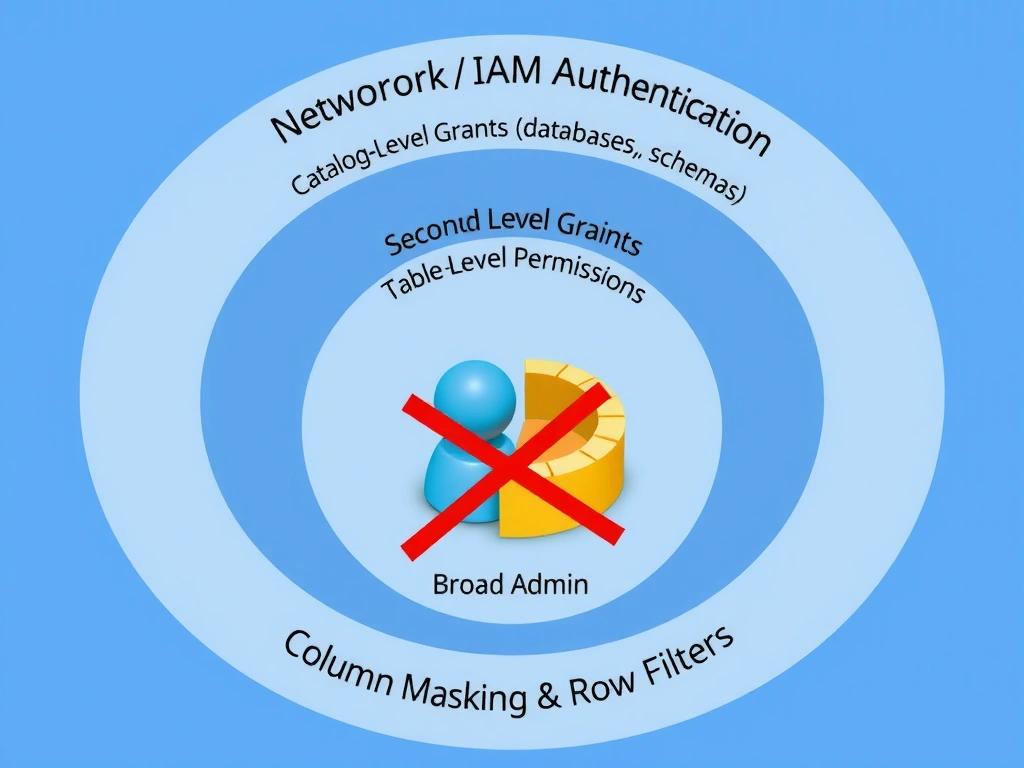
Here's the deal: governance in watsonx.data is not a bolt-on — it's woven into the architecture through the metadata catalog, access control policies, lineage tracking, and audit logging. Applying access control, metadata tagging, lineage capture, and policy enforcement from day one means every table, query, and user action is tracked and auditable. Adding governance after the fact to a production lakehouse that was deployed without it is like trying to retrofit fire suppression into a building that's already occupied.
Full explanation below image
Full Explanation
The correct answer is option D: Apply access control, metadata, lineage, and policy controls so lakehouse data remains trustworthy.. This aligns with IBM's IBM watsonx.data platform architecture guidance, which emphasizes apply access control, metadata, lineage, and policy controls so lakehouse data remains trustworthy as the recommended approach for production deployments. Option A (Let analysts manage permissions with copied CSVs) is incorrect because it either bypasses IBM's recommended architecture or introduces operational risk that the correct approach is specifically designed to avoid. Option B (Remove schema definitions to stay flexible) is incorrect because it either bypasses IBM's recommended architecture or introduces operational risk that the correct approach is specifically designed to avoid. Option C (Govern only dashboard outputs, not source data) is incorrect because it either bypasses IBM's recommended architecture or introduces operational risk that the correct approach is specifically designed to avoid. Understanding this distinction is critical for the C9007300 exam: IBM watsonx.data is designed to enforce governance, performance, and operational best practices through its built-in architecture, and the correct answers consistently reflect those architectural constraints rather than shortcut alternatives.