
A team is preparing a production rollout and needs to avoid a design mistake. The team is focused on API access. Which recommendation is most appropriate?
Select an answer to reveal the explanation.
Short Explanation and Infographic
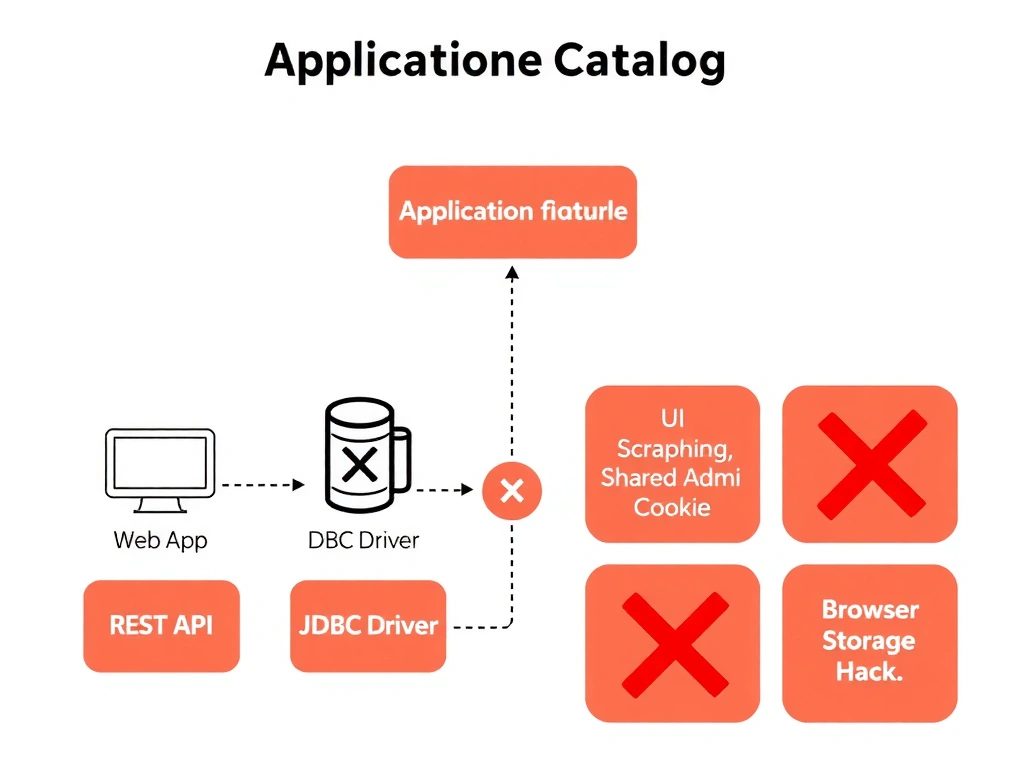
Here's the deal: when applications need programmatic access to watsonx.data — for embedded analytics, automated reporting, or ML model serving — the correct path is through IBM's supported APIs and certified clients, not through direct engine connections or bypassing the access control layer. Supported APIs enforce the same governance policies that govern UI-based access, which means your application inherits the same lineage tracking and permission model as every other consumer. Unsupported clients create policy blind spots.
Full explanation below image
Full Explanation
The correct answer is option C: Use supported APIs and clients when applications need programmatic access to watsonx.data.. This aligns with IBM's Data consumption and analytics guidance, which emphasizes use supported apis and clients when applications need programmatic access to watsonx.data as the recommended approach for production deployments. Option A (Scrape the web UI as an integration strategy) is incorrect because it either bypasses IBM's recommended architecture or introduces operational risk that the correct approach is specifically designed to avoid. Option B (Share administrator cookies with applications) is incorrect because it either bypasses IBM's recommended architecture or introduces operational risk that the correct approach is specifically designed to avoid. Option D (Generate SQL by editing browser local storage) is incorrect because it either bypasses IBM's recommended architecture or introduces operational risk that the correct approach is specifically designed to avoid. Understanding this distinction is critical for the C9007300 exam: IBM watsonx.data is designed to enforce governance, performance, and operational best practices through its built-in architecture, and the correct answers consistently reflect those architectural constraints rather than shortcut alternatives.