
A senior engineer reviews the current plan and notices that one key control is missing. The team is focused on Data manager. Which recommendation is most appropriate?
Select an answer to reveal the explanation.
Short Explanation and Infographic
Here's the deal: Data Manager is watsonx.data's centralized control point for everything catalog-related — browsing registered datasets, adding new tables to the catalog, organizing schemas, and managing table-level metadata. It's the operational tool that keeps your governance story coherent as more data sources get added to the lakehouse. Doing catalog management ad hoc through CLI or direct metastore manipulation creates configuration drift that shows up as broken queries and missing lineage.
Full explanation below image
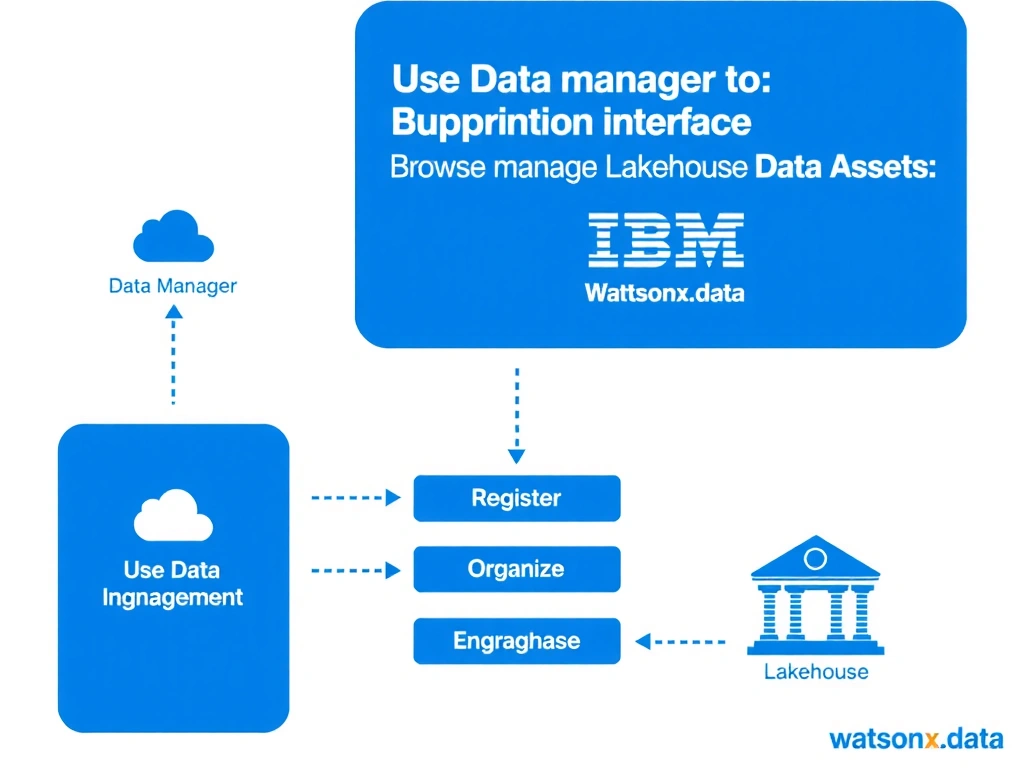
Full Explanation
The correct answer is option B: Use Data manager to browse, register, organize, and manage lakehouse data assets.. This aligns with IBM's Platform operations and administration guidance, which emphasizes use data manager to browse, register, organize, and manage lakehouse data assets as the recommended approach for production deployments. Option A (Use Data manager only for user password resets) is incorrect because it either bypasses IBM's recommended architecture or introduces operational risk that the correct approach is specifically designed to avoid. Option C (Manage table metadata through email requests) is incorrect because it either bypasses IBM's recommended architecture or introduces operational risk that the correct approach is specifically designed to avoid. Option D (Avoid registration so data remains discoverable) is incorrect because it either bypasses IBM's recommended architecture or introduces operational risk that the correct approach is specifically designed to avoid. Understanding this distinction is critical for the C9007300 exam: IBM watsonx.data is designed to enforce governance, performance, and operational best practices through its built-in architecture, and the correct answers consistently reflect those architectural constraints rather than shortcut alternatives.