
A project lead is turning a proof of concept into a governed production workflow. Which approach best demonstrates data transformation in a IBM Certified watsonx Data Lakehouse Engineer environment?
Select an answer to reveal the explanation.
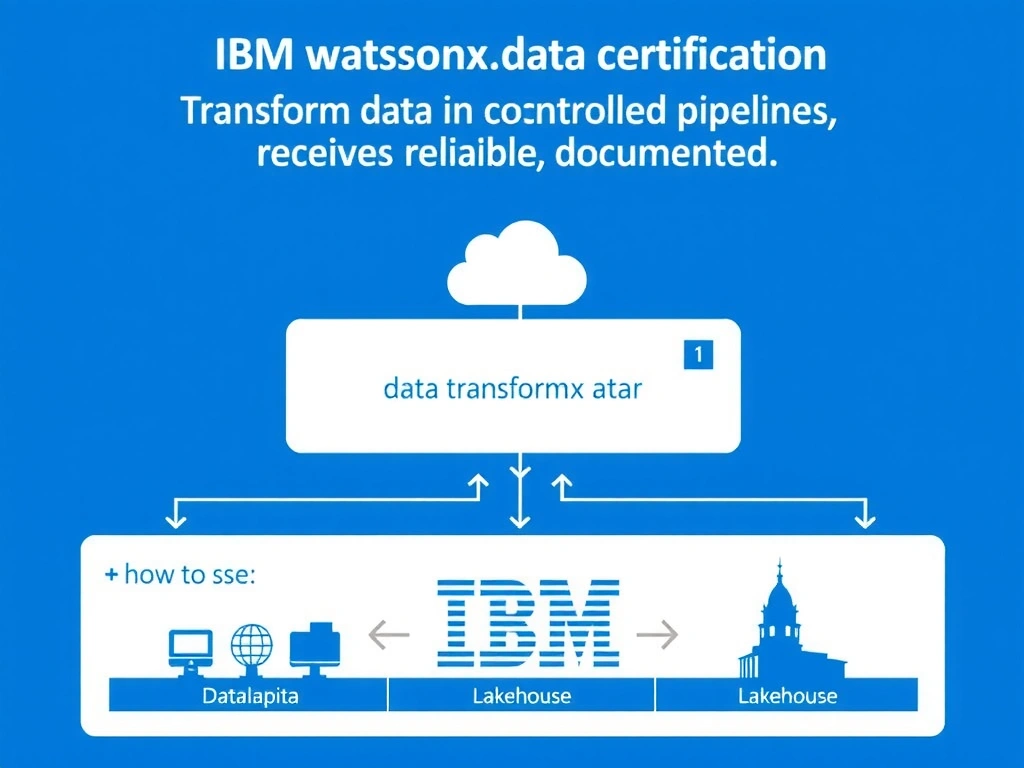
Short Explanation and Infographic
Here's the deal: data transformation in watsonx.data happens in controlled pipelines — Spark jobs that read raw source data, apply cleaning and enrichment rules, validate output quality, and write polished results to governed Iceberg tables. Exposing raw, unvalidated data directly to consumers skips the quality layer that makes a lakehouse trustworthy. The governance value of the lakehouse only materializes when consumers receive curated, documented, validated data — not when they get the raw file dump.
Full explanation below image
Full Explanation
The correct answer is option D: Transform data in controlled pipelines so consumers receive reliable, documented tables.. This aligns with IBM's Data integration patterns guidance, which emphasizes transform data in controlled pipelines so consumers receive reliable, documented tables as the recommended approach for production deployments. Option A (Hide transformations in personal notebooks only) is incorrect because it either bypasses IBM's recommended architecture or introduces operational risk that the correct approach is specifically designed to avoid. Option B (Transform production data manually in spreadsheets) is incorrect because it either bypasses IBM's recommended architecture or introduces operational risk that the correct approach is specifically designed to avoid. Option C (Avoid testing transformations because SQL succeeded) is incorrect because it either bypasses IBM's recommended architecture or introduces operational risk that the correct approach is specifically designed to avoid. Understanding this distinction is critical for the C9007300 exam: IBM watsonx.data is designed to enforce governance, performance, and operational best practices through its built-in architecture, and the correct answers consistently reflect those architectural constraints rather than shortcut alternatives.